

U.S. Customs and Border Protection (CBP) pays IEEPA tariff refunds only to the importer of record (IOR) on the entry, or to a party that importer designated on CBP Form 4811. IEEPA is the International Emergency Economic Powers Act, the law behind the tariffs CBP collected until February 2026. Under Delivered Duty Paid (DDP) terms, the seller is responsible for U.S. import clearance and duties, so on many DDP purchases from China the IOR, and therefore the refund, sits with the supplier’s side. Any share for you depends on your purchase terms, which makes the U.S. entry summary the first document to get.
Who Can File for an IEEPA Refund and Who Gets Paid?
CBP processes these refunds through CAPE, the Consolidated Administration and Processing of Entries tool in its Automated Commercial Environment (ACE). Filing rights and payment both follow the customs entry, not the supplier invoice.
Filing and Payment Roles
Start by finding out which company is the importer of record on each entry, then check its role in this table.
| Role on the Entry | Can File in CAPE? | Can Receive the Refund? |
|---|---|---|
| Importer of record | Yes, for its own entries | Yes, once enrolled for ACH refunds |
| Licensed customs broker that filed the entry | Yes, on the importer’s behalf | Only if designated on CBP Form 4811 |
| Party designated on CBP Form 4811 | Only if it is also the IOR or the filing broker | Yes, once enrolled for ACH refunds |
| Buyer that only paid a DDP invoice | No | No |
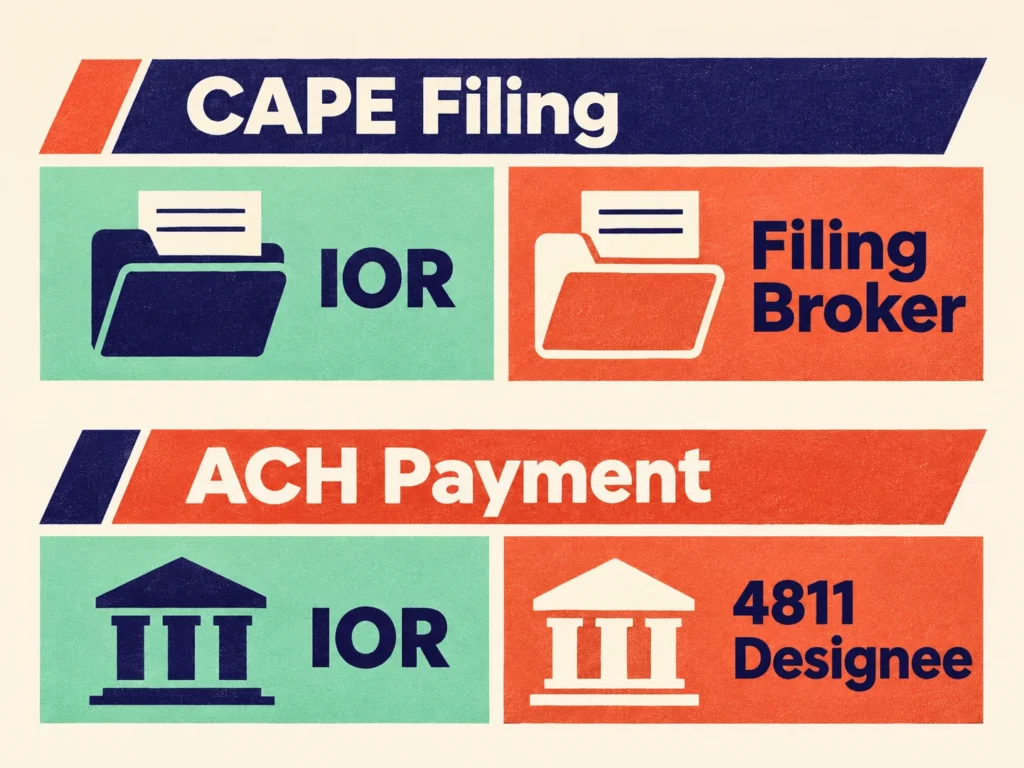
CBP issues these refunds electronically by ACH and consolidates them by IOR or designated party. A payee that has not enrolled for ACH refunds can expect delays.
Which Entries CAPE Accepts
Eligibility depends on each entry’s status, and CBP has opened CAPE in phases. Phase 1, launched April 20, 2026, accepts entries in ACE that carry at least one IEEPA tariff number from Chapter 99 of the Harmonized Tariff Schedule. At launch, it did not accept entries more than 80 days past liquidation, the point when CBP finalizes the duty owed. It also turned away entries with an open or suspended protest and entries tied to drawback, reconciliation or USMCA duty deferral.
Finally liquidated entries follow a separate track. CAPE Phase 3, deployed October 6, 2026, lets plaintiffs holding court orders file for those entries. On October 8, 2026, the U.S. Court of International Trade certified a class of importers of record that paid IEEPA duties between February 1, 2025 and February 19, 2026, excluding importers with their own lawsuits. The rules for these older entries are still developing, so have the IOR or its broker check current CBP guidance for each entry.
How to Check Whether Your DDP Entry Included IEEPA Duties
Get the U.S. entry summary, filed on CBP Form 7501 or its electronic equivalent, from the supplier or whoever arranged clearance. CBP stopped collecting IEEPA duties on goods entered on or after February 24, 2026, so only earlier entries can carry them.
- Match the entry number and product lines to your goods, using the purchase order, commercial invoice number and bill of lading reference.
- Ask which entry covers each batch if your purchases moved in separate shipments.
- Read the importer of record field, which can name a different company from the consignee.
- Ask the filing broker which IEEPA Chapter 99 provision applied and how much IEEPA duty was paid.
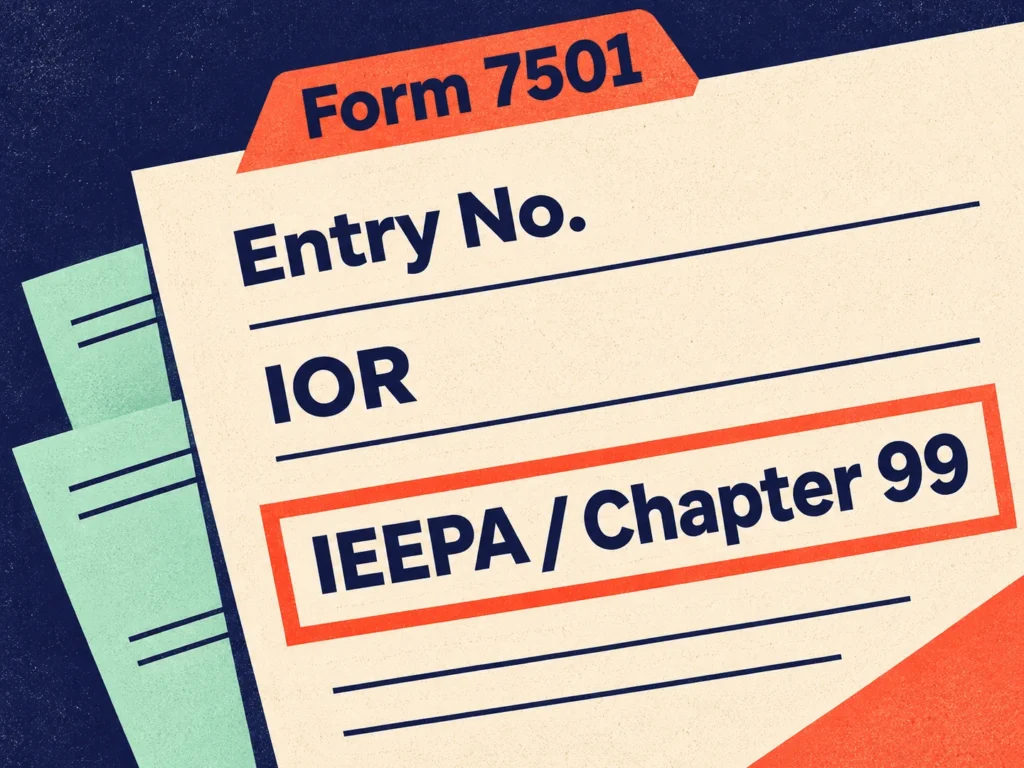
Keep Section 301 and Section 232 duties out of the calculation, because the end of IEEPA collection did not affect them. A single duty charge on a DDP invoice can bundle several tariff programs, so compare it with the IEEPA lines on the entry rather than treating it as your refund amount.
What If Your Supplier Is the Importer of Record?
Then CBP pays the supplier’s side, and any share for you comes from your contract, not from CBP. The International Chamber of Commerce (ICC) notes that DDP is the only Incoterms rule that puts import formalities and tariffs on the seller, so a delivered price may already reflect the duty. Review your purchase agreement and any written DDP terms or credit terms, then ask the supplier, or the broker it used, to confirm in writing:
- The entry numbers covering your goods
- Whether those entries included IEEPA duties
- Whether the importer has filed or plans to file in CAPE
- Any refund already received for your goods, and how it will be credited
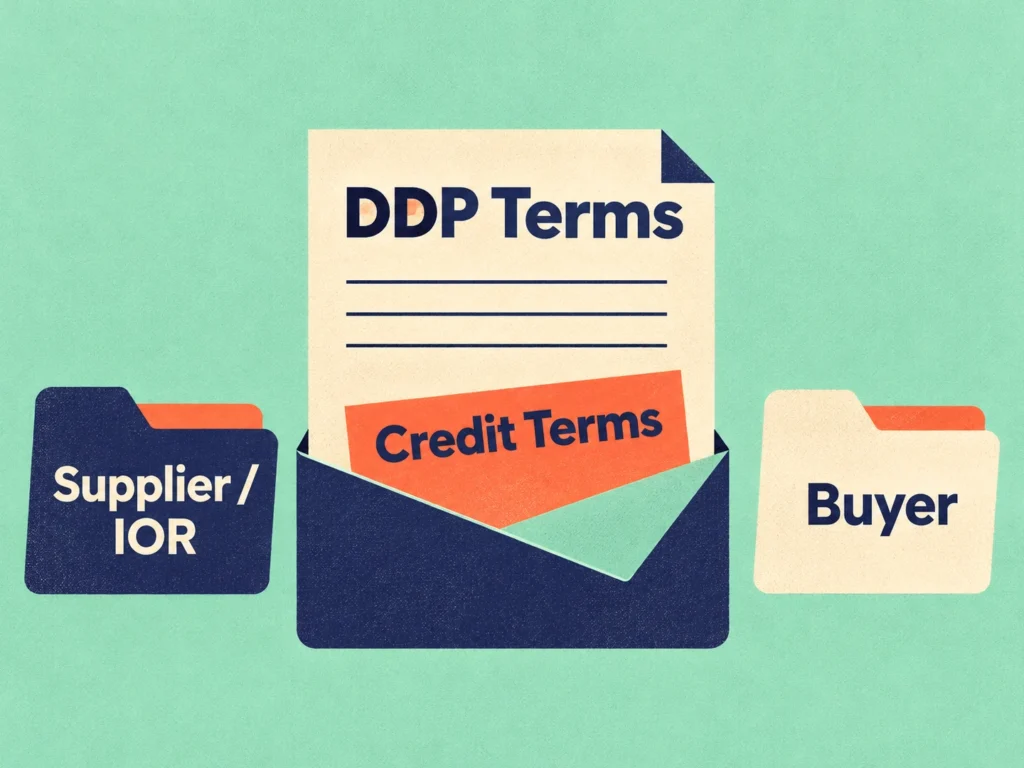
If a supplier sends only a freight invoice with a duty line, ask for the entry number and the importer’s name before you plan around a refund.
Setting Up DDP Shipments From China After the IEEPA Refunds
Put the import roles in writing before pickup, while a missing invoice or packing detail can still be fixed at origin.
Terms to Put in Writing
- Delivery point: the named place where the seller’s DDP obligations end
- Importer and broker: the legal importer of record and the broker filing the entry
- Duty scope: which duties and taxes the price includes, and who keeps a later refund or pays a later adjustment
- Records: who sends you the entry number, duty detail and entry summary after clearance
Freight and Broker Handoff
Foresmart, which provides freight forwarding from China, collects from factories in different Chinese cities and receives the goods at its warehouses in Shenzhen, Yiwu, Shanghai and other cities. Its team repacks or palletizes the cargo as agreed for full-container-load (FCL) shipping. Receiving several suppliers’ orders together lets the team catch a missing invoice, or a packing list that does not match the cargo, before loading.
Foresmart does not act as importer of record by default. For door-to-door freight, it confirms the DDP or DAP scope and the named importer before quoting, then coordinates the documents and the handoff to the customs broker. Send the supplier cities, cargo descriptions, ready dates, weights, dimensions, the U.S. delivery ZIP code and any supplier DDP terms, and say whether you already work with a U.S. broker. Shipments start at 100 kg or 1 cubic meter (CBM).

Frequently Asked Questions
How Can I Check My IEEPA Refund Status After the Broker Files?
Ask the filing broker, or run ACE reports if your company has ACE portal access as the importer. The ES-022 CAPE Entry Summary Report links each declaration and entry to its refund number and shows principal and interest separately. The REV-603 Trade Refund Report shows whether the refund has been sent to or issued by the Treasury.
Does CBP Pay Interest on IEEPA Refunds?
Yes. CBP calculates interest on CAPE refunds as it does on any interest-eligible refund, under 19 CFR 24.36, and includes it in the refund.
Can I Claim Duty Drawback on an Entry Included in CAPE?
Possibly, but file in CAPE first. CBP tells importers and brokers to submit the CAPE declaration before filing a drawback claim, and CAPE does not accept entries already associated with a drawback entry.
Source
- Consolidated Administration and Processing of Entries (CAPE) for IEEPA Refunds, April 20, 2026, Deployment (CSMS #68340863), U.S. Customs and Border Protection: who may file, refund consolidation by IOR or Form 4811 party, ACH, Phase 1 eligibility, interest and drawback.
- CBP Offers Multiple ACE Reports for Monitoring CAPE Refund Claims (CSMS #68536553), U.S. Customs and Border Protection: the ES-022 and REV-603 reports.
- Ending Collection of International Emergency Economic Powers Act Duties (CSMS #67834313), U.S. Customs and Border Protection: the February 24, 2026 end of IEEPA collection and its limit to IEEPA duties.
- 19 CFR 142.11, Entry summary form, Electronic Code of Federal Regulations: CBP Form 7501 or its electronic equivalent.
- Using the Incoterms® 2020 Rules to Manage Tariff Risk in International Trade, International Chamber of Commerce: the seller’s import clearance and tariff responsibility under DDP.
- Freestyle World, Inc. v. United States, Court No. 26-01088, Opinion and Order, U.S. Court of International Trade: CAPE Phase 3 and the October 8, 2026 class certification for finally liquidated entries.