
Read CBP Form 7501 in three passes: the header that identifies the shipment and importer, the line items that classify and value each product, and the totals that show what was paid to U.S. Customs and Border Protection (CBP). Form 7501 is the Entry Summary that CBP uses to assess duties, taxes and fees. Most entries are now filed electronically in the Automated Commercial Environment (ACE), but the data follows the same sections. When one container carries more than one supplier’s goods, the line items are where you confirm that every order is covered.
How Do You Match the Entry Summary to Your Shipment?
Start with the header, because a wrong reference here means you’re checking someone else’s cargo. Confirm these fields before you read a single line item:
- Entry number: save it with your shipment file, since the broker uses it to find the filing.
- Bill of lading reference: match it to your bill of lading and arrival notice.
- Importer of record and importer number: check them against the importer of record agreed for this shipment.
- Ultimate consignee: expect a different company here when one entity imports and another receives the goods.
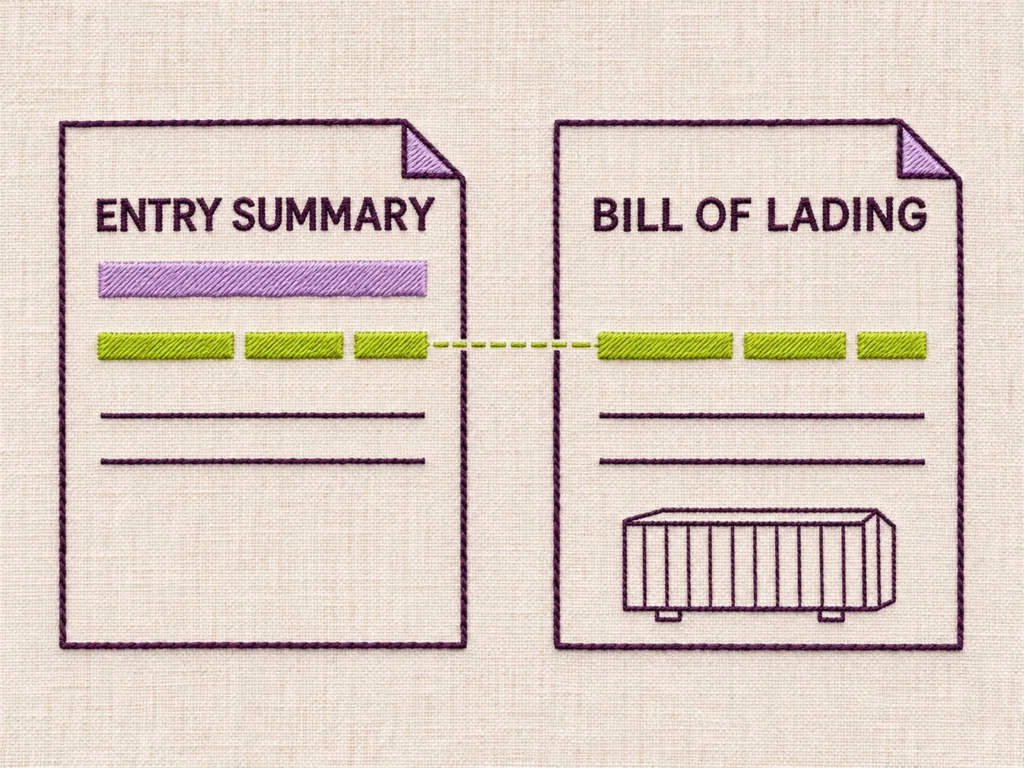
If the bill reference doesn’t match your arrival notice, ask the broker whether it filed under the master or the house bill. If one shipment was split across several entries, find out which entry covers each batch before you compare quantities, and make sure you have every continuation page.
What Should You Check on Each Entry Line?
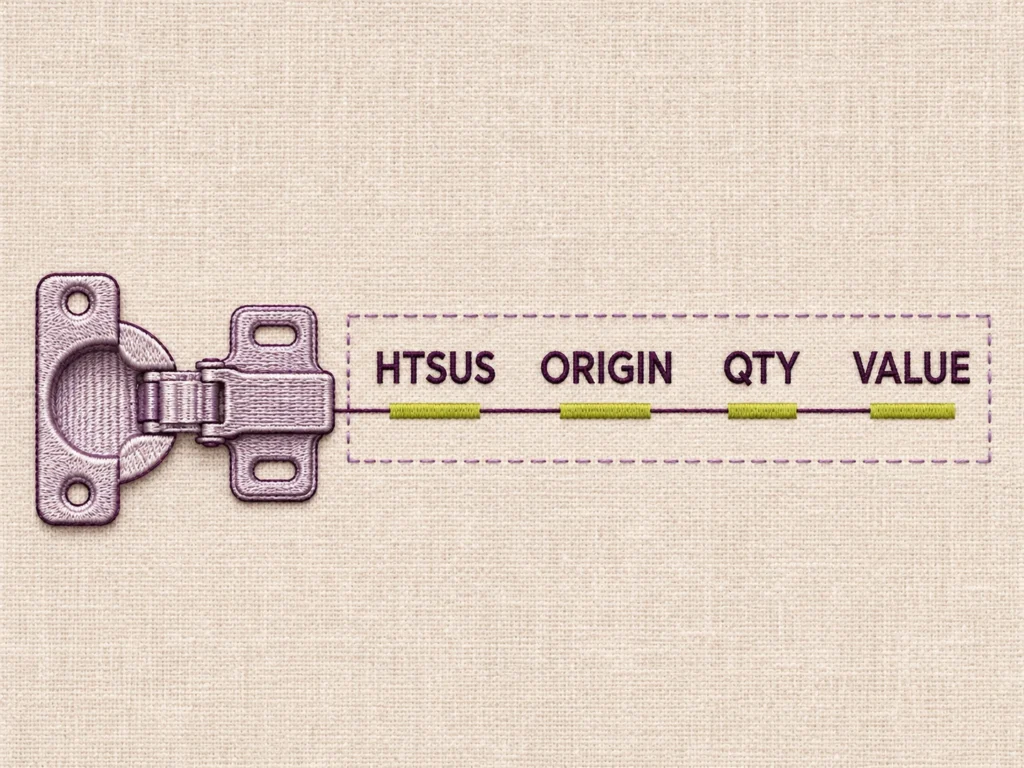
Each line ties a product to a tariff number, an origin and a value. Check them in that order, because the classification decides the duty rate the value is multiplied by.
Product Description and HTSUS Number
Read the description alongside its number in the Harmonized Tariff Schedule of the United States (HTSUS), which sets the duty rate for those goods. If the description is too broad to tell which product a line covers, send the broker the product specifications and supplier invoice and ask. A Chapter 99 number can appear next to the regular HTSUS number when an additional duty applies, so trace both numbers to the same item before you add up quantities.
Country of Origin
Check origin against where your supplier actually manufactured the goods. The exporting country and the country of origin are separate fields, and goods shipped from China aren’t automatically Chinese-origin. If the origin isn’t what you expected, send the broker the production records and ask what determined it.
Quantity and Entered Value
Check the unit before you compare numbers. Your packing list may count cartons and your invoice may count pieces, while the entry reports net quantity in the unit the tariff schedule requires. Twelve cartons on the packing list and 240 pieces on the entry can both be right if each carton holds 20.
Entered value is usually lower than the invoice total when the invoice includes international freight and insurance, because CBP’s transaction value excludes those charges. It can also be higher, since packing costs, selling commissions, assists and royalties paid by the buyer are added to the price. When the figures differ, ask the broker to show how it got from the invoice to the entered value, and how it split one invoice across several lines.
Checking Duties, Taxes and Fees on Form 7501
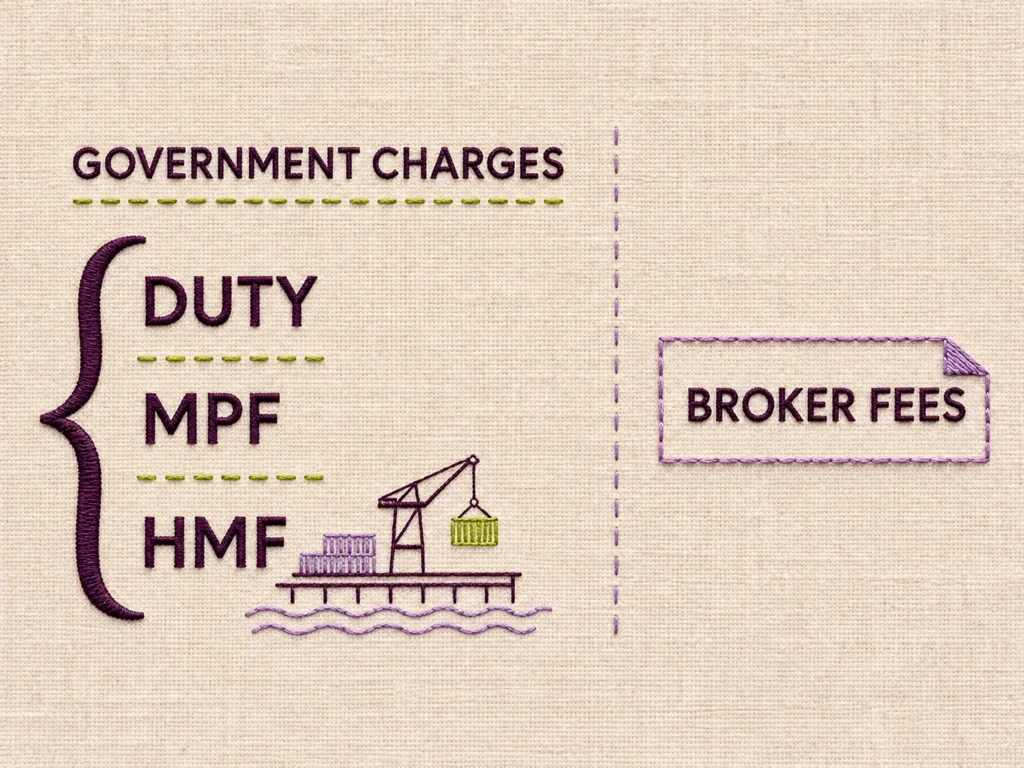
The totals section shows government charges only. Match each one to the same line on the broker’s bill, then review the broker’s own service fees separately.
| Charge | How It’s Calculated | What to Check |
|---|---|---|
| Duty | Each line’s HTSUS rate applied to its entered value | Rate and value on each line, including any Chapter 99 duty |
| Merchandise Processing Fee (MPF) | A percentage of value, with a minimum and maximum CBP adjusts each fiscal year | The amount matches the rates for the entry date |
| Harbor Maintenance Fee (HMF) | 0.125% of the value of cargo unloaded at a covered U.S. port | It appears on ocean entries; air entries don’t carry it |
CBP Form 7501 Example for a Two-Supplier Container
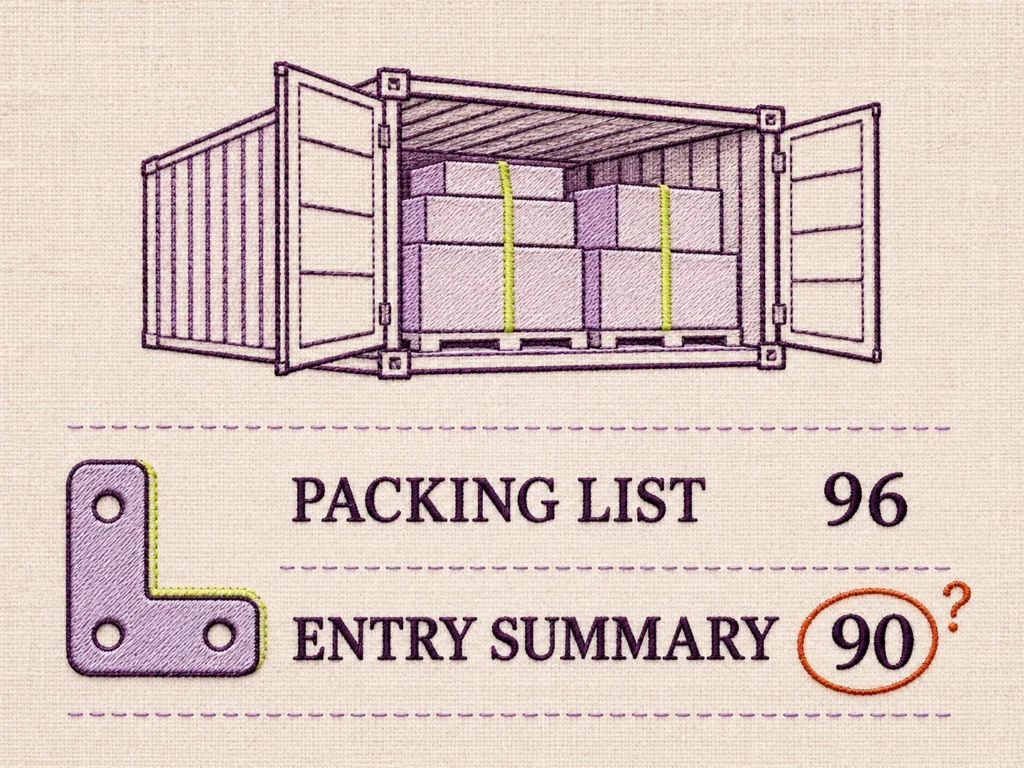
Suppose two Chinese suppliers each invoice 240 identical cabinet hinges, and the second also invoices 96 mounting brackets. The packing lists and loading records show all of it went into one container.
| Supplier Records | Entry Summary Shows | What to Check |
|---|---|---|
| Two invoices with 240 hinges each | One line covering 480 hinges | Both invoices were combined on that line |
| Second supplier’s invoice for 96 brackets | One line covering 90 brackets | The unit, and where the other six went |
The single hinge line can be correct. CBP rules let goods of the same class, origin and statistical reporting number be reported on one line across several invoices. A worksheet then has to itemize the entered value from each invoice. Ask the broker for that worksheet to confirm both quantities went into the 480.
For the brackets, compare the entry with the final packing list. If both count pieces, check whether a revised invoice or a later booking accounts for the six. If the loading records still show 96 brackets on this shipment, flag it.
What Should You Send the Broker if Something Looks Wrong?
Send the filing broker one short note that lets it find and fix the line without a follow-up call:
- The entry number and line number
- What the entry shows and what your records show
- The supplier invoice and final packing list
- A bill reference or loading record, if the question is which shipment carried the goods
- The document behind any charge or adjustment, for a value question
If the broker confirms a filing error, ask whether a Post Summary Correction (PSC) is still possible. A PSC amends an eligible entry summary in ACE and generally has to be filed within 300 days of the entry date or at least 15 days before the scheduled liquidation date, whichever comes first. Keep the broker’s explanation or revised record with your shipment file.
Preparing a Consolidated Container So Form 7501 Is Easy to Check
Give each supplier order a reference that stays on its invoice, packing list and receiving record through loading. If a supplier delivers fewer cartons than planned or a balance moves on a later sailing, record what actually loaded under each bill reference. The broker can then trace every entry line back to the right invoice once your forwarder hands over the shipping documents.
Foresmart, a freight forwarder in China, collects from multiple suppliers and records arrivals at its warehouses by purchase order reference. Its team handles agreed repacking or palletizing and plans a full container load (FCL) when the combined cargo calls for it. It doesn’t act as importer of record by default, so confirm before pickup who’ll share the entry record with you if a supplier arranges clearance. Send the supplier cities, cargo-ready dates, carton counts, weights, dimensions, U.S. delivery ZIP code and your broker’s contact details, so the quote can cover the freight and the document handoff together.
Frequently Asked Questions
How Do I Get a Copy of My CBP Form 7501?
Ask the broker that filed for your company for the full entry summary, including the line items, and give it the entry number or bill of lading reference. If another company is the importer of record, that company controls the record, so ask it to share what it can.
What Is the Difference Between CBP Form 3461 and Form 7501?
Form 3461, or its electronic equivalent, is the entry document used to get cargo released. Form 7501 is the entry summary CBP uses to assess duties, taxes and fees. When the entry summary is filed at the time of entry, Form 7501 can serve as both and no separate 3461 is needed.
How Long Should I Keep CBP Form 7501?
Keep it for five years from the date of entry, along with the supporting invoices and shipment records. CBP’s recordkeeping rules set shorter periods for a few record types, such as some informal entries, so check the rule if your entry falls outside a standard commercial import.
Source
- 19 CFR 141.61, Completion of entry and entry summary documentation, Legal Information Institute (Cornell Law School): combined reporting of goods from several invoices under one statistical reporting number and the required worksheet.
- 19 CFR 152.103, Transaction value, Electronic Code of Federal Regulations: price actually paid or payable, excluded freight and insurance, and additions to the price.
- 19 CFR 24.24, Harbor maintenance fee, Electronic Code of Federal Regulations: the 0.125% rate, importer liability and reporting the fee on Form 7501.
- Modification of the National Customs Automation Program Test Regarding Post-Summary Corrections for Extensions of Liquidation, U.S. Customs and Border Protection (Federal Register): PSC filing time limits.
- 19 CFR 142.3, Entry documentation required, Electronic Code of Federal Regulations: Form 3461 as entry documentation and Form 7501 serving as both entry and entry summary.
- 19 CFR 163.4, Record retention period, Electronic Code of Federal Regulations: the five-year retention period and its exceptions.