
Prepare the final shipping packing list from the cargo that is packed and ready to leave, rather than from the factory’s estimate. The list ties each product and quantity to a numbered carton, pallet, or crate, with its weights and dimensions. For imports from China, check it again after supplier consolidation, repacking, or palletizing, since each of these can change package counts, weights, and measurements before the goods leave the warehouse.
What Should a Shipping Packing List Include?
A shipping packing list should identify the shipment parties, the goods, and every package with its weight and size.
| Field | What to Record |
|---|---|
| Shipment parties | Shipper and consignee names, addresses, and contact details |
| Document references | Packing list number, date, and related invoice or purchase order references |
| Goods | Specific product descriptions, item references, quantities, and units |
| Package identification | Carton, pallet, or crate numbers and the marks printed on them |
| Packing details | Package type, package count, and contents of each package or identical package group |
| Weight | Net and gross weights, with units |
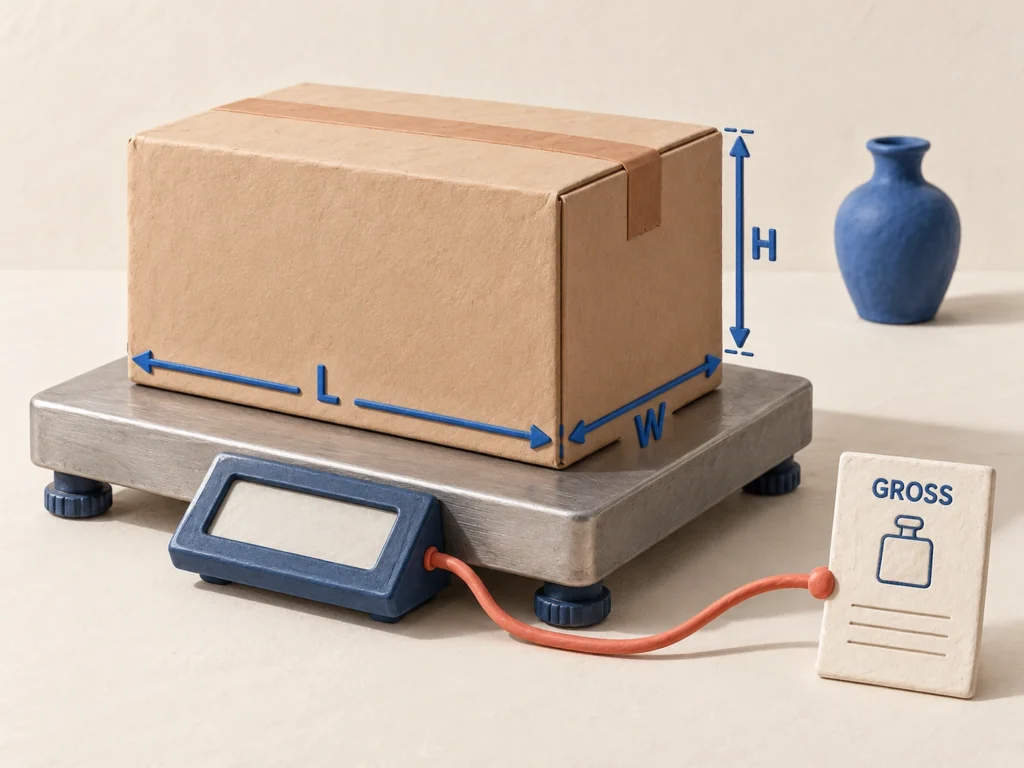
| Dimensions and volume | Outside package dimensions and total volume where relevant |
| Transport references | Booking, container, or transport-document numbers once available |
Net weight covers the goods alone and gross weight adds the packaging, so state whether each figure applies to one carton, a loaded pallet, or the whole shipment.
Label every unit, and when volume appears in CBM (cubic meters), keep each package’s volume separate from the row total. Confirm any destination-specific fields with the importer or customs broker before you fix the format.
How Do You Prepare a Shipping Packing List?
Work from the packed cargo, give every package a reference, and check the result against the other shipment documents before approving it.
Confirming the Final Packing
Get the packing details from the supplier and check them against the goods ready for collection. Record only what will actually ship, including any agreed split shipment or items held back.
Measure the outside of each carton, crate, or loaded pallet, because product dimensions do not describe the packed unit. If the warehouse repacks the goods, get the revised measurements and weights before approving the outgoing list.
Identifying Every Package
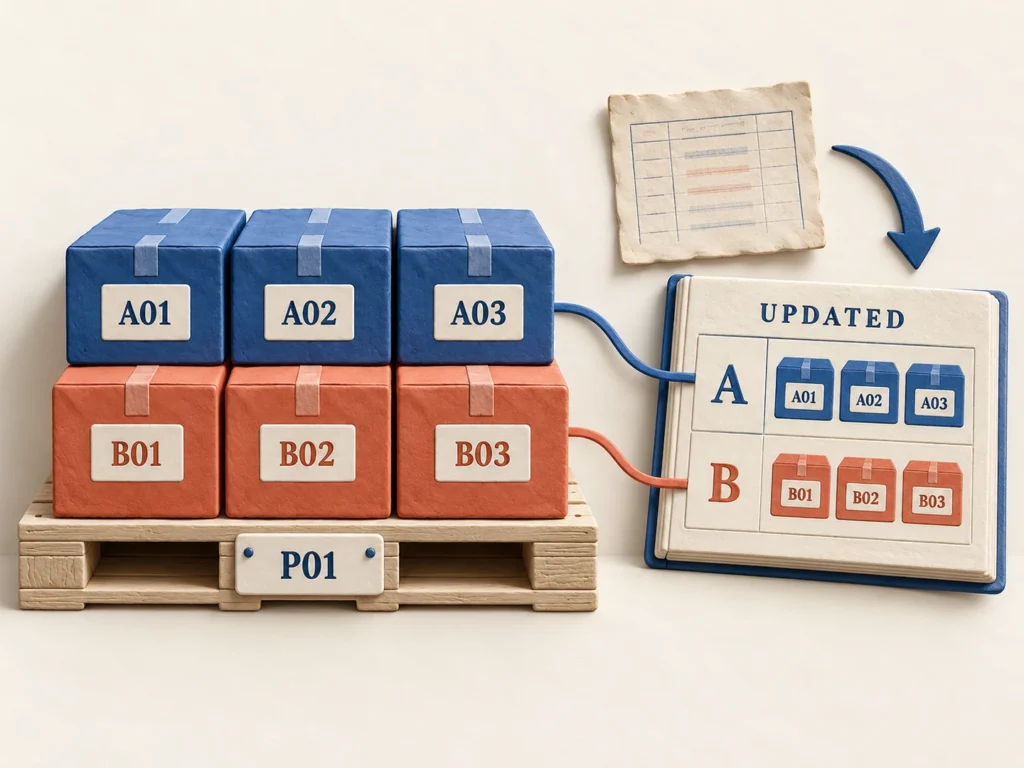
Give every package a reference that appears on both the list and the cargo, and match each shipping mark to its row. Group identical cartons under one numbered range, and start a new row when contents, quantities, weights, or dimensions differ. When two suppliers both mark a box “Carton 1,” add the supplier or purchase-order reference to tell the cartons apart.
Keep the package count at one packing level. Write “40 cartons on two pallets” and record which cartons sit on each pallet, since “42 packages” adds cartons and pallets together. Check which level the booking or transport instructions require.
Checking the Supporting Documents
Compare the packing list with the commercial invoice and the transport-document instructions, which must describe the same cargo in their product descriptions, quantities, parties, and package and weight figures. If the order was for 500 units but only 480 were packed, confirm the shipped quantity and correct every affected record rather than leaving the missing 20 on the list.
Date the approved version, send it to the parties preparing the shipment documents, and keep earlier versions so a later correction can be traced to its source.
A Shipping Packing List Example for China Exports
In this example, two suppliers send 20 loose cartons for one shipment:
| Carton IDs | Contents | Units per Carton | Net kg per Carton | Gross kg per Carton | Outside Size (cm) |
|---|---|---|---|---|---|
| A01 to A12 | Cotton tote bags | 10 | 12 | 15 | 60 × 40 × 40 |
| B01 to B08 | Plastic storage trays | 20 | 10 | 12 | 50 × 40 × 30 |

Calculate volume from the outside length × width × height in meters, multiplied by the number of identical cartons: 0.60 × 0.40 × 0.40 × 12 = 1.152 CBM for the A cartons and 0.50 × 0.40 × 0.30 × 8 = 0.480 CBM for the B cartons. The shipment totals 20 cartons, 280 units (120 tote bags and 160 storage trays), 224 kg net, 276 kg gross (about 608 lb), and 1.632 CBM (about 57.6 cubic feet).
If these cartons are palletized, keep the carton rows and counts, add pallet IDs, and record which cartons sit on each pallet. Then weigh and measure the loaded pallets, counting each pallet’s own weight once in the outgoing gross weight.
How Do You Handle Packing Lists From Multiple Suppliers?
Combine the supplier lists into one shipment record without losing which supplier and order each package came from.
Keeping Supplier Orders Traceable
Build a combined record that links every cargo line to its supplier, purchase order, and original packing list, and check warehouse receipts against it. Keep goods already received separate from orders still expected, and keep separate sellers, invoices, and exporter identities traceable even when their goods share one shipment.
Updating the Record After Consolidation
Repacking during multi-supplier consolidation can change package IDs, carton counts, gross weights, and dimensions while the product quantity stays the same. Update those fields and keep the link to each supplier’s original list.
When a supplier misses the consolidation date, decide whether to wait, split the cargo, or ship the ready orders first. The outgoing list should then show only the cargo going on that departure.
What Must the Shipping Packing List Show Before an FCL Shipment Leaves China?
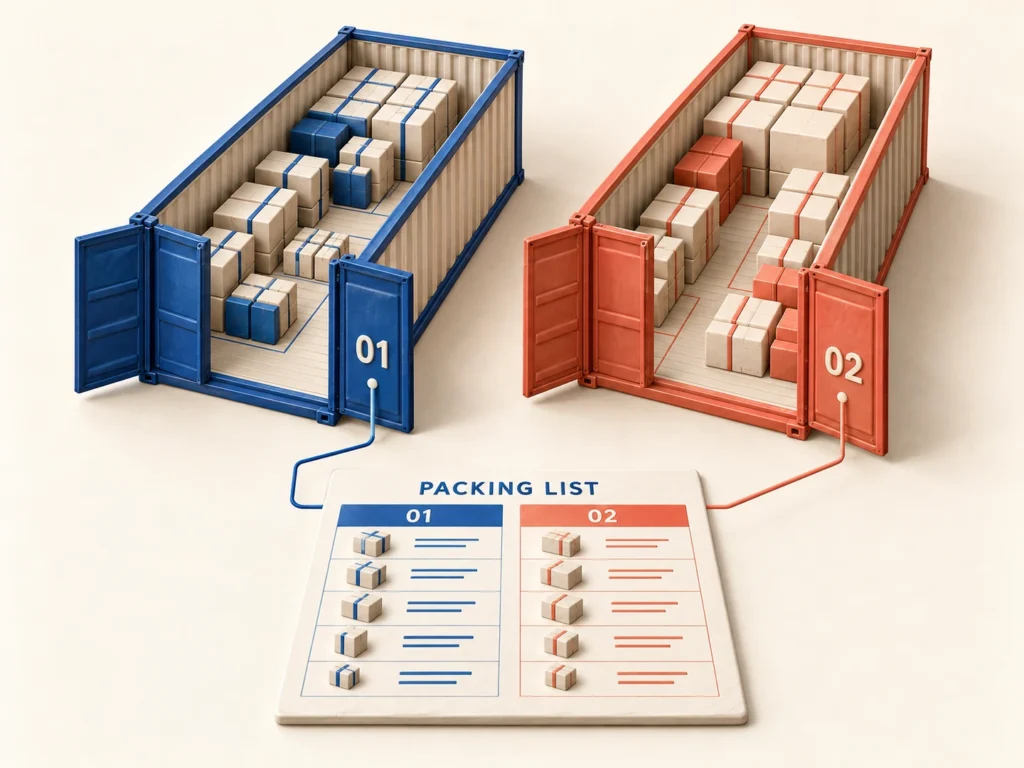
Before a full-container-load (FCL) shipment leaves China, the packing list should match the container records as well as the cargo. Link the package IDs to the container loading plan, which shows where each package sits, because total CBM alone does not show whether the load fits the assigned container. For an order split across containers, add the container numbers and keep a separate cargo allocation for each one so the receiver can find the goods. Check each allocation against the loading records and send the approved version before the document deadline.
Foresmart, a China-based freight forwarder, collects cargo from suppliers across China, receives it by buyer, supplier, and purchase order, and coordinates the invoice, packing list, booking, and export data for the combined shipment. Send the team your packing list, supplier locations, ready dates, and destination, mark any unfinished packing work or estimated figures, and ask for a collection and FCL shipping plan. Foresmart’s minimum shipment size is 100 kg or 1 CBM; confirm cargo and route acceptance before booking.
Frequently Asked Questions
Is a Company Stamp Required on a Shipping Packing List?
Only when the destination or a receiving party requires one, so confirm stamp, signature, and original-copy requirements with the destination broker or importer before issuing the final document.
Can I Send a Packing List as an Excel File?
Yes, if the recipient accepts that format. Excel suits calculations and revisions, but keep a dated approved copy, and if you export a PDF, check that every row and column remains visible.
What Should I Do If I Find a Packing List Error After Departure?
Notify the forwarder and destination broker, identify the incorrect fields, and send a dated correction. Ask which transport documents or customs filings also need amendment, because a replacement packing list does not change records another party has already submitted.