
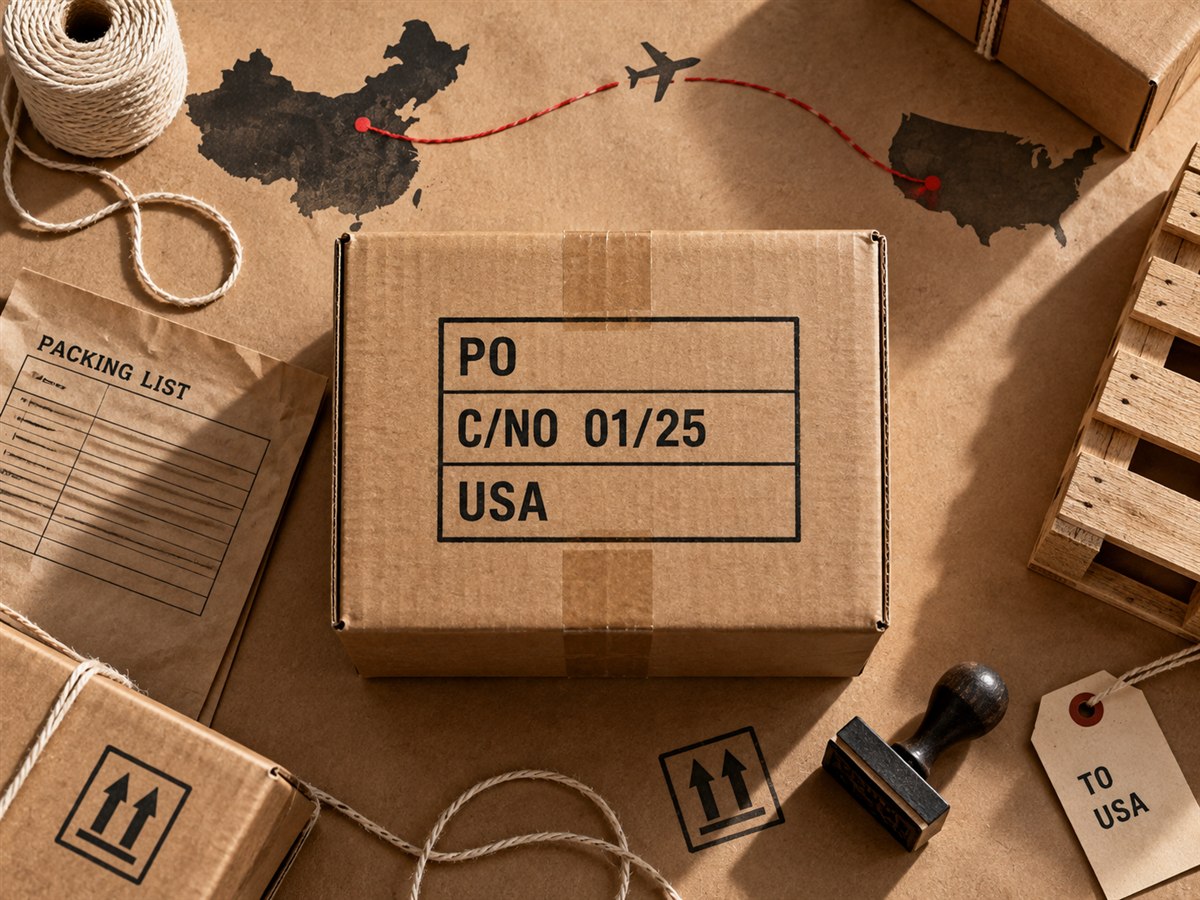
A shipping mark is the identification printed or attached to an outer package. Handlers use it to match cargo to the buyer, destination, order, and package count. For shipments from China, send the supplier a written mark before packing. Approve one sample carton, then check the finished marks against the packing list and transport instructions. A shipping mark does not replace a country-of-origin mark, carrier label, dangerous-goods mark, or FBA label. This guide covers what to include, where to place it, and what to check before pickup.
What Is a Shipping Mark and What Does It Identify?
A shipping mark identifies a carton, crate, palletized load, or other package in transit. Warehouse staff, freight forwarders, carriers, and consignees use the mark to match a physical package with shipment records.
The mark may contain words, letters, numbers, or simple symbols. It identifies the package. Branding, barcode scanning, country-of-origin marking, and dangerous-goods handling serve different purposes and may require separate labels.
What Should a Shipping Mark Include?
Use only the details the receiving team needs to identify the shipment without opening each carton. Start with a buyer or consignee identifier, reference number, destination, and package number. Add other fields when the receiving or transport process requires them.
| Field | Example | Use or condition |
|---|---|---|
| Buyer or consignee identifier | ABC IMPORTS | Matches the carton to the buyer or receiving party. |
| PO or order reference | PO-2026-0813 | Connects the package to the purchase order and related records. |
| Destination | NEW YORK, USA | Shows the agreed port, place, or final destination. |
| Package number | C/NO. 01/25 | Shows the carton sequence and total carton count. |
| SKU or item code | WEL-001 | Separates variants or order groups when the receiver needs that detail. |
| Quantity per carton | 24 PCS | Supports carton-level quantity checks when the buyer or warehouse requires them. |
| Gross weight or dimensions | 17 KG / 46 x 30 x 25 CM | Add these details when the carrier, warehouse, or buyer requires them. |
| Handling instruction | KEEP DRY | Use only when the cargo needs a specific handling instruction. |
| Country-of-origin wording | MADE IN CHINA | Treat this as a separate marking requirement. Confirm the product and destination rule before printing it. |
Extra fields increase the chance of a mismatch. Keep detailed contents on the packing list when the shipping mark can stay shorter.
How Do You Create a Shipping Mark for a China Shipment?
Create and approve one version before the supplier finishes packing. Use the same version in the purchase order, supplier instructions, and forwarder file.
- Choose a buyer identifier that the receiving team will recognize. Use the agreed company name or short code, not the factory’s internal reference.
- Copy the destination from the booking or delivery instructions. Use the correct port or named place for the shipment.
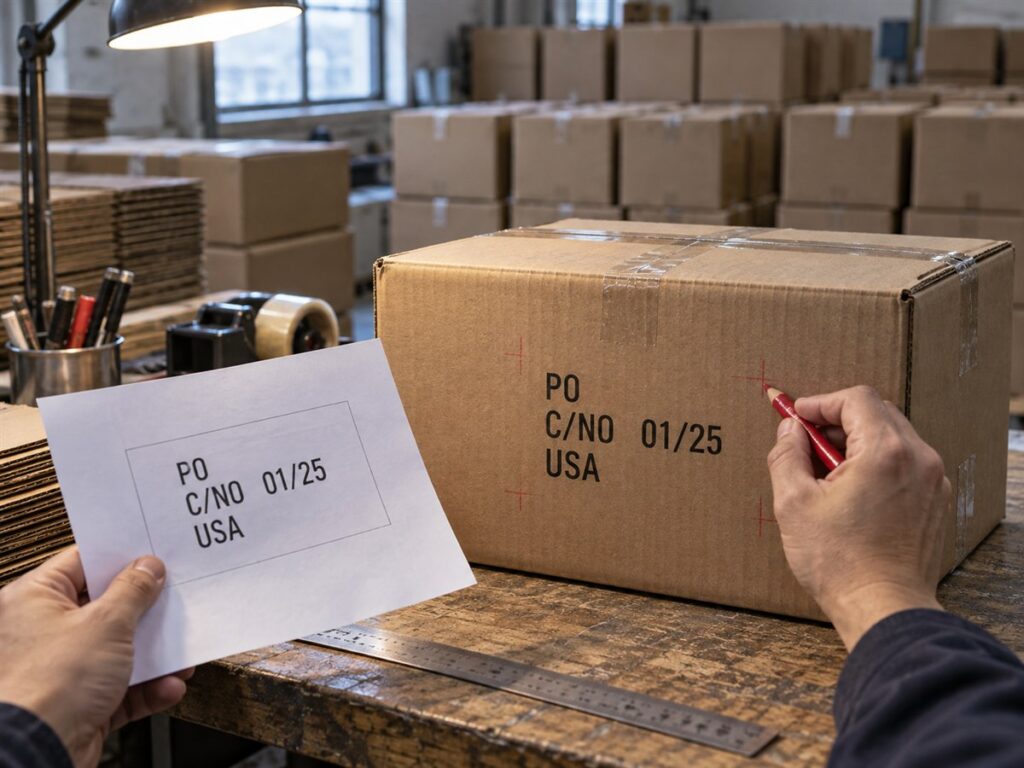
- Assign carton numbers after the supplier confirms the final count. C/NO. 01/25, for example, identifies the first carton in a 25-carton group.
- Add the SKU, quantity, weight, dimensions, or handling instructions only when a receiver, carrier, retailer, or product rule requires them.
- Send a text block or image that fixes the wording, line breaks, punctuation, and carton-number format. Request a photo of one completed carton before mass packing.
This shipping mark template shows a basic structure. The values are examples, not a universal form:
- ABC IMPORTS
- PO-2026-0813
- NEW YORK, USA
- C/NO. 01/25
- SKU: WEL-001
- QTY: 24 PCS
Add country-of-origin wording, dangerous-goods marks, or program-specific labels only after checking the applicable rules and receiving guide. Give the supplier one current file for the order. Partial instructions in a chat can leave an old PO number, destination, or carton count on the box.
Where Should Shipping Marks Go on Cartons and Pallets?
Place shipping marks where handlers can read them after workers stack, wrap, and move the cartons. If the receiver specifies carton faces, label size, barcode clearance, or pallet tags, follow that guide.
Marking Individual Cartons
Repeat the approved identity on every carton in a multi-carton shipment. Change only the fields that vary, such as the carton number, SKU, or quantity. Use a visible side panel that will remain exposed after palletizing. Keep the shipping mark away from seams, tape joints, and corners. Also avoid areas that stretch wrap may cover during freight packaging.
Workers may separate cartons from the pallet during handling. Each carton therefore needs enough information for independent receiving and document matching.
Labeling Palletized Loads
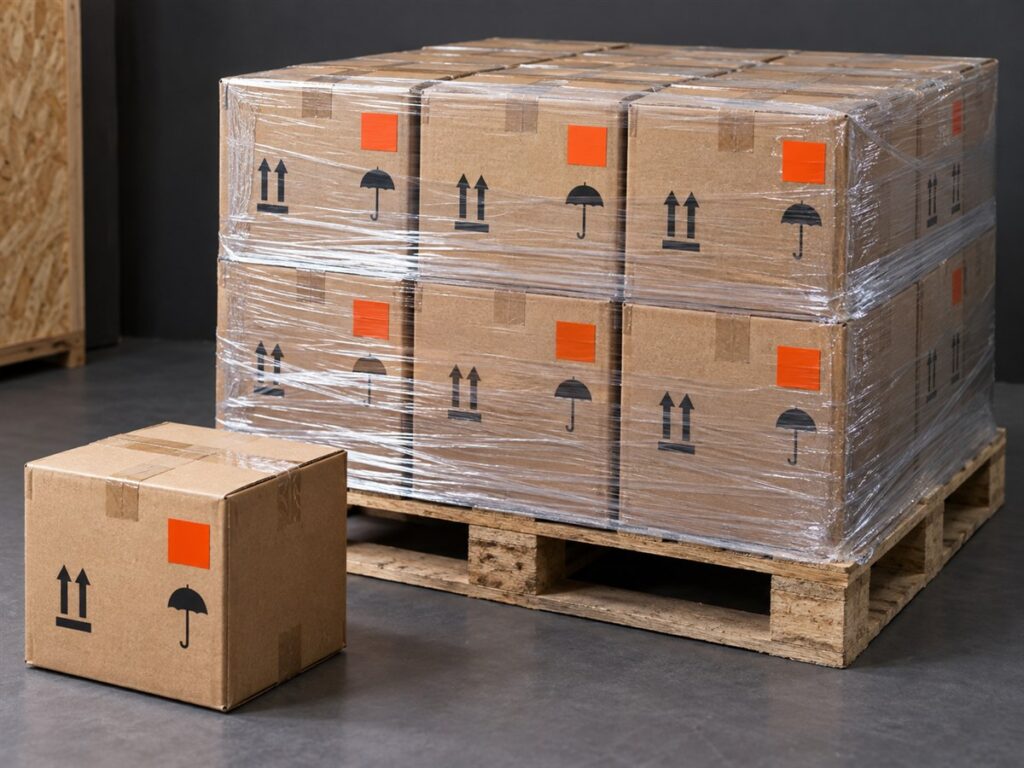
A pallet shipping mark identifies the pallet as one handling unit. Depending on the receiver’s process, the pallet label may include the destination, PO, pallet number, total pallet count, and carton range.
Keep the carton marks visible in case workers unload, restack, or deliver cartons separately. Before wrapping the load, confirm the pallet-label requirements with the receiver, retailer, Amazon workflow, or freight forwarder.
Which Labels Are Separate From a Shipping Mark?
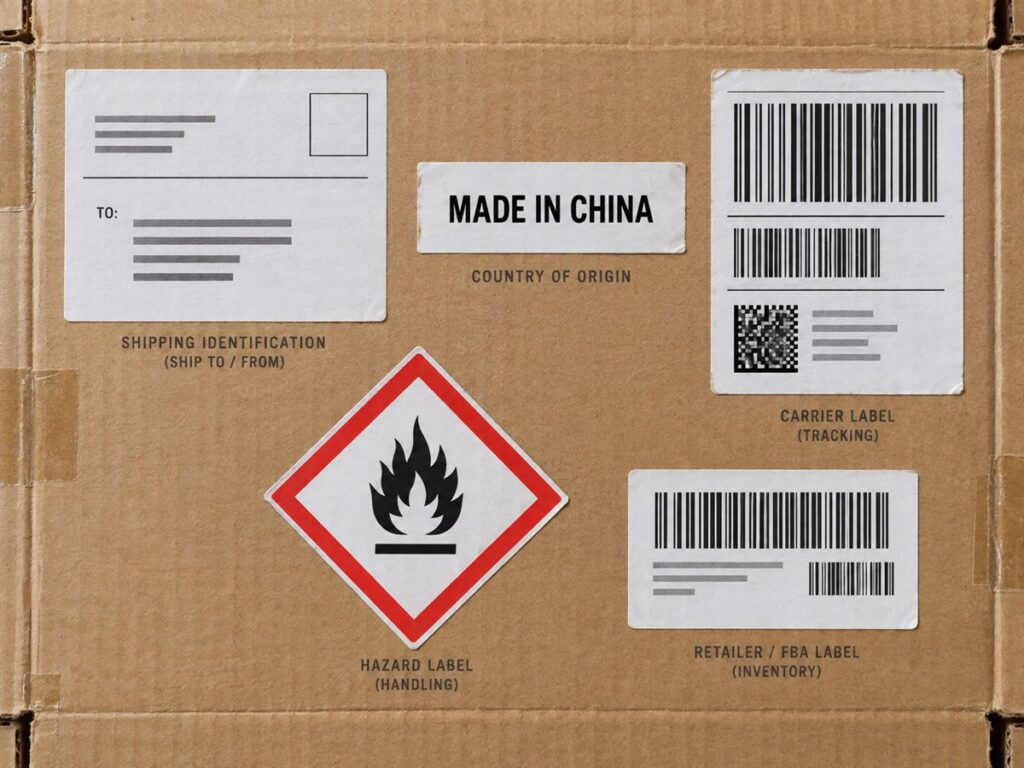
Each mark or label has its own purpose. A carton may carry more than one identifier, but one label should not substitute for another.
| Mark or label | Main purpose | What to confirm |
|---|---|---|
| Shipping mark | Identifies the outer carton or package by buyer, order, destination, and package number. | Approved wording, carton sequence, and readable placement. |
| Country-of-origin mark | Tells the ultimate purchaser where the imported article originated. | Required wording, location, permanence, and any product or destination exception. |
| Carrier label or barcode | Identifies the transport movement, routing, or tracking record. | Carrier or forwarder format and application instructions. |
| Dangerous-goods mark or label | Shows a regulated cargo classification or handling instruction. | Product classification, transport mode, required documents, and carrier approval. |
| FBA or retailer label | Connects the carton or pallet to a receiving program or shipment plan. | Current platform or retailer instructions, label placement, and scanability. |
How Should Shipping Marks Match the Document Set?
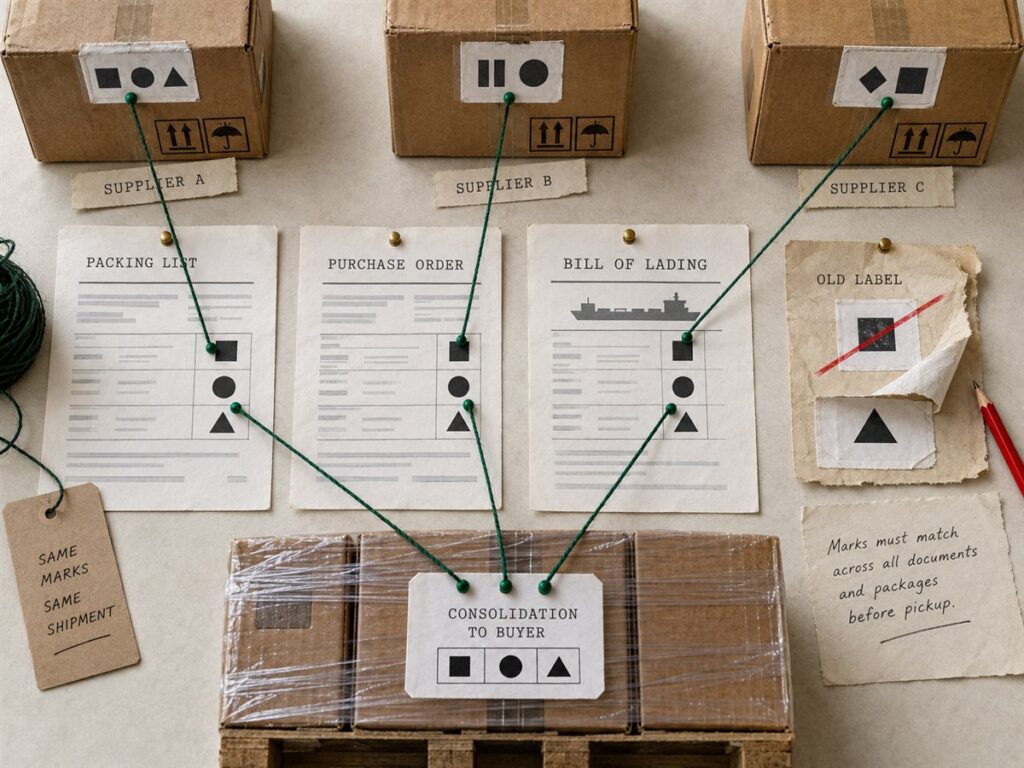
The physical shipping marks and the document fields for marks and numbers should describe the same shipment. Copy the approved text instead of retyping it from memory.
Compare these details across the carton mark, packing list, purchase order, commercial invoice, booking instructions, and any transport or customs record that uses them:
- Buyer or consignee identifier
- PO or other order reference
- Destination port or place
- Carton sequence and total package count
- SKU, short description, and quantity when shown on the mark
- Gross weight and dimensions when shown on the mark
A shipping mark does not replace the commercial invoice, packing list, customs filing, or transport document. If a China export filing contains a marks field, ask the exporter or declaration agent how the approved wording should appear.
Multiple suppliers may use different internal references. Create one buyer-side mark list before the cargo reaches a consolidation warehouse. If the document set uses unfamiliar international shipping terms, verify each field before copying it to the carton.
What Should Importers Check Before Pickup From China?
Approve and inspect the final shipping marks before the cargo leaves the supplier. Corrections are easier while the cartons remain at origin.
- Freeze the version. Put the exact text and layout in the purchase order and packing instructions. State which fields may change after packing.
- Approve a sample carton. Request a full photo showing the mark, other labels, carton seams, and visible faces. Correct the sample before mass packing.
- Check each carton group. Verify the buyer identifier, destination, PO, SKU, package sequence, and total count for each product or destination group.
- Reconcile the documents. Compare the final marks with the packing list, commercial invoice, booking instructions, and any marks-and-numbers field.
- Check separate requirements. Verify country-of-origin wording, dangerous-goods labels, FBA or retailer labels, and wood-packaging marks when they apply.
- Send the final file to the forwarder. Record who can approve a change and which version the warehouse should use at pickup or consolidation.
An old PO number, wrong destination, repeated carton number, or mark hidden under pallet wrap can lead to manual sorting, relabeling, or document corrections. The cost and delay depend on where workers find the error and who must fix it.
How Can Foresmart Support Marked Cargo From China?
Foresmart’s consolidated shipping from China service covers pickup, repacking, palletizing, and consolidation through 10 Chinese cities. For cargo from multiple suppliers, include the approved shipping mark, carton range, pallet count, and receiver labels in the pickup instructions. Also state which labels must remain on each carton and which ones the warehouse may add.
When requesting a quote from a freight forwarder, provide the origin city, destination, transport mode, and cargo type. Include the carton or pallet count, final dimensions, gross weight, and approved shipping mark. These details help the forwarder review the handling and document path before pickup.
Frequently Asked Questions
What Does a Supplier Mean by “Send the Shipping Mark”?
The supplier is usually asking for the exact wording or artwork for the outer carton. Check whether the request also covers FBA, retailer, carrier, or dangerous-goods labels, since those require separate instructions.
Does a Shipping Mark Need to Match the Bill of Lading?
If a bill of lading has a marks-and-numbers field, use the approved carton wording and package count. Apply the same rule to shipping instructions. Ask the forwarder which format applies when multiple suppliers share a shipment or the forwarder issues a house bill.
Should a Shipping Mark Include “Made in China”?
Not automatically. Country-of-origin marking is separate from the shipping mark. For U.S. imports, a foreign-origin article or its container generally needs the English country name unless an exception applies. The required location and method depend on the product, so confirm the rule with the importer or customs broker before mass printing.
What Should You Do If the Shipping Mark Is Wrong After Packing?
Stop the affected shipment at the earliest controllable point and send the approved replacement to the supplier, forwarder, and broker. Before relabeling, recheck the carton count, destination, origin marking, carrier or FBA labels, and affected documents. A correction after pickup may also require warehouse handling, carrier approval, or document changes.