
The Harbor Maintenance Fee (HMF) is a 0.125% U.S. port-use charge assessed on commercial cargo unloaded from vessels at qualifying water ports. Importers of record pay HMF alongside customs duties and other entry fees on CBP Form 7501. The basic calculation multiplies the shipment’s CBP appraised value by 0.00125, with no statutory maximum cap. Final liability depends on the discharge port, entry type, and applicable statutory exemptions, while air and pure border land freight remain exempt.
What Is the Harbor Maintenance Fee and When Does It Apply?
Established under the Water Resources Development Act and codified in 19 CFR § 24.24, HMF funds the maintenance of federal shipping channels. Assessment requires three simultaneous triggers: commercial cargo, transport on a commercial vessel, and unlading at a federally maintained U.S. port.
Commercial Vessel Cargo
HMF applies to commercial shipments entered for consumption (Entry Type 01), bonded warehousing (Entry Type 21), or foreign-trade zone admission. CBP assesses the fee specifically on maritime vessel unlading. Therefore, HMF functions as an official government user charge rather than an ocean carrier surcharge or forwarder fee.
Covered U.S. Ports
19 CFR § 24.24(b) defines covered ports as harbors maintained by the U.S. Army Corps of Engineers. This designation encompasses most major commercial coastal and Great Lakes terminals.
When booking shipping from China to the USA, verify the initial ocean vessel discharge port against this schedule. Cargo moving inland via intermodal rail or truck remains subject to HMF if the maritime container originally discharged at a qualifying coastal harbor.
Statutory Exemptions and Specific Entry Rules
Federal statutes exempt specific transactions, including bonded cargo moving under Transportation and Exportation (T&E) entries for direct export. Certain government goods and designated trade involving Alaska, Hawaii, or U.S. possessions also qualify for exemptions.
Under CBP Form 7501 instructions and 19 CFR § 24.24(c)(4), CBP waives HMF if the calculated fee equals $3 or less and represents the sole payment due on the entry. Entries carrying duties, taxes, or other customs charges pay the calculated HMF regardless of the amount.
Air Freight and Non-Vessel Transport Modes
Air cargo bypasses HMF entirely because airport arrivals involve no commercial maritime vessel or federally maintained waterway. Shipments crossing land borders from Canada or Mexico exclusively by rail or truck are likewise exempt.
Importers reviewing cross-border freight should verify the foreign port of entry to confirm whether any previous maritime leg triggered harbor maintenance liabilities.
How Do You Calculate the Harbor Maintenance Fee?
The Harbor Maintenance Fee equals 0.125% (expressed as a decimal multiplier of 0.00125) applied to the shipment’s CBP appraised customs value. Unlike customs duties, HMF maintains a flat statutory rate across all qualifying tariff classifications.
CBP Appraised Value as the Calculation Base
Customs valuation law under 19 U.S.C. § 1401a determines the appraised value, which also serves as the basis for calculating ad valorem customs duties.
The total shown on a vendor’s commercial invoice often differs from the entered customs value. Under U.S. valuation rules, importers deduct international ocean freight and marine insurance from CIF or CFR prices to isolate the foreign port transaction value. Calculating HMF against gross invoice totals instead of net appraised value causes importers to overpay port fees.
HMF Formula and Calculation Examples
Calculating the fee uses a standard formula:
CBP Appraised Customs Value × 0.00125 = Harbor Maintenance Fee
For an ocean container from Shenzhen with an appraised customs value of $80,000:
$80,000 × 0.00125 = $100.00

Because HMF has no statutory ceiling, a high-value shipment appraised at $600,000 incurs $750.00 in HMF. Importers should update calculations whenever post-entry amendments, assists, or price adjustments revise the declared customs value prior to liquidation.
Who Pays HMF and How Do You Check the Charge?
The legal Importer of Record (IOR) listed on the customs entry summary holds direct statutory liability for HMF payments. Licensed customs brokers routinely transmit funds to CBP on the importer’s behalf through Automated Broker Interface (ABI) daily statements. However, legal liability remains strictly with the importer.
Importer Liability and Payment Timing
Liability attaches at the moment cargo unlades at a covered U.S. port. On formal consumption entries, payment processes through standard CBP settlement alongside applicable tariffs and user fees.
Under DDP terms, an overseas supplier or forwarder often coordinates customs clearance. In these cases, the U.S. consignee must confirm whether the entry uses a foreign non-resident importer bond or the buyer’s own importer record.
HMF Identification on CBP Form 7501
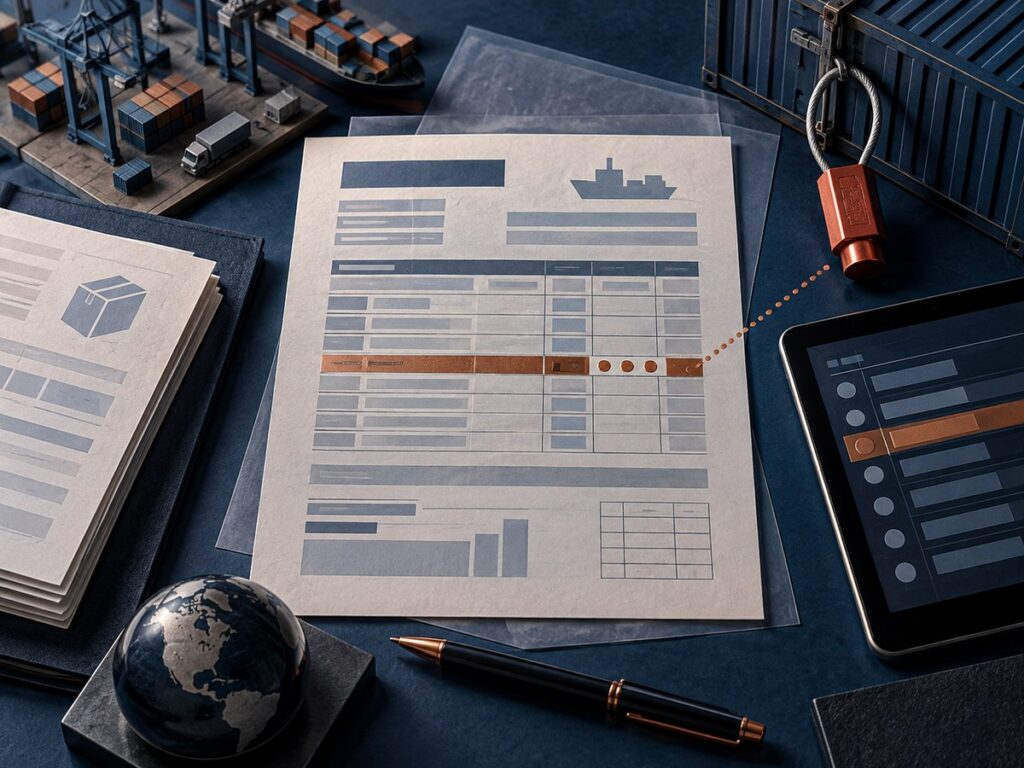
CBP records harbor maintenance collections in Block 39 (Other Fee Summary) of CBP Form 7501 under Fee Code 501. Because Block 39 aggregates multiple statutory charges into a single subtotal, importers should verify the fee itemization on the broker’s entry documentation.
Reconciling Code 501 against the declared value confirms whether the math reflects exactly 0.125% of the appraised merchandise value.
Invoice Reconciliation and Billing Verification
Arrival notices and logistics invoices often combine terminal handling charges, chassis fees, and local destination charges. Referencing a verified freight glossary helps accounting teams distinguish statutory customs assessments from carrier accessorial charges like demurrage or wharfage.
Reviewing clearance invoices requires six sequential checks:
- Match the entry summary number and designated IOR to CBP Form 7501.
- Confirm the vessel arrival terminal against CBP’s covered port schedule.
- Compare the HMF calculation base against Block 37 appraised customs value.
- Verify the line-item math at 0.00125 without added percentage markups.
- Reconcile Fee Code 501 to ensure no duplicate billing across broker and carrier invoices.
- Verify documentation for any claimed exemption or bonded transit status.
Executing a structured freight audit across CBP Form 7501, carrier bills of lading, and commercial invoices prevents duplicate disbursements and catches valuation errors early.
How Is HMF Different From MPF?
Both HMF and the Merchandise Processing Fee (MPF) appear on CBP Form 7501 for ocean entries. However, their statutory authorities, triggers, and fee limits differ:
| Comparison Attribute | Harbor Maintenance Fee (HMF) | Merchandise Processing Fee (MPF) |
|---|---|---|
| Regulatory Authority | 19 U.S.C. § 4461; 19 CFR § 24.24 | 19 U.S.C. § 58c; 19 CFR § 24.23 |
| Statutory Purpose | Maintenance of federal harbor navigation channels | Offsetting CBP commercial entry processing costs |
| Transport Trigger | Commercial maritime vessel unlading at covered ports | All transport modes (ocean, air, rail, truck, mail) |
| Fee Rate | Flat 0.125% (0.00125) of appraised value | Formal entries: 0.3464% (0.003464) of entered value |
| Fee Ceiling | No maximum cap (unlimited ad valorem fee) | Statutory caps (FY2026: ~$31.67 minimum, ~$614.35 maximum) |
| CBP Form 7501 Code | Fee Code 501 (Block 39) | Fee Code 499 (Block 39) |
| Free Trade Agreements | Generally not exempted under U.S. trade pacts | Often fully exempt under qualifying agreements (e.g., USMCA) |
Importers utilizing preferential tariff programs should note that an MPF exemption does not eliminate HMF liability on maritime arrivals. Each statutory fee requires independent qualification.
How Can Foresmart Clarify Costs on China-to-U.S. Ocean Quotes?
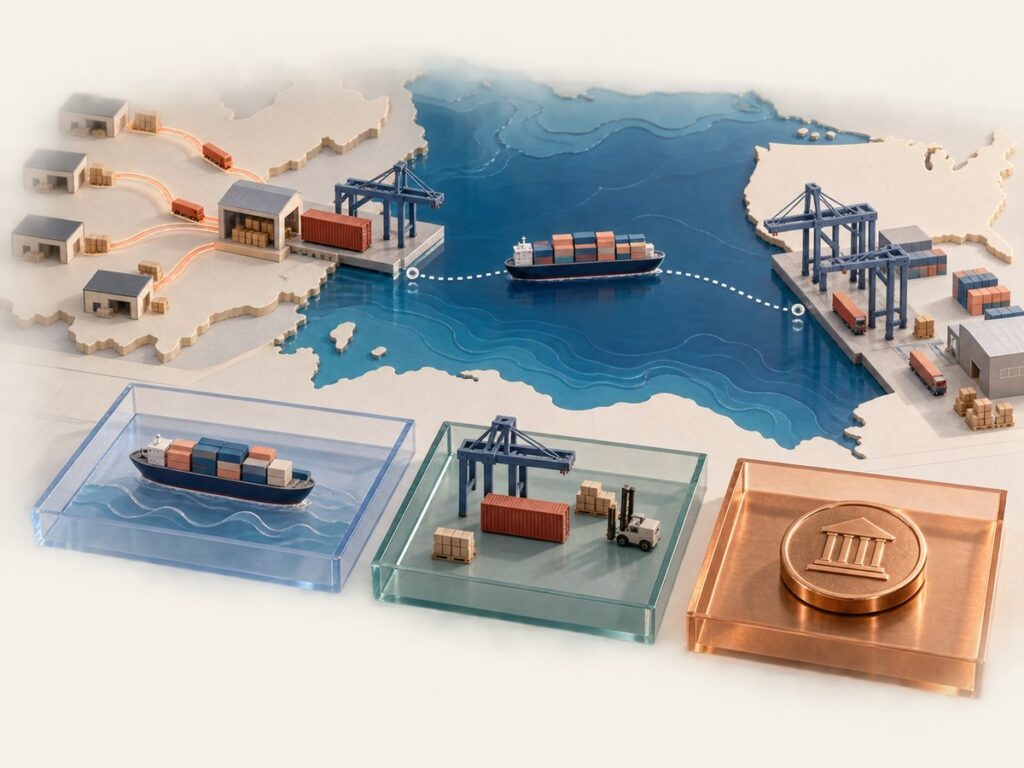
Managing landed costs on transpacific ocean shipments requires clear demarcation between carrier freight rates and official U.S. customs assessments. Working with an FMC-licensed (code 031352) China freight forwarder like Foresmart ensures freight quotations separate ocean transport from statutory import fees.
Providing detailed shipment parameters (cargo description, expected customs value, discharge port, and final delivery destination) allows Foresmart to build an accurate logistics quote. When buyers consolidate cargo from multiple Chinese factories, Foresmart coordinates origin documentation to ensure declared customs values reflect true FOB foreign port totals.
U.S. Customs and Border Protection determines final appraised values and liquidated fee amounts. However, upfront quote visibility helps finance and logistics teams anticipate HMF and MPF liabilities before containers depart Chinese ports.