
Importers can use a Sea Waybill when buyer and supplier terms do not require negotiable title control. The shipping line and destination port must also support paperless release. If supplier payment, documentary credits, or destination rules demand original-document security, select an alternative release method before submitting final Shipping Instructions.
What Does a Sea Waybill Change?
A Sea Waybill eliminates the need to present physical paper at destination, but it operates without negotiable document-of-title functions. The document functions as a receipt of goods and evidence of the carriage contract, listing the shipment parties, routing, and cargo details. Unlike a negotiable bill of lading, a Sea Waybill names a specific consignee and cannot transfer cargo ownership during transit.
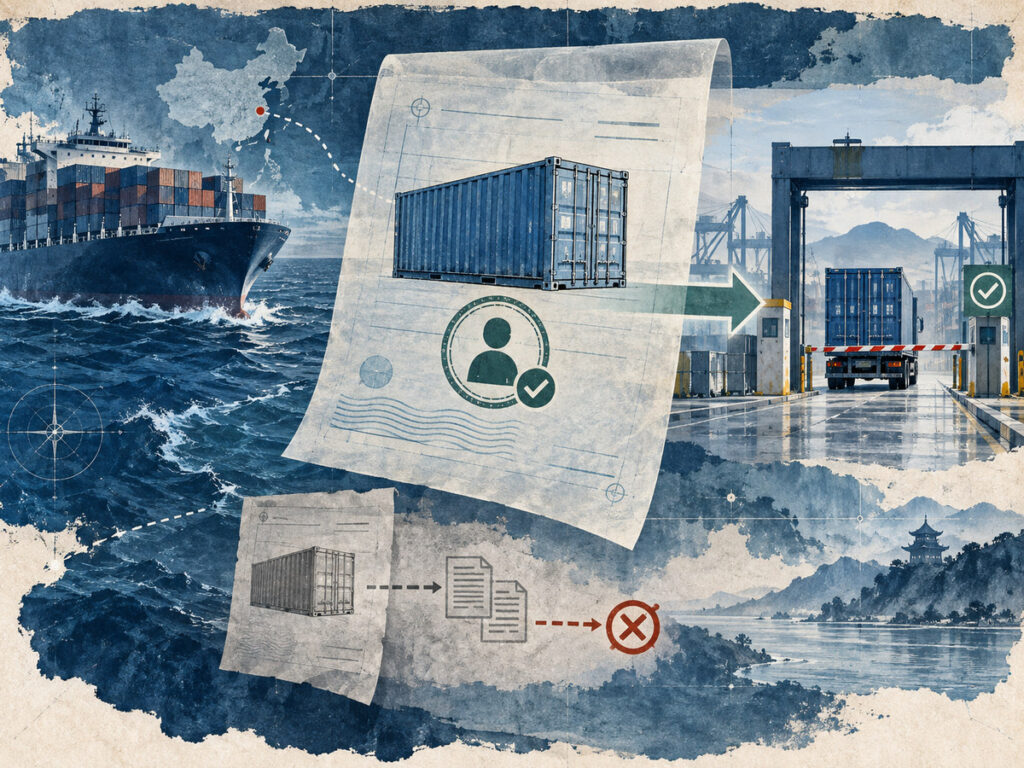
At the destination port, the named consignee claims the shipment upon proof of identity. Physical paper presentation is unnecessary, though standard release requirements still apply. Importers must clear customs, settle freight and terminal charges, and obtain the carrier’s Delivery Order. A Sea Waybill never substitutes for a commercial invoice, packing list, or customs entry declaration.
When Should Importers Use a Sea Waybill?
A Sea Waybill suits shipments where cargo ownership is settled before departure and no party requires physical document control. Importers typically select this option under specific commercial and operational conditions:
- Payment is settled upfront or through open-account terms, leaving the supplier with no need to hold cargo release.
- The shipment moves directly into company inventory rather than being traded or endorsed in transit.
- Financing terms do not involve letters of credit or bank collections that require negotiable paper.
- Consignee corporate details, delivery addresses, and customs registrations are confirmed.
- Both the ocean carrier and the destination port permit paperless waybill release.
Even with trusted suppliers, commercial terms govern release authority. Importers should review payment schedules and related sea freight shipping documents before committing to non-negotiable terms.
When Should Importers Avoid a Sea Waybill?
Do not select a Sea Waybill while financial, title, or destination release conditions remain open. Once the carrier issues the document, changing the release structure requires formal approvals, carrier fees, and manifest corrections.
Payment or Cargo Control Is Unsettled
Avoid a Sea Waybill if the supplier relies on transport documents to secure final payment. Because the waybill names the consignee directly, the ocean carrier can release cargo upon arrival once freight charges are settled. The supplier forfeits cargo release control as soon as the container is loaded and the waybill is issued.
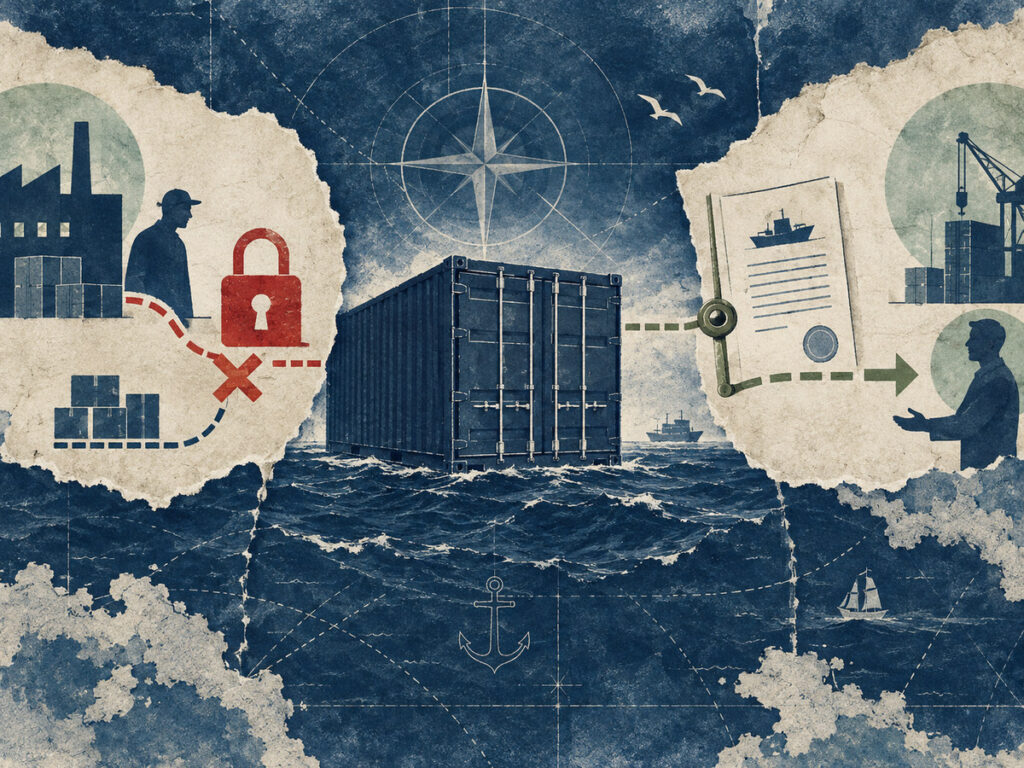
Similarly, cargo intended for resale during transit requires a negotiable transport document. Without an Original Bill of Lading made out “to order,” an importer cannot endorse title over to a secondary buyer while goods are afloat.
Bank Documents Require a Specific Transport Document
Most letters of credit require a negotiable Original Bill of Lading consigned “to order” so the issuing bank retains collateral on the goods. While UCP 600 Article 21 provides examination rules for non-negotiable Sea Waybills, banks accept them only when the credit explicitly permits that document type.

If a letter of credit calls for a marine or ocean bill of lading, presenting a Sea Waybill creates an immediate discrepancy. Importers, suppliers, and trade banks must align credit documentation requirements before the cargo departs.
Consignee, Carrier, or Destination Rules Are Unsettled
Do not issue a Sea Waybill if the receiving entity or delivery address might change during transit. Updating consignee details on a Sea Waybill requires formal carrier approval, shipper consent, and customs manifest corrections at destination.
Carrier acceptance and local port customs also vary by trade lane. Certain shipping lines hold releases until prepaid ocean freight settles, while some destination countries restrict paperless waybill clearances entirely. Importers should obtain written confirmation for their specific booking rather than assuming past approvals apply.
Sea Waybill vs. Original Bill of Lading vs. Telex Release
Each document structure serves a distinct operational purpose, even though both Sea Waybill and Telex Release allow paperless cargo pickup.
| Decision Point | Sea Waybill | Original Bill of Lading | Telex Release |
|---|---|---|---|
| Paper original issued at origin? | No physical original printed | Yes, usually three originals | Yes, physical originals printed first |
| Physical surrender at destination? | No, identity verification only | Yes, at least one endorsed original | No, originals surrendered at origin |
| Document negotiability | Non-negotiable | Negotiable if issued “to order” | Non-negotiable after origin surrender |
| Primary use case | Open-account or fully paid cargo | Unpaid cargo, bank L/Cs, or resale | Payment settled after original issuance |
| Key importer checks | Consignee accuracy and port rules | Courier tracking and endorsement | Surrender receipt and carrier EDI release |
Importers often confuse a Telex Release with a Sea Waybill. A Telex Release requires printing paper bills of lading, surrendering them at origin, and paying carrier surrender fees. A Sea Waybill issues no paper from the start, avoiding telex processing fees and courier delays entirely.
What Should Importers Check Before Issuance?
Complete these verification steps before the carrier’s Shipping Instructions (SI) deadline. Changing documentation after container loading adds amendment penalties and port delays.

- Confirm that supplier payment is settled and both parties agree in writing to a non-negotiable release.
- Review financing agreements to verify that issuing banks permit a Sea Waybill under UCP 600 rules.
- Check consignor and consignee details against destination customs registrations to prevent manifest amendment charges.
- Verify that the operating ocean line and destination discharge terminal accept paperless releases for your commodity.
- Specify “Sea Waybill” on the shipping instructions before the carrier cutoff to prevent default Original B/L issuance.
- Reconcile container numbers, seal numbers, piece counts, and cargo descriptions between the draft waybill and commercial invoice.
- Arrange destination charges and customs clearance early so the carrier agent can issue the Delivery Order upon arrival.
Retain written confirmation of the waybill instructions in the shipment file. When carrier paperwork includes unfamiliar international shipping terms, request written clarification on release procedures before the vessel departs.
How Can Foresmart Support China-Origin Sea Freight?
Managing transport documentation requires balancing supplier payment security against destination release speed. As an FMC-licensed NVOCC and China freight forwarder, Foresmart coordinates FCL and LCL shipments with major ocean carriers to ensure proper document issuance.
For booked cargo, operations teams review supplier documentation, booking parameters, and customs declarations within a unified shipment file. This review confirms that shipping instructions, party designations, and release requests match carrier cutoffs and destination port rules.
Importers can submit their trade route, cargo specifications, commercial terms, and preferred release format before the Shipping Instructions deadline. Foresmart integrates documentation audits directly into its sea freight from China service, helping cargo move through destination customs without courier delays or release holds.