
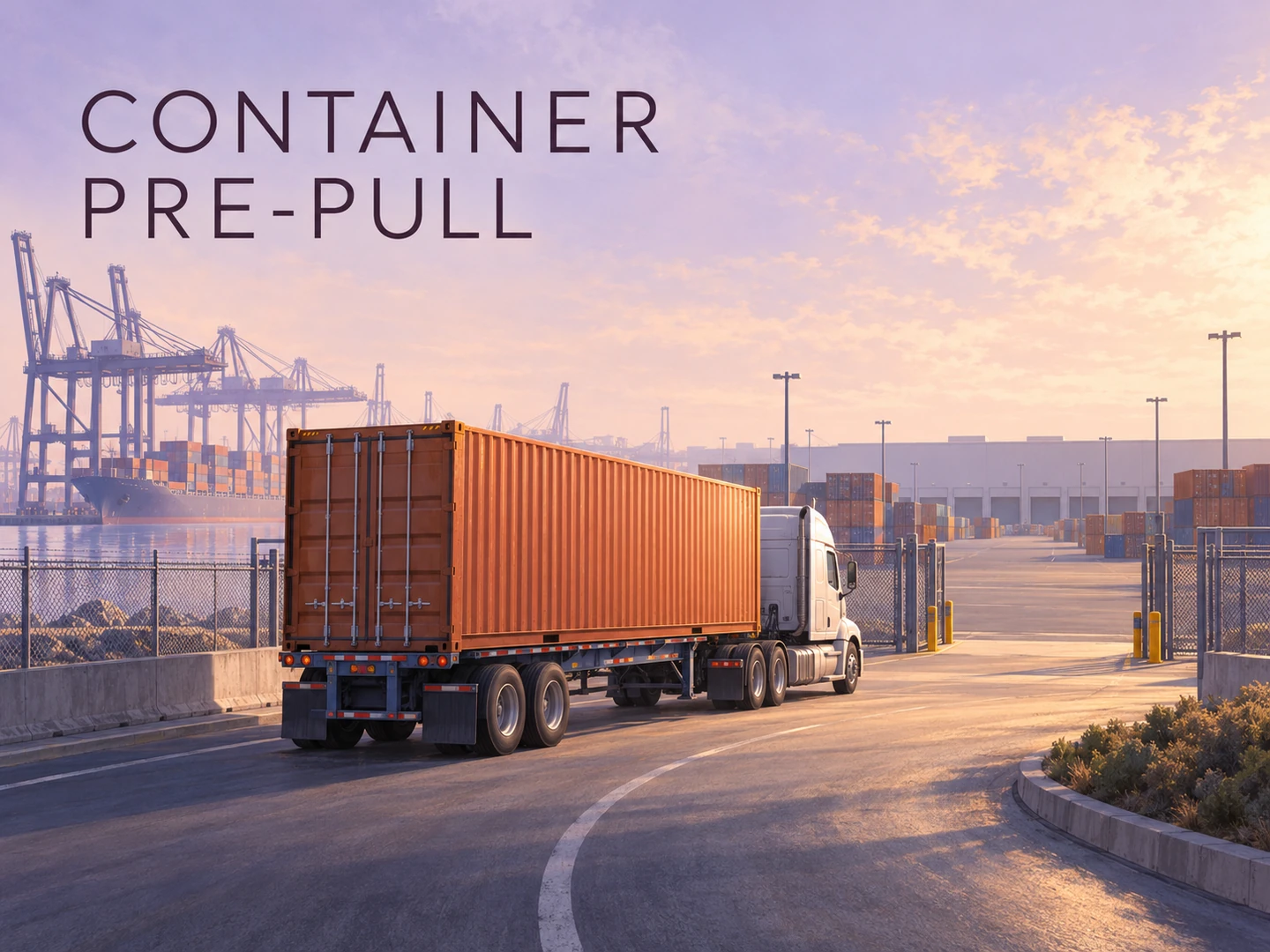
Arrange a container pre-pull when the terminal pickup deadline and the warehouse’s receiving window can’t be met with one direct delivery. The trucker collects the loaded container, holds it at an agreed yard, and delivers it later, which can cover a scheduling gap or limit terminal charges on a full-container-load (FCL) import. Before you approve it, check release, yard availability, total added cost, and the empty-return deadline, and raise the question as soon as the conflict shows up so there’s still time to compare options.
What Is a Container Pre-Pull?
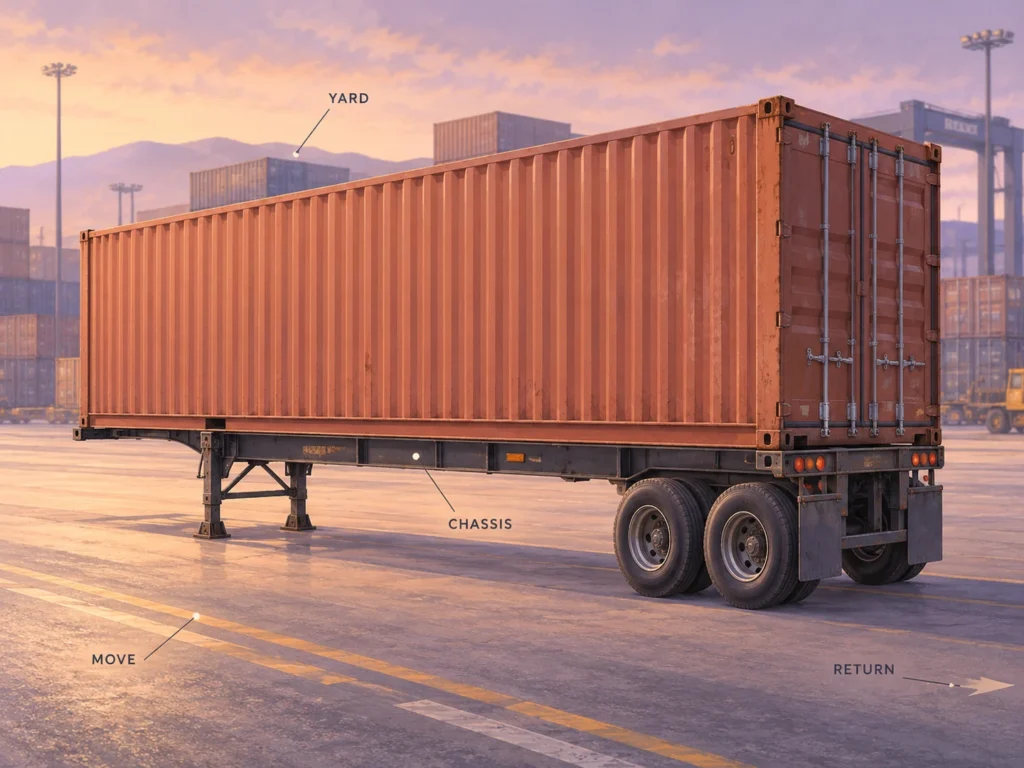
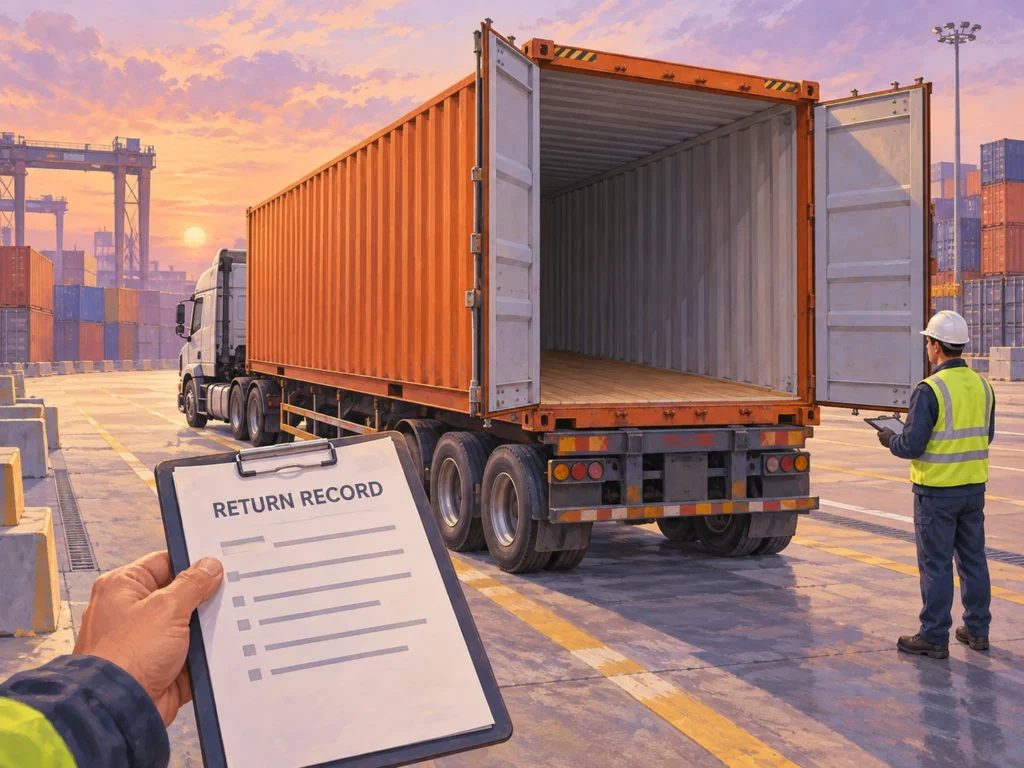
In North American container trucking, a pre-pull splits terminal pickup and final delivery into two moves, with the loaded container waiting at a staging yard in between. The goods stay inside the container the whole time, and a trucking yard isn’t a receiving warehouse, so confirm the actual holding location before you approve the move.
When Does a Pre-Pull Make Sense?
Consider a pre-pull when the container can leave the terminal but can’t reach an accepted receiving slot through a direct move.
Receiving After the Last Free Day
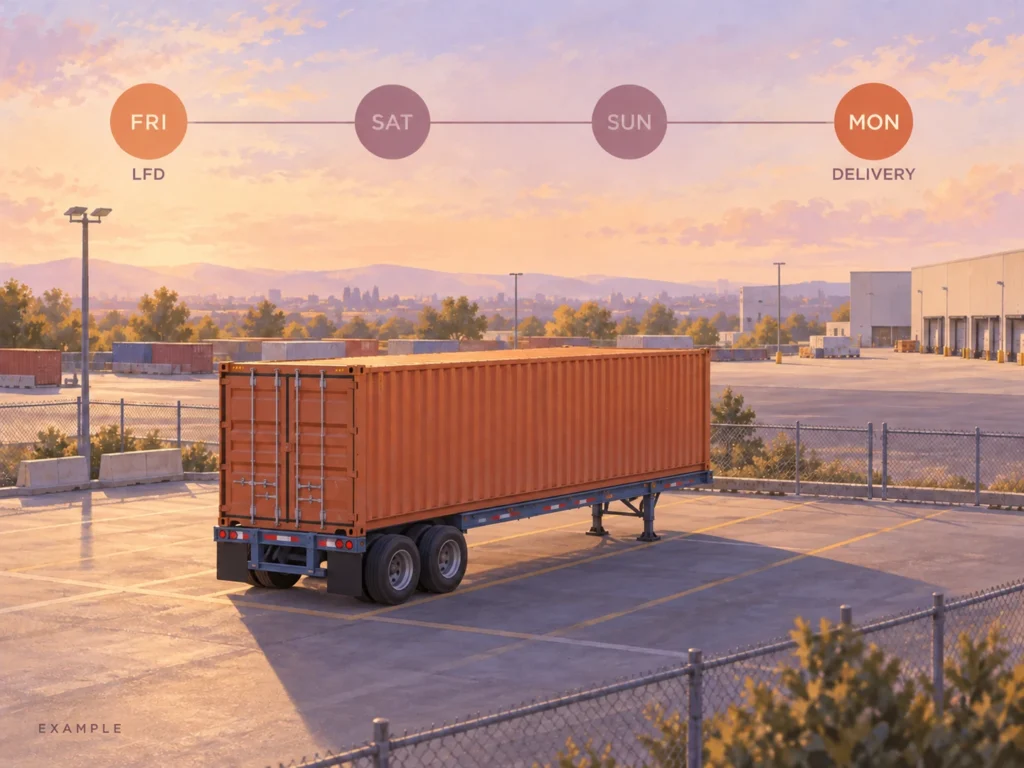
A pre-pull is worth pricing when the warehouse’s first available appointment falls after the container’s Last Free Day (LFD), the deadline for the applicable free time. Confirm the LFD with the terminal or carrier, including how weekends and holidays count, and ask whether the receiver can take an earlier slot. If direct delivery fits inside both the pickup and receiving windows, the extra yard move just adds cost.
Say the confirmed LFD is Friday and the warehouse can only receive on Monday. Pulling the container before the deadline could cover the weekend, but only once you’ve confirmed the weekend yard cost, the equipment terms, and the Monday delivery. A warehouse closure or a full dock schedule raises the same question.
Meeting an Early Delivery Appointment
An early receiving slot can justify staging even while terminal free time remains. Ask dispatch whether terminal hours, pickup timing, and the drive to the warehouse allow a same-day collection and delivery. If they don’t, pulling the container ahead of time may make the appointment workable, so set the pickup date from the confirmed delivery plan.
How Do You Decide Whether Pre-Pull Is Worth the Cost?
Approve a pre-pull when it solves a real delivery constraint at an acceptable total cost. Ask for the pre-pull fee and any accessorial charges next to the cost of the alternatives, since a low pre-pull fee tells you little if daily storage and equipment charges sit outside it.
| Cost Item | Question to Settle Before Approval |
|---|---|
| Pre-pull and trucking | Does the fee cover the pull, the later delivery, and the empty return? |
| Yard storage | What are the daily rate, minimum billing period, and weekend or holiday terms? |
| Chassis use | How long is the rental period, what are the daily charges, and is positioning billed separately? |
| Container detention | When does equipment free time start, and what’s the accepted empty-return deadline? |
| Terminal charges | What applies if the container stays at the terminal until the alternative pickup date? |
| Delivery changes | What’s charged for a rescheduled appointment, waiting time, cancellation, or another delivery attempt? |
Demurrage and detention can apply at different stages of the container journey, and moving the container out of the terminal doesn’t end its equipment-use terms. Where detention is charged under separate import rules, time outside the terminal can count against the allowance for returning the empty. Check the actual carrier agreement, including any combined free-time arrangement.
Then compare the extra cost of staging, through accepted empty return, with the extra cost of leaving the container at the terminal, using the same receiving date and delivery scope for both. If you need the pre-pull mainly to make an appointment, judge that scheduling benefit separately from any fee savings a quote claims.
What Must Be Confirmed Before Dispatch?
Before the truck leaves, confirm that the container can be picked up and that the staging plan connects to delivery and empty return.
Release and Pickup Access
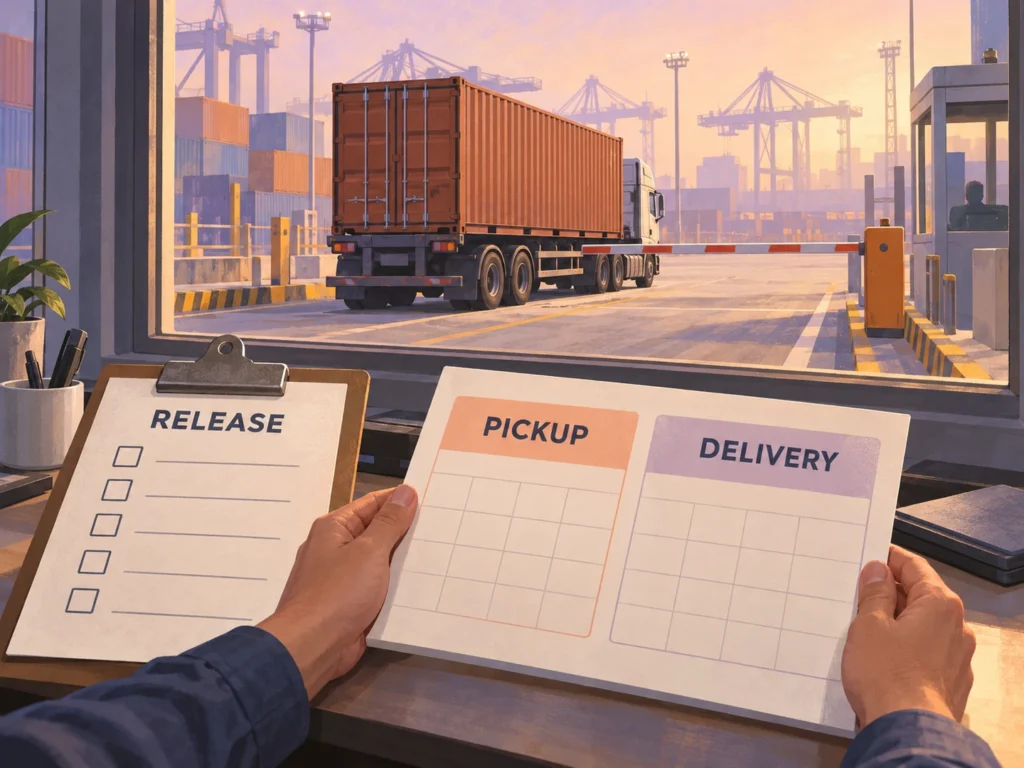
Vessel arrival doesn’t mean a truck can collect the container, and a pre-pull request can’t override a release restriction. Check these before setting a pickup date:
- Discharge from the vessel
- Customs status
- Shipping-line release
- Terminal holds
- Pickup appointment, where the terminal requires one
Follow shipment events with carrier container tracking, then confirm pickup availability with whoever controls release. Give dispatch the container number, terminal, pickup reference, and current LFD, and if a hold remains, find out who has to clear it before you set a firm collection plan.
Treat the terminal pickup and the warehouse delivery as separate appointments, because holding one doesn’t secure the other. Have the trucking provider confirm that both windows fit the planned moves.
Yard, Delivery, and Empty Return
Get the staging and onward movement confirmed together:
- Yard address, and the yard’s acceptance of the loaded container and cargo
- Planned pickup date and expected holding period
- Chassis arrangement and equipment charging period
- Receiver’s accepted delivery date, time, and unloading arrangement
- Empty-return location, deadline, and the party arranging the return
- Contact authorized to approve extra costs or schedule changes
Name one coordinator to keep the receiver, trucking provider, and release contacts on the same plan. Ask for pickup confirmation after gate-out and an update if the receiving appointment changes, and recheck yard and equipment costs before extending the holding period.
Keep movement records through empty return. Delivering to the warehouse and unloading the cargo don’t show that the carrier has accepted its equipment back, so confirm the required return event and keep that record.
Planning a Container Pre-Pull for FCL Delivery From China
As a China-based freight forwarder, Foresmart coordinates FCL shipments from supplier pickup and export handling through ocean transport and the agreed destination handoff, including multi-supplier orders received and consolidated in China. Share the warehouse’s receiving restrictions while the shipment is being planned, so the route, container, and delivery conditions get reviewed together.
Foresmart’s door-to-door shipping scope covers customs-document coordination and final-mile planning for equipment, appointments, site access, and proof of delivery. If a pre-pull might be needed, send the container status, destination terminal, LFD, delivery address, and accepted receiving slot, then ask whether a local pre-pull is available and request a proposal with the holding period, onward delivery, and itemized charges. If another party controls the booking, name its release and trucking contacts so any proposed involvement follows the existing arrangements.
Frequently Asked Questions
Is Pre-Pull the Same as a Drop-and-Pick Delivery?
No. A pre-pull stages the loaded container at a yard before delivery, while a drop-and-pick leaves it at the receiving site for unloading and collects the empty later, and one shipment plan can use both. A live unload instead keeps the driver at the receiving site while the cargo comes off.
Does Door-to-Door Shipping Include Pre-Pull Charges?
Only if the written quote includes the staging work and its charges. Check the pre-pull move, yard storage, chassis use, and later delivery against the itemized quote, and if the receiving schedule changes after booking, ask for an updated scope and price before approving extra work.
Can a Pre-Pulled Container Be Unloaded at the Storage Yard?
Only under a separate handling agreement with a facility that can handle the cargo, since a pre-pull covers staging the loaded container. If you want the goods unloaded or transferred, ask for the handling method, the facility, the equipment-return plan, and the separate charges before dispatch.