
container from China is rolled, get the specific reason it stayed behind before you accept the new departure date, because a capacity roll needs carrier follow-up while missing documents or a pending release need corrective work. Then verify the replacement booking and revise delivery plans only from confirmed dates.
Confirm What Happened to Your Container
Ask your forwarder for the specific non-loading reason and the carrier or terminal record behind it. A note that only says “rolled to the next vessel” gives no cause.
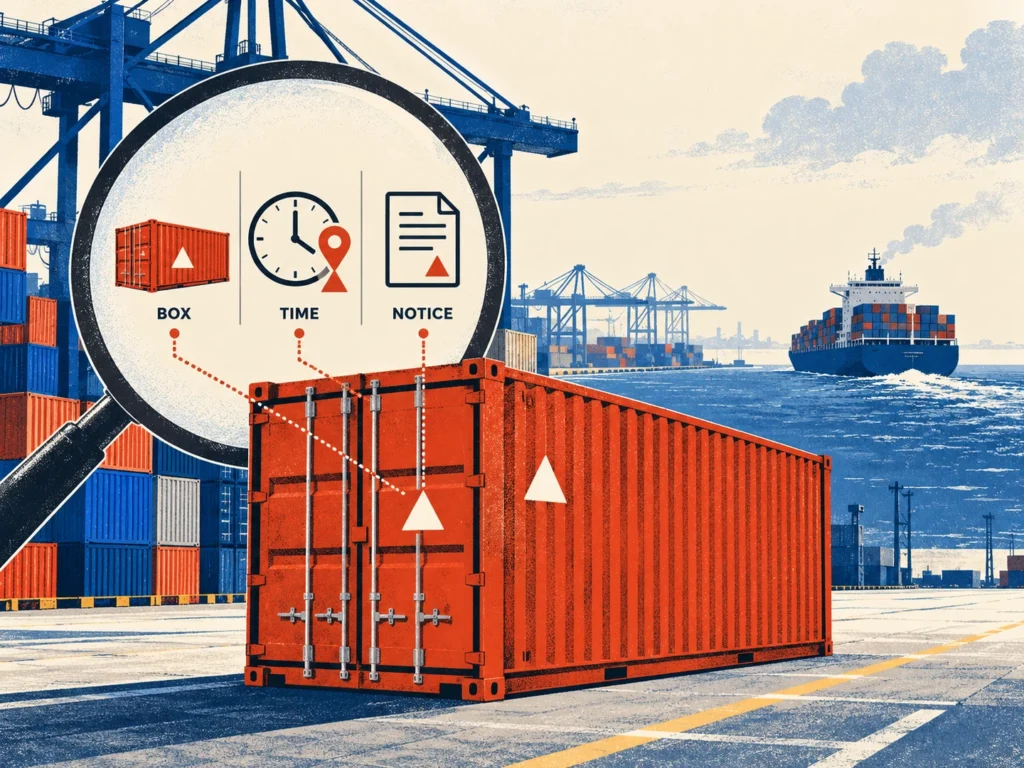
Check the roll notice against your shipment file:
- Booking number and every affected container number
- Original vessel, voyage, and loading port
- Latest completed movement, with location and timestamp
- Original cutoffs and your actual submission and gate-in times
- The carrier or terminal notice, and when the forwarder received it
When one booking covers several containers, identify each affected box and plan loaded and unshipped containers separately.
Check whether the vessel sailed without your container or the carrier canceled the sailing or port call. A blank sailing changes the service schedule, while a container-specific loading failure needs its own reason and corrective action even when another sailing is available. A low freight rate, a busy port, or a late update may coincide with the roll, but none of them explains why this container stayed behind.
Match the Non-Loading Reason to the Next Action
Assign each open issue to the party that can resolve it, and agree on the record that will close it. The contacts below are operational follow-up roles; they do not settle contractual liability or who pays.
| Reported Reason | Confirm and Resolve | Follow-Up Contact | Closeout Record |
|---|---|---|---|
| Carrier capacity or allocation | Confirm the cargo met loading requirements; request reassignment and its space status. | Forwarder’s booking team and carrier | Carrier reason notice and amended booking confirmation |
| Terminal or vessel operating constraint | Identify the restriction and whether it still affects the container. | Forwarder, carrier, and terminal contact | Updated operating status and the carrier’s loading arrangement |
| Missed terminal gate-in cutoff | Compare the actual gate-in time with the cutoff; get instructions for the revised voyage. | Origin trucker and forwarder | Gate-in receipt and acceptance for the new voyage |
| Missing or rejected shipping instructions | Find the missing field or rejection reason; correct and resubmit through the required channel. | Document preparer and forwarder’s documentation team | Submission acknowledgment and carrier confirmation that the issue is resolved |
| Missing or incorrect VGM | Confirm the packed container’s verified gross mass and correct the submission. | Responsible shipper and appointed submitting party | Corrected VGM record and acknowledgment of receipt |
| Export clearance or release pending | Identify the hold and the required response through the appointed export representative. | Exporter, customs representative, and forwarder | Release record and confirmation that the loading hold is cleared |
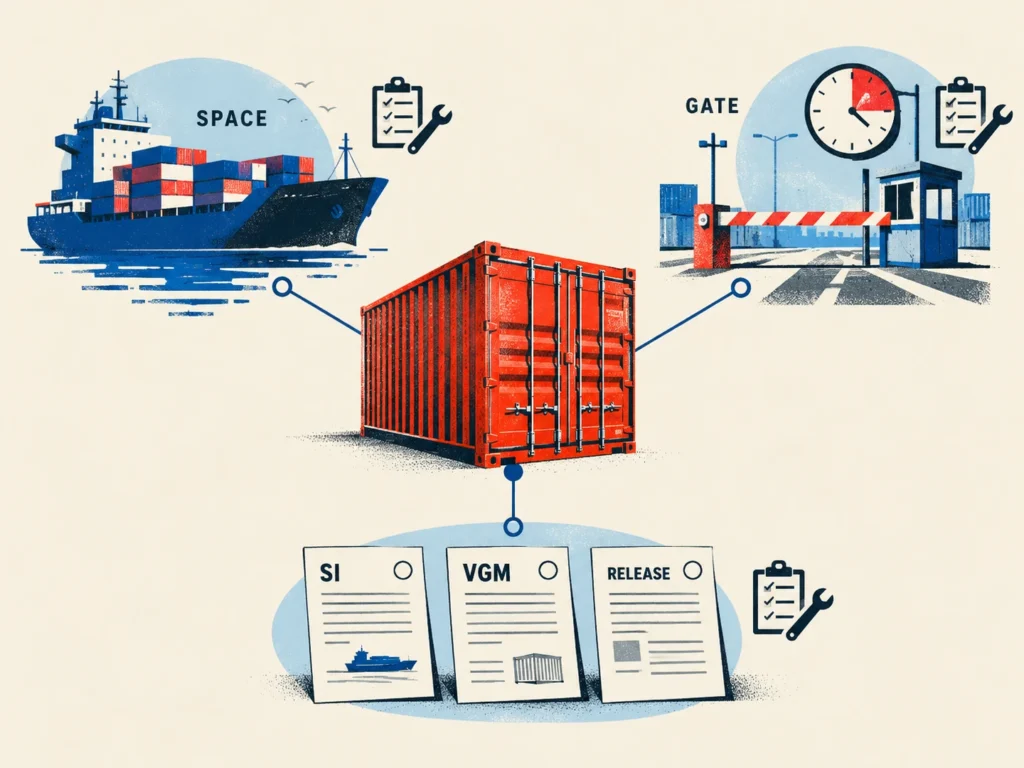
VGM (verified gross mass) is the total weight of the packed container. SOLAS requires a VGM before loading, but submitting one does not entitle the container to vessel space. Check that the relevant parties received the figure.
Electronic shipping instructions (ESI) need the same status check: prepared, sent, and accepted are three different milestones. If the ESI cut-off was missed, ask whether the corrected instructions meet the revised voyage’s requirements, since the carrier may not carry them forward automatically.
Keep an issue log with each open task, its contact, the evidence needed, and the next update time. Track each problem separately, because correcting a document does not clear an unrelated terminal hold.
Verify the Replacement Booking and Actual Loading
A replacement plan is usable when it ties a named voyage to your container and shows which conditions are still open. Follow the container until the record shows it loaded.
Confirming the Revised Booking
Request an amended booking confirmation or written carrier confirmation covering:
- Replacement vessel and voyage
- Loading and discharge ports, including any changed transshipment routing
- Space status and remaining conditions
- Estimated departure and arrival dates
- Revised cargo and document cutoffs
- Status of every issue that prevented the original loading
Ask the forwarder whether the new sailing is a suggestion, a booking awaiting acceptance, or a carrier-confirmed booking. A confirmed booking still depends on its stated conditions and actual operations.
No standard number of days applies after a roll. The next departure may have different space, routing, or connections, so plan from the revised shipment-specific schedule and keep any unconfirmed leg marked as unconfirmed.
Following the Container Through Loading
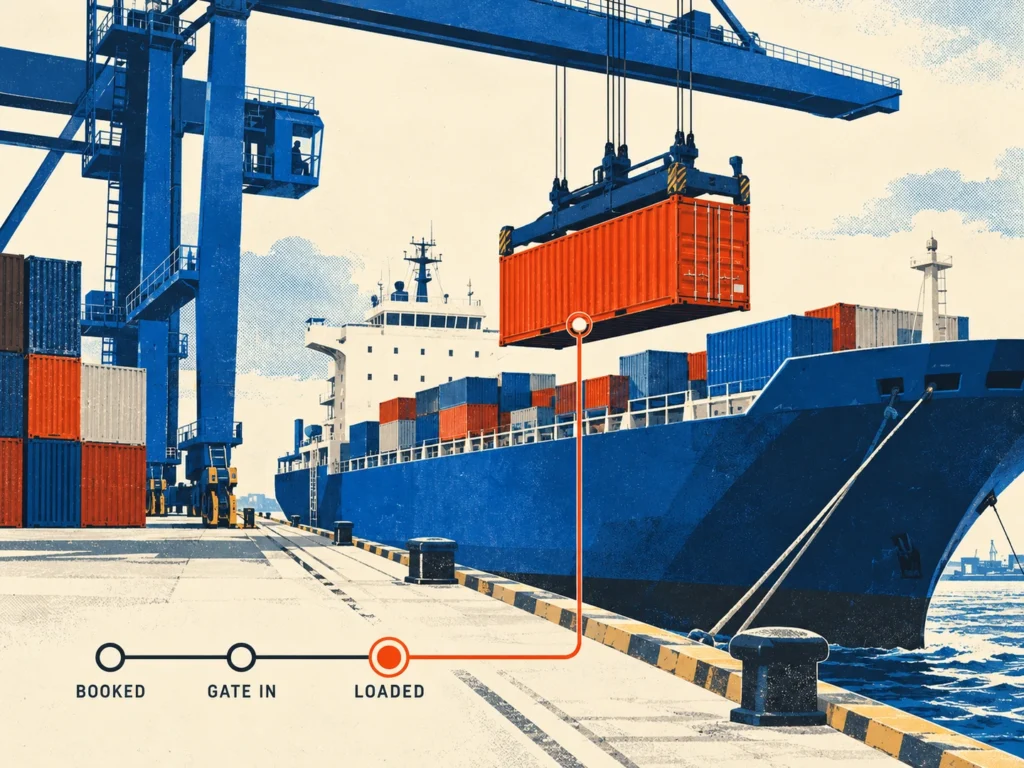
Check container tracking for an actual loaded-on-vessel event tied to the correct box and voyage. The vessel’s departure time only shows that the ship sailed.
If tracking conflicts with the forwarder’s update, ask for the underlying carrier or terminal confirmation and note when each record was last updated. Clarify a stale display before you treat the container as loaded or rolled again.
On a transshipment route, confirm loading onto each onward vessel when that connection falls due. Agree on who reports the next milestone and by when, so you can follow up against that commitment instead of waiting for another general schedule notice.
Adjust Delivery Plans, Costs, and Escalation
Notify affected teams promptly, keeping confirmed shipment facts separate from working estimates. You can report a missed loading before the replacement plan is complete, as long as the remaining uncertainty is clear.
Updating the Delivery Window
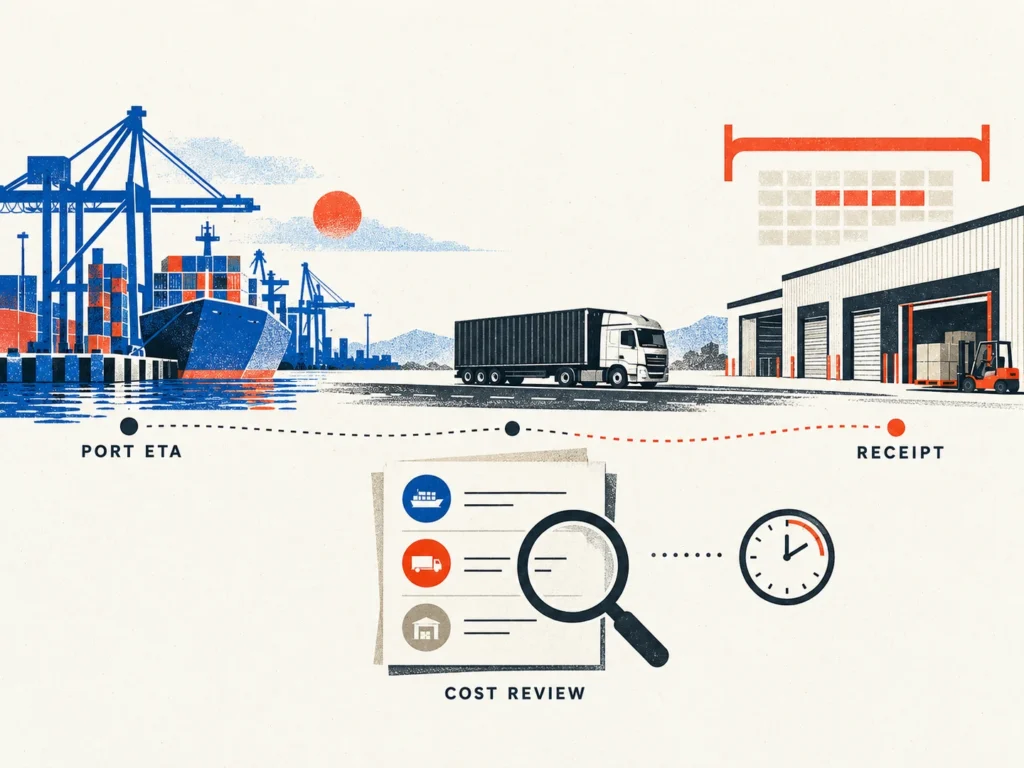
Use the revised port arrival estimate to reassess the warehouse receipt date with your destination logistics team, allowing for the actual import, cargo-release, trucking, and receiving arrangements. Port ETA is not a final delivery commitment.
Tell customers, warehouses, and inventory planners what changed, the current expected window, and when the next update is due. Flag the purchase orders or stock items tied to this container, and reconfirm receiving appointments once the destination team can support the new dates.
Checking Additional Charges
Request an itemized cost review for the period and changes involved. Depending on the shipment, it may cover terminal storage, equipment free time, extra handling, document amendments, trucking changes, and booking cancellation or rebooking.
For each proposed charge, ask for its basis, charging period, applicable free time, payer, and approval status. Also check whether the revised booking changes the freight rate or its validity.
Keep the original booking, submission timestamps, gate-in record, and roll notice together to support any correction or waiver request. A waiver stays pending until the relevant party confirms it in writing, and payment responsibility depends on the applicable agreements and circumstances.
Deciding When to Escalate
Go to the booking manager when the revised plan misses your required receipt date, the same blocker stays unresolved, the promised booking confirmation is overdue, or the container is rolled again. Bring the issue log, confirmed cargo status, latest acceptable receipt date, and cost limit, then ask what can change and which approvals are needed. Before canceling or moving the container, confirm access, release requirements, equipment, acceptance on the replacement booking, and total cost.
Then fix the cause you identified. If supplier data caused the miss, build the document handoff into your next ocean freight booking from China. If carrier capacity caused it, review booking conditions and alternatives before the next dispatch.
Reviewing a China Shipping Plan After Rolled Cargo
Foresmart’s sea freight from China covers full-container-load (FCL) shipping with origin coordination, export handling, and destination delivery options matched to the agreed route, and the team can compare sailings by cutoff, routing, equipment, destination charges, and delivery requirements. For multi-supplier orders, Foresmart also coordinates supplier readiness, receiving, cargo identification, and agreed repacking or palletizing, so supplier records and cargo are matched before dispatch, especially when factories have different ready dates.
To have a global freight forwarder check the route and cargo against your revised deadline, send Foresmart the original booking, roll notice, container status, open issues, cargo details, and required delivery date, and ask for a written proposal showing the workable scope, remaining confirmations, and cost basis. If another provider holds the booking, establish who controls the booking and the container before agreeing to any transfer.
Frequently Asked Questions
Does a Draft Bill of Lading Prove My Cargo Was Loaded?
No. A draft bill of lading is a document for review, so check the final transport document’s vessel and shipped-on-board details against the actual loading record, and ask the issuing party to explain any discrepancy before you rely on it as shipment evidence.
What Should I Check if My LCL Shipment Is Rolled?
Ask whether the roll affects the whole consolidated container or only your goods. In less-than-container-load (LCL) shipping, your cargo shares a container with other shippers, so match your shipment reference to that container and its revised sailing. A warehouse receipt only shows that your goods reached the consolidation warehouse.
Will Cargo Insurance Cover Losses From a Rollover?
It depends on your policy wording and endorsements, so confirm with your insurer or broker before assuming coverage. Ask specifically about delay-related losses, extra expenses, and notification requirements, and keep in mind that any carrier compensation arrangement is separate from your cargo insurance.