
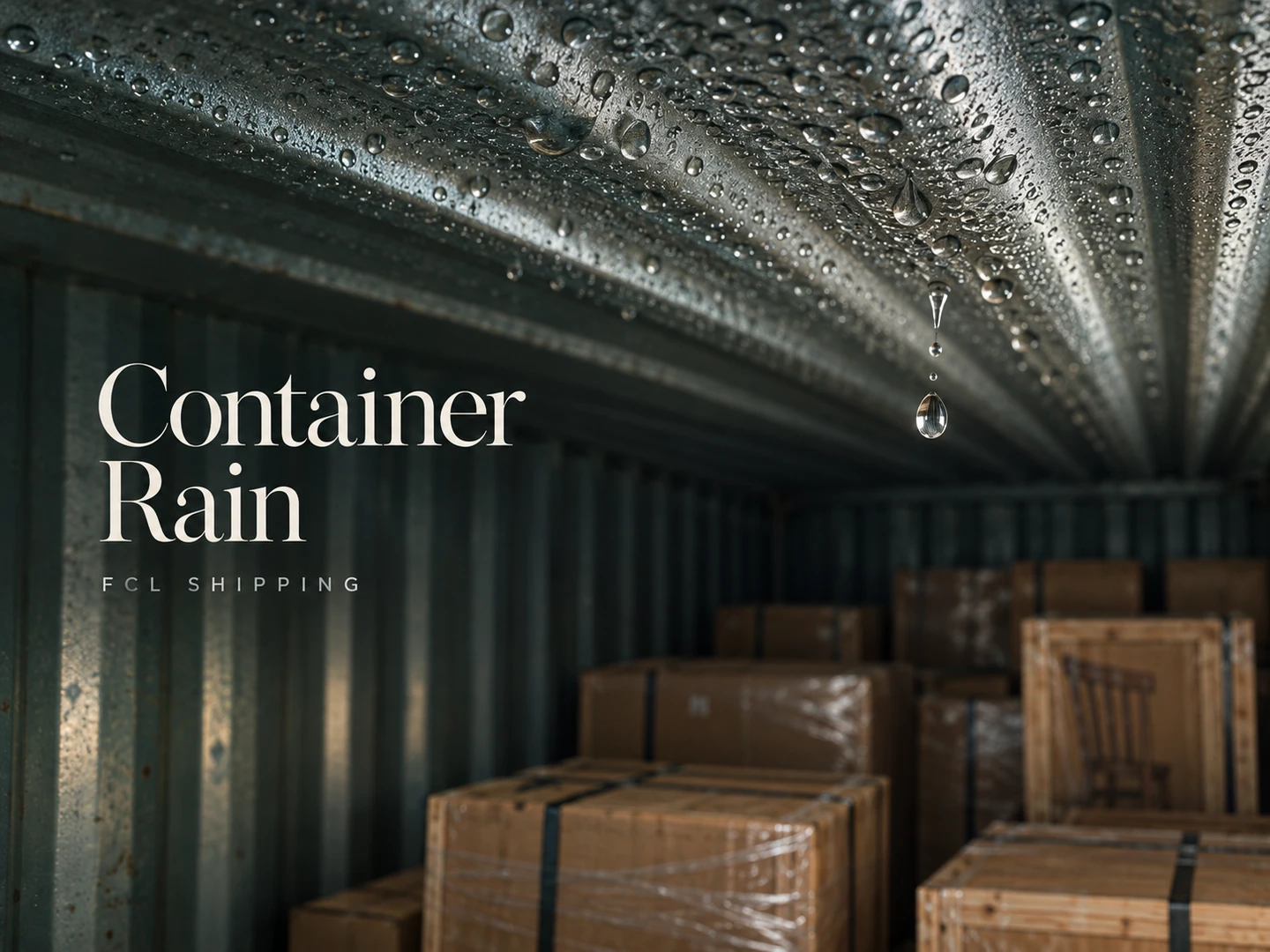
To reduce container rain, load the cargo and packing dry, check the container before it’s packed, and match the protection to the goods. Container rain is the condensation that forms inside a shipping container and drips onto the cargo. On a full-container-load (FCL) shipment of furniture, wood products, or fabrics, write these requirements into the supplier’s production and packing instructions, because a carton that looks dry at dispatch can still seal damp goods inside.
Why Does Container Rain Form During Ocean Shipping?
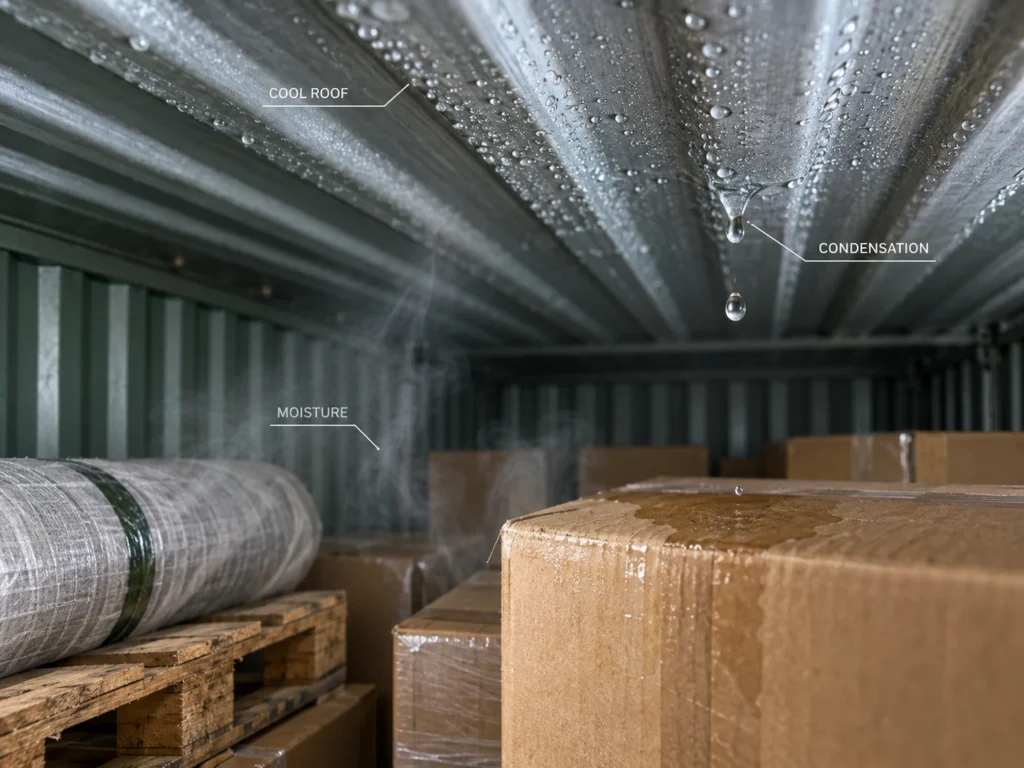
Condensation forms when a container surface cools below the dew point, the temperature at which the air inside can no longer hold its moisture, so water collects on the roof and drips onto the top cartons. The moisture rides in with the load: wood, textiles, cardboard, pallets, and the dunnage used for blocking and bracing all carry it, and IMO’s informative material on the CTU Code notes that cargo packed in a humid climate releases that water as temperatures change at sea. Wet cartons can also come from a leaking roof or door seal, which is a container defect rather than condensation, so check for both before deciding the cause.
Which Cargo Needs Moisture Protection?
Check each packed unit part by part, because a wardrobe, its hinges, its carton, and the pallet under it react differently to the same moisture.
| Material or packing component | What moisture can affect | What the buyer should specify |
|---|---|---|
| Wood furniture and timber components | Dimensional change, staining, or mold | Moisture acceptance criteria and protection suited to the construction |
| Fabrics and upholstered items | Dampness, staining, or mold | Dry condition before wrapping and a protective pack |
| Ferrous metal hardware and fittings | Corrosion | A compatible corrosion-protection method for exposed parts |
| Cartons, wooden pallets, and crates | Weaker cartons and moisture released into the container | Dry storage and a condition check before packing |
The CTU Code puts rising corrosion risk for ferrous metals at a relative humidity of 40% and rising mold risk on organic materials at 75%, so metal fittings packed with timber or fabric can corrode in air that is still too dry for mold. When several suppliers’ goods share one container, ask the packing team which items release moisture, which are sensitive to it, and how the two will be separated.
How to Reduce Container Rain Risk Before Loading
A standard dry container’s small vents only equalize pressure, Hapag-Lloyd’s packing guidance notes, so whatever moisture is sealed in at loading stays in for the voyage.
Keep Products and Packing Materials Dry
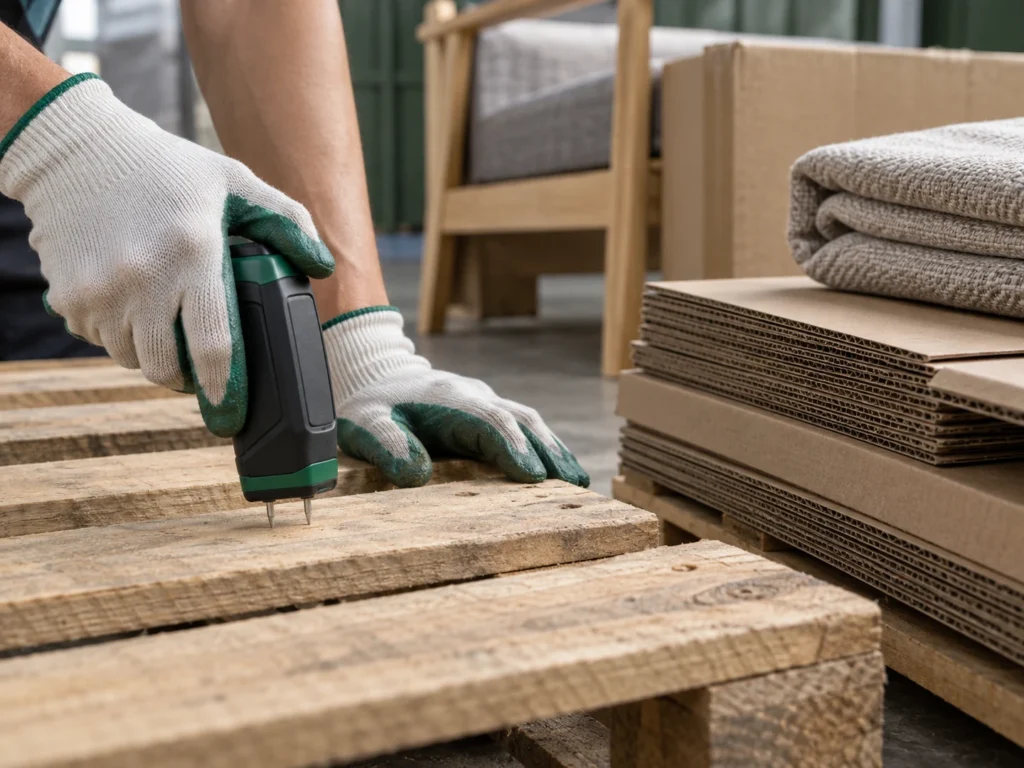
Dry cargo can still go in on damp pallets, and export packaging stored outdoors or in damp rooms absorbs moisture unnoticed, so set acceptance criteria for the goods and every packing material: what is measured, where, and with which instrument. Fit the criteria to each material instead of applying one timber moisture percentage to everything, and recheck any batch that gets wet after inspection, since the earlier reading no longer applies.
Check the Container and Loading Conditions
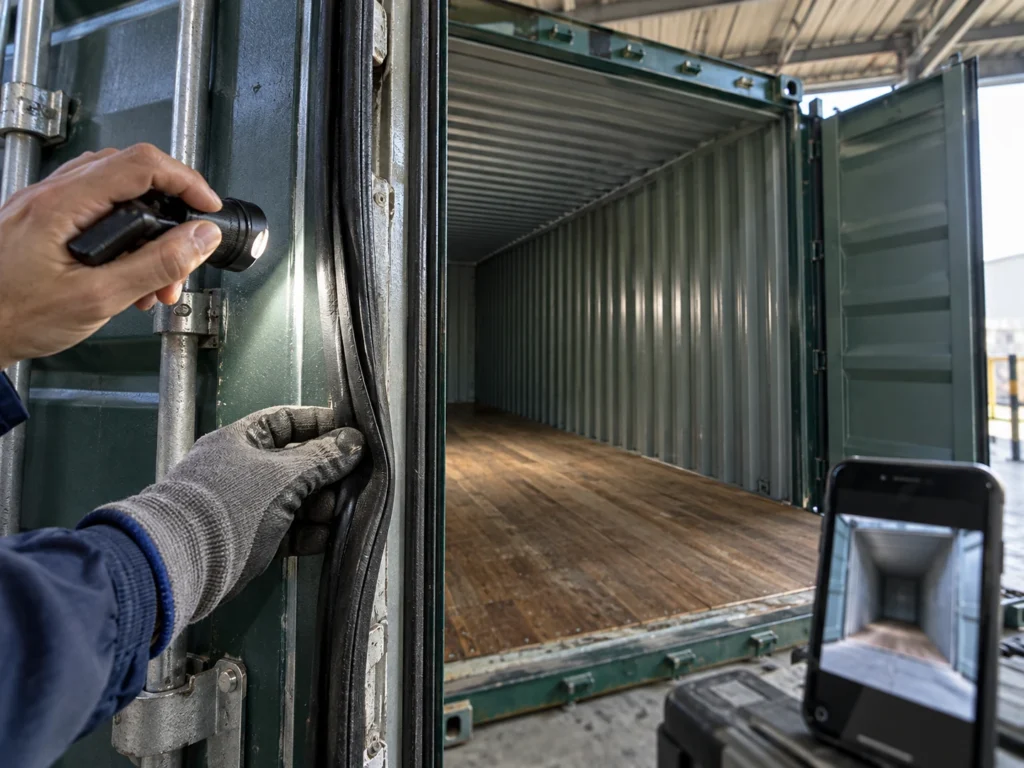
Inspect the empty container for holes, damaged door gaskets, damp patches, and signs of earlier water entry, and record what you find the same way you would note container damage at pickup, so the equipment provider can repair or swap the box before loading. Keep the loading route covered, and if rain reaches the cargo, stop and assess it, because closing the doors on wet cartons seals the water in.
Match Moisture Protection to the Cargo
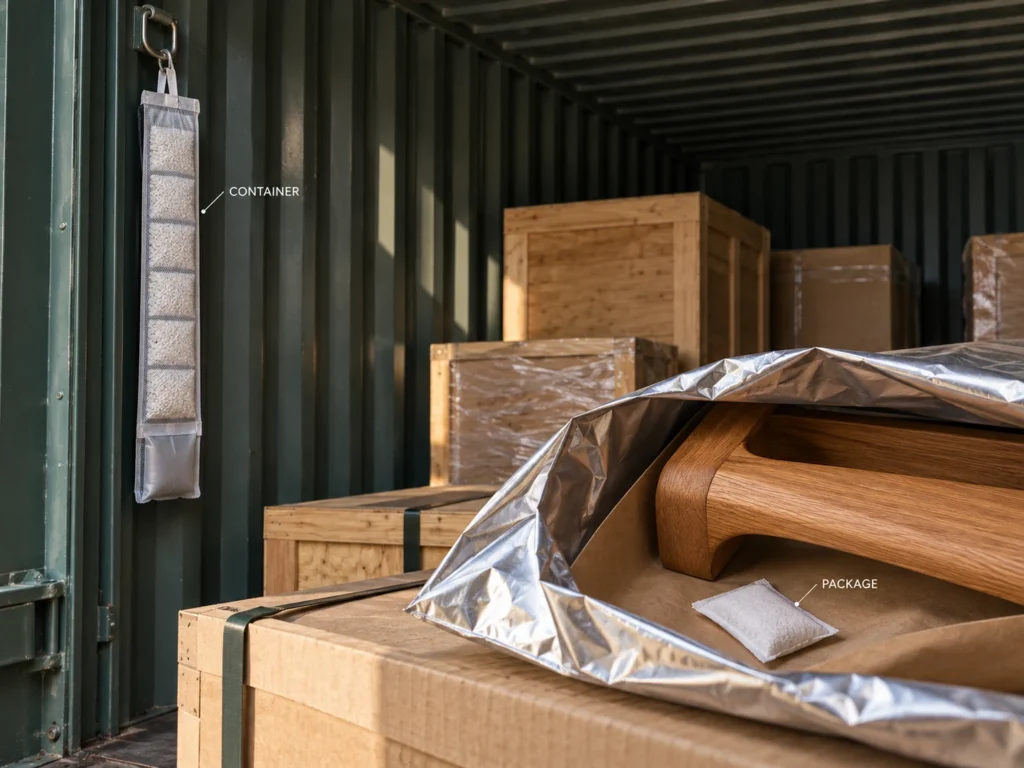
Decide where protection goes, whether around a single product, inside a sealed package, at container level, or in more than one place, based on the material and how much moisture it carries. A shipping container moisture absorber such as a desiccant bag pulls moisture from the air and lowers the dew point, as desiccant maker Clariant explains, but container-level bags and in-package sachets do different jobs. Ask the supplier for the product, capacity, quantity, placement, and service period for your load, allowing for storage time and transit delays.
A moisture barrier only works if its seals hold and the contents went in dry. Hapag-Lloyd’s guidance adds that silica gel bags work only in airtight spaces and that condensation damage can still occur with absorbents in place, so dry preparation still comes first.
What to Confirm Before the Container Is Sealed
Make one named person responsible for releasing the container, and hold it if any of these checks fails; extra desiccant bags won’t make a wet batch fit to ship.
- Moisture checks on the goods and packing are complete and still current.
- The empty-container inspection is recorded and any defect is fixed.
- Barriers, desiccants, and cargo separation are installed as specified.
- Labels and the packing list identify every package, so photos and readings tie to the right goods.
- Photos of the empty interior, sample packed items, and installed protection are on file; they show condition but can’t prove moisture content.
- The destination team knows what protection was used and how to unpack it.
Build Container Rain Checks Into Cargo Preparation in China
Foresmart books FCL ocean freight and can receive cargo from your suppliers before loading, with visible-condition checks, photos, repacking, palletizing, and reinforcement arranged as part of warehouse cargo preparation in China. Moisture readings or desiccant installation have to be written into that scope, with the method and acceptance criteria agreed before the work starts.
Send your packing list, product and packing materials, supplier pickup locations, destination, and ready dates through the freight quote form, and flag any cargo that needs moisture protection.
Frequently Asked Questions
Can a Shipping Container Dehumidifier Be Used During FCL Transport?
Only with the carrier’s agreement. A standard dry container has no power supply, so a plug-in unit needs an agreed power source, installation, and a way to drain the collected water. Some suppliers also sell passive desiccants as “container dehumidifiers,” so check which type a quotation describes.
Does an ISPM 15 Mark Prove That a Pallet Is Dry?
No. The ISPM 15 mark shows the wood packaging was treated against pests, not that it is dry. Check the pallet’s moisture separately against the agreed criteria, especially after outdoor storage or rain.
Can Container Rain Occur in LCL Shipments?
Yes. Condensation depends on moisture and temperature, not on how the container is booked, and in a shared less-than-container-load (LCL) container you can’t control other shippers’ cargo. Ask the consolidator how your packages will be protected, and build product-level protection into your own packing instructions.