

Book a live unload only when your site can empty the container inside the waiting time the trucking carrier confirms, and settle the appointment, unloading crew, equipment, and waiting terms in writing before dispatch. In a live unload, the driver stays at your receiving site while the cargo comes off a full-container-load (FCL) shipment, then leaves with the empty container.
What Is a Live Unload?
In a live unload, your crew takes the cargo out while the driver waits, and the truck leaves with the empty container; in a drop, the container is left at the site and collected later. The driver being there doesn’t mean the driver helps, so name the party responsible for unloading before dispatch and don’t assume driver assistance, extra labor, or unloading equipment is included unless the quote lists it.
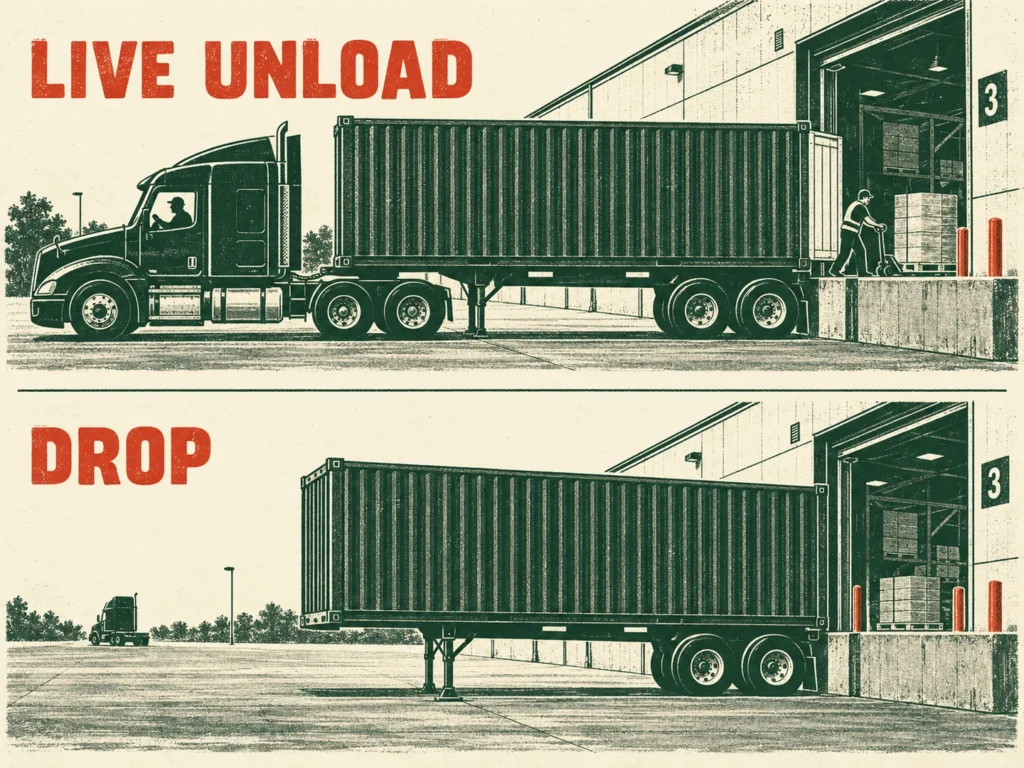
When Is Live Unload Suitable for Your FCL Shipment?
Live unload suits a shipment when the receiver can start at the appointment and finish inside the carrier’s confirmed waiting allowance, judged from the packing list rather than the container size, since loose cartons cleared by hand usually take longer than the same cargo on pallets moved by forklift. If the receiver can’t confirm the points below, review a drop or another delivery arrangement before the truck is dispatched.
- The receiver has accepted the cargo’s packaging and handling requirements.
- The planned vehicle can reach the unloading point.
- Staff and suitable equipment are booked for the appointment.
- There’s space to stage cargo without blocking the unloading.
- Dispatch and the receiver have agreed how to handle a delay.
How Should You Prepare Before the Container Arrives?
Once the truck arrives, any gap in the appointment, site access, or crew plan turns into waiting time that someone pays for.
Confirming the Delivery Appointment
Get the appointment accepted by both the receiver and the delivery provider. Carrier container tracking shows the vessel’s progress, but an estimated arrival date isn’t a delivery appointment, so ask the forwarder or trucking carrier to confirm when the cargo is available and the planned delivery window.
Give dispatch the receiving address, gate, appointment reference, and a contact who can fix a dock or staffing problem on the day. Send the warehouse the latest packing list with package counts, packed dimensions, weights, and handling instructions, flagging loose cartons and crates before it accepts the slot. If the timing changes, keep that contact informed, since an early truck only helps if the dock and crew can take it.
Checking Site Access and Dock Readiness
Check the route from the street to the unloading point for gate access, turning space, vehicle restrictions, and overhead clearance, and send the carrier photos or a sketch when it’s unclear, because a limited access delivery site can need a different truck and carry extra charges. A commercial address doesn’t mean there’s a usable dock, so if there isn’t one, have the delivery provider review the handling arrangement before booking. Clear the staging area before arrival, with space set aside for each shipment group the crew will receive.
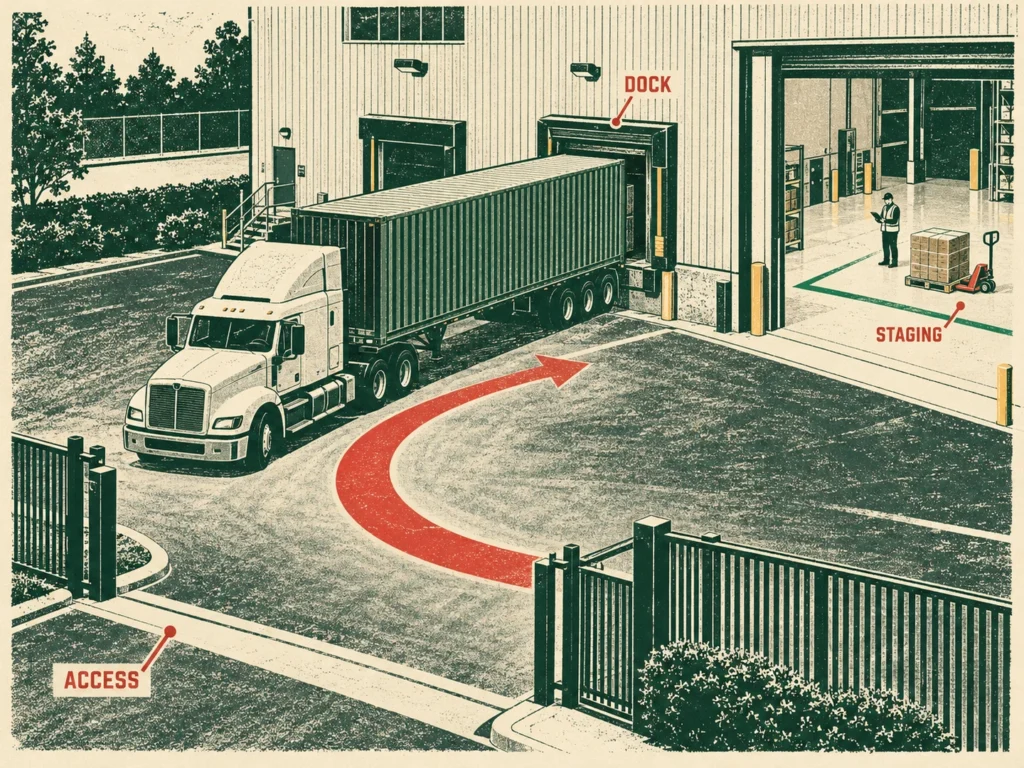
Scheduling Unloading Staff and Equipment
Book the crew and equipment against the real packages, using packed weights, dimensions, and the supplier’s handling instructions, and agree in writing who supplies the labor, who operates the equipment, and who pays for extra handling. A separate unloading contractor needs the same shipment details and appointment information.
Send the receiving requirements back to the supplier before packing: whether the site takes pallets, loose cartons, or crates, and how labels should mark each order so the crew can sort it on arrival. Ask for the packing list, label samples, and loading records before dispatch, and use them to brief the receiving team.
Which Waiting Terms and Charges Should You Confirm?
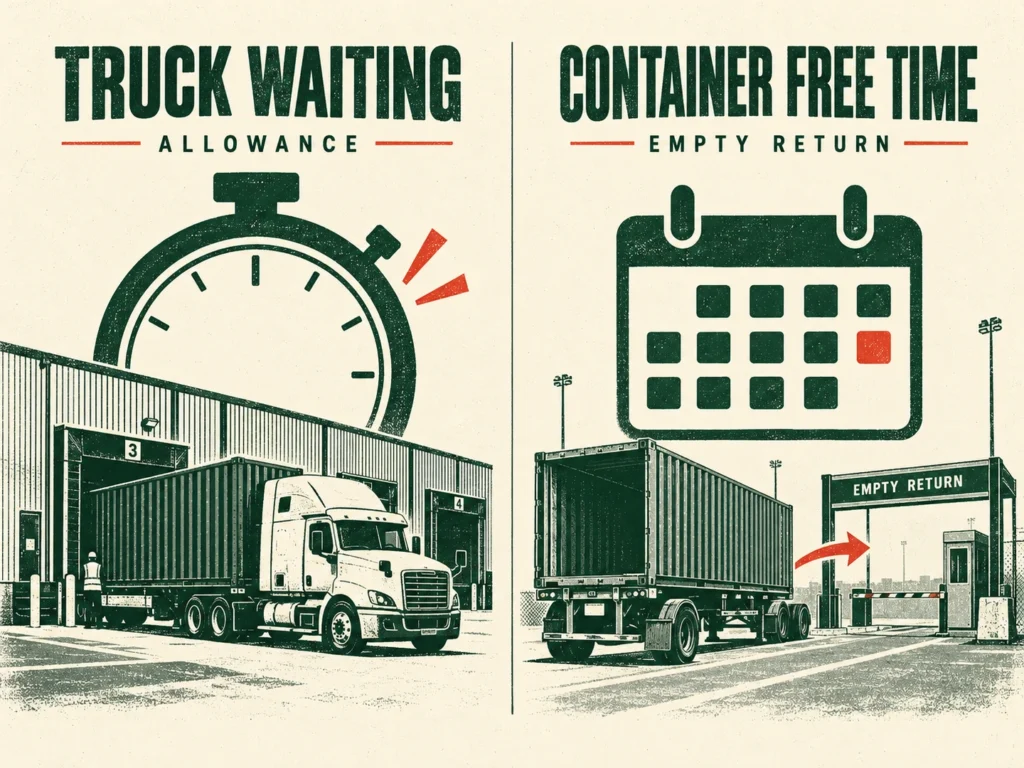
Two clocks can run during a live unload, the truck’s waiting time and the container’s free time, and they’re billed separately.
Free Waiting Time and the Billing Clock
Get the waiting allowance and charging rules in writing instead of assuming a standard two free hours: ask whether the clock starts at arrival, check-in, or the appointment time, when it stops, how early arrivals and dock congestion count, and what the rate, billing increments, and payer are. Waiting time is one of the accessorial charges a carrier bills from timestamps and may round up to the next interval, and a quote marked “delivery included” doesn’t cover extended waiting unless it says so. Check the receiver’s unloading estimate against these terms before dispatch.
Truck Waiting Fees and Container Charges
The word “detention” can mean either charge, so read the description on each quote line.
| Charge | What It Generally Relates To | What to Confirm |
|---|---|---|
| Truck waiting or driver detention | Driver and vehicle time beyond the agreed allowance | Start and stop events, allowance, rate and increments |
| Container detention | Carrier equipment held outside the terminal beyond its free time | Applicable free time, return deadline and accepted return location |
| Demurrage | Carrier equipment held inside the terminal beyond its free time | Pickup deadline and applicable carrier terms |
Some carriers combine demurrage and detention into one free-time allowance, and an emptied container keeps counting against it until it’s returned, so confirm who books the empty return and how you’ll get proof of it.
What Happens on the Day of a Live Unload?
Keep the booking terms at the dock and log each step as it happens:
- Record arrival and check-in times with the container number and appointment reference.
- Check the container number and seal against the delivery documents, and note visible concerns before unloading starts.
- Record when unloading starts and finishes, and warn dispatch early if it could run past the allowance.
- Note missing packages or visible damage on the delivery receipt, with photos and package identifiers.
- Complete the delivery paperwork, keep a copy, record when the driver leaves with the empty container, and tell the logistics contact so the return can be tracked.
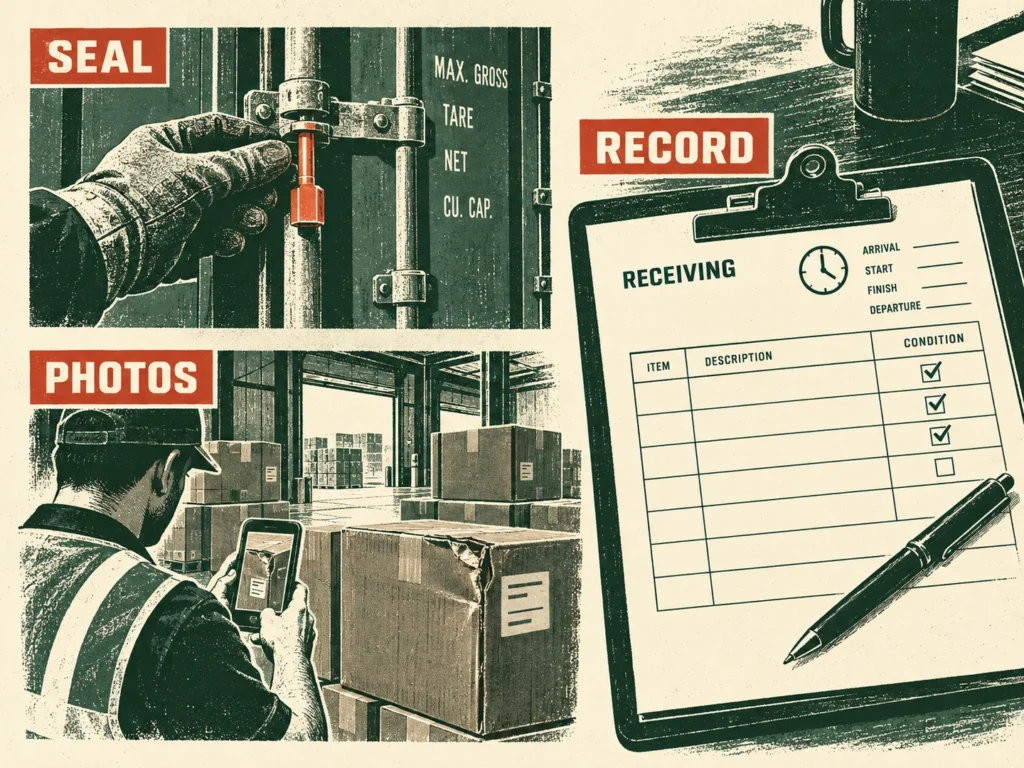
Keep the booking, receiving record, and time entries together, since they’re the evidence if a waiting invoice or a delivery discrepancy is disputed.
What If Your Warehouse Cannot Complete the Live Unload?
Tell dispatch as soon as the plan breaks down, with the reason, the work left, and a realistic finish time, and ask whether the driver can keep waiting and at what cost.
A drop can give the crew more time, but it may add a second trip and equipment charges and needs the site’s permission, so confirm the collection timing and revised charges before accepting it. If the site can’t take the container at all, ask for another receiving location or a new delivery date, and confirm the new scope and cost first.
Book Live Unload as Part of Door-to-Door FCL Delivery
Foresmart’s door-to-door freight plans the final-mile equipment, appointment, site access, and proof of delivery, and the written quote states which charges are excluded; waiting time, redelivery, appointment changes, and lift-gate use are among the final-mile extras that can apply.
Include the delivery address, site access notes, unloading method, and receiving hours with your cargo details when you request a freight quote, so the quote covers the live unload terms.
Frequently Asked Questions
Is Devanning the Same as Live Unload?
Not quite. Devanning means taking cargo out of a container, while a live unload is the delivery arrangement in which the driver waits during that work. A container can also be devanned after it has been dropped at a receiving facility, so ask which delivery arrangement a quoted unloading service comes with.
Can a Consolidated Container Be Live Unloaded?
Yes. A container packed with goods from several suppliers is delivered as one FCL shipment, so it can be live unloaded like any other. Ask for the loading sequence along with the packing list: cargo loaded last at the door end comes off first, and the crew can stage and check each supplier’s packages in that order.