
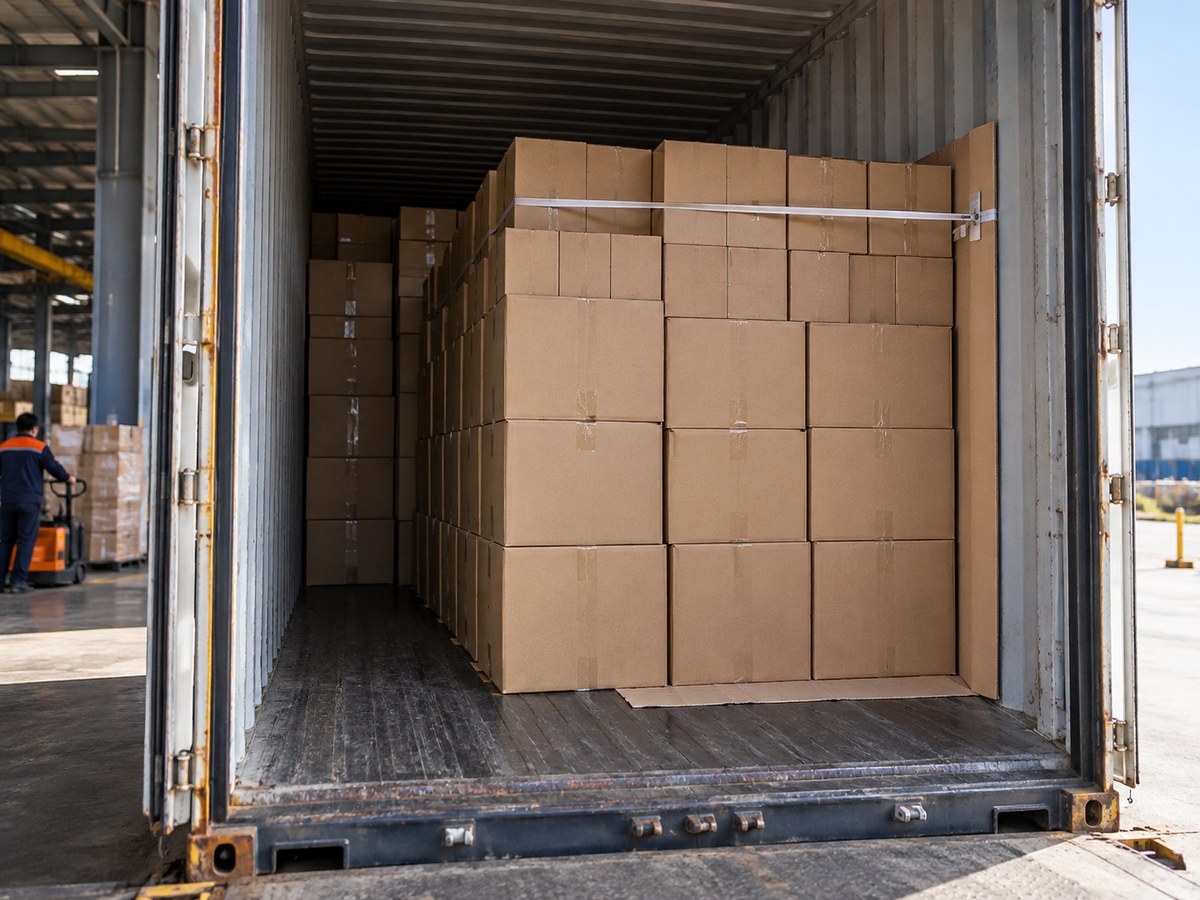
A floor-loaded container carries cargo stacked directly from the container floor upward without pallets. Importers choose this method to maximize usable container volume, especially when shipping uniform cartons from China. It works best when the packaging can bear the stack weight and the destination facility can unload individual boxes.
Comparing floor loading against palletized shipping requires looking at total landed costs, labor availability, and destination handling equipment before booking cargo space.
What Is a Floor Loaded Container?
In ocean shipping, floor loading describes cargo placed directly on the container floor or on protective slip sheets instead of wooden or plastic pallets. The term refers to the loading method rather than a specific container type.
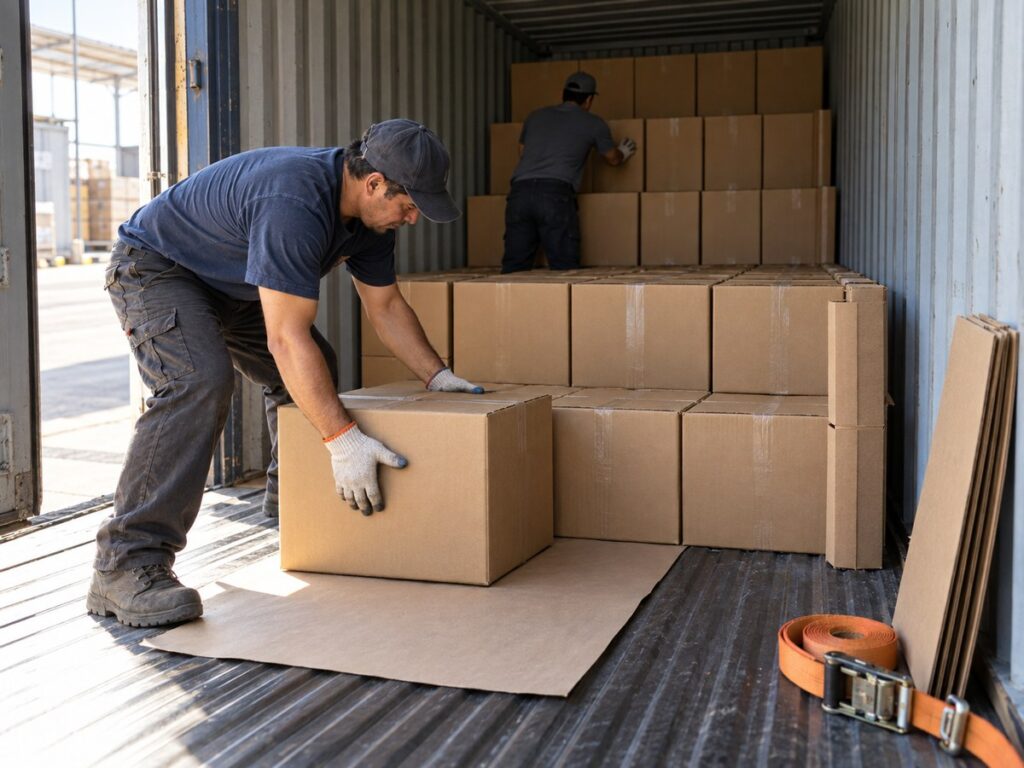
Packers arrange cartons in tight rows and tiers, adding protective materials and cargo restraints to prevent shifting. This method is standard for boxed consumer goods, apparel, and lightweight items. Heavy industrial machinery and concentrated loads require specialized cradles, flat racks, or heavy-duty lashing.
For sea freight shipping, shippers specify floor loading separately from container booking terms. Floor loading indicates how workers pack the cargo inside the box. It does not dictate whether the shipment moves as a full container load (FCL) or consolidated cargo.
How Does Floor Loading Compare with Palletized Shipping?
Floor loading frees up physical space normally occupied by wooden pallets. Palletized shipping lets forklifts move entire units at once, cutting warehouse dock time.
| Factor | Floor-Loaded Container | Palletized Container | Practical Buyer Impact |
|---|---|---|---|
| Space utilization | Maximizes cubic volume without pallet height loss | Pallets consume height and floor footprint | Compare total carton volume per container |
| Packing materials | Requires protective cardboard, slip sheets, and bracing | Requires pallets, shrink wrap, and corner boards | Compare total packing material expenses |
| Loading and unloading | Manual carton handling or specialized box conveyors | Fast forklift handling at dock height | Check destination labor rates and dock equipment |
| Cargo protection | Relies on box compression strength and tight stowage | Pallet base absorbs ground impact and isolates cargo | Select packaging based on product fragility |
| Destination sorting | Cartons may require manual sorting by SKU at the dock | Pre-sorted pallets speed up inbound inventory receiving | Factor in order complexity and SKU counts |
| Warehouse acceptance | Requires facility approval for loose cartons | Standard across most commercial fulfillment centers | Verify warehouse receiving rules before dispatch |
For carton shipments, labor costs often drive the decision between floor loading and pallets. Handling loose cartons takes more warehouse hours than moving pallets, making local labor rates decisive.
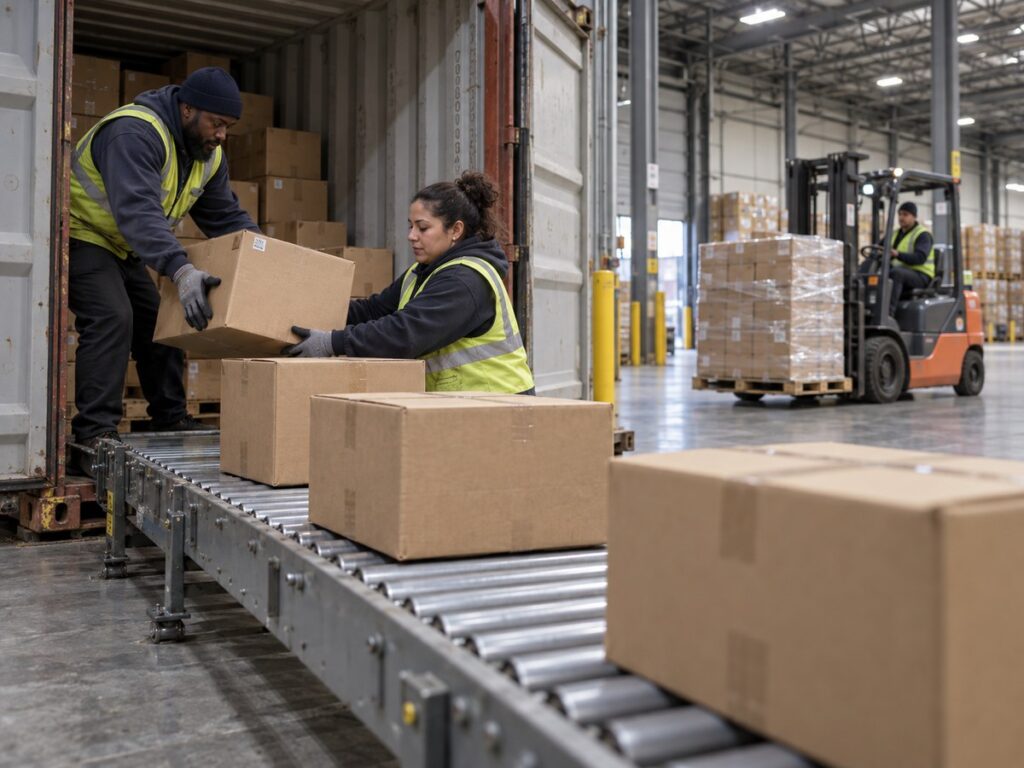
When Does Floor Loading Suit Your Shipment?
Floor loading works well when goods tolerate stacking, extra cargo volume justifies the labor, and the receiving dock can process loose cartons.
Cargo Suitable for Stacking and Manual Handling
Uniform cartons pack into neat, stable tiers. Even dimensions alone do not guarantee safe floor loading. Bottom cartons must support the weight of all layers above them and withstand motion during ocean transit.
Check each carton’s gross weight, dimensions, and structural integrity against planned handling methods. Packages must fit within safe manual lifting limits for dock workers unless automated conveyors are available. Fragile items require heavy-duty corrugated cartons and internal cushioning regardless of whether shippers use pallets.
Shipments That Maximize Space Within Weight Limits
Floor loading delivers its greatest cost advantage on bulky, lightweight goods that cube out before weighing out. High-density cargo often hits road or vessel weight limits before filling the container volume.
Importers should compare carton layout drawings against container internal dimensions. A standard 40-foot high cube container offers roughly 76 cubic meters of gross volume. Floor loading often fits 65 to 68 cubic meters of cargo, compared to 55 to 58 cubic meters on standard pallets. Check equipment tare weights and highway axle limits along the delivery route to avoid overweight penalties.
Receiving Facilities Equipped for Loose Freight
The destination warehouse must have sufficient labor, staging space, and appropriate equipment to count, sort, and devan loose boxes. A forklift on site does not mean the warehouse can unload floor-loaded freight efficiently.
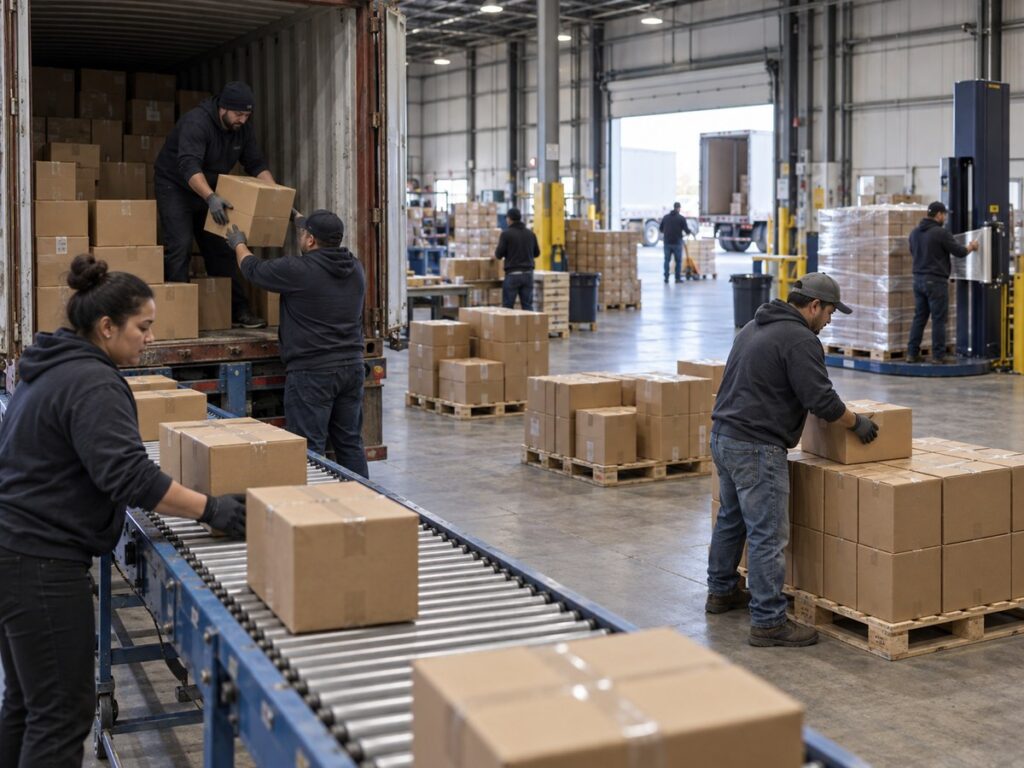
Confirm whether the facility charges extra for manual devanning or requires palletizing goods before placing them into storage racks. When shipping to fulfillment centers such as Amazon FBA, dock rules generally require palletized delivery. Importers shipping loose containers often cross-dock at a port-side 3PL to palletize goods before final truck dispatch.
For door-to-door shipping, define destination receiving conditions in the written booking scope. This lets your freight forwarder arrange proper delivery appointments and avoid surprise accessorial fees.
How Does Floor Loading Affect Total Shipping Costs?
Floor loading lowers total delivered costs only when ocean freight savings exceed the extra labor expenses for packing, unloading, and sorting. Lower freight per carton does not always mean lower landed costs.
Container Utilization and Origin Packing Costs
Skipping pallets reduces wood packaging costs and export treatment fees. Building a secure floor-loaded container still requires careful origin labor and proper cargo protection.
When arranging warehousing and cargo preparation, request itemized quotes for palletizing, shrink wrapping, and loose container stuffing. This cost breakdown makes it easy to compare both loading methods accurately.
Destination Handling and Waiting Charges
Destination warehouses bill loose-carton unloading by the container, by the box, or by labor hour. Facilities may also charge separate fees for sorting mixed SKUs, providing wooden pallets, and shrink wrapping.
For live unloads, check the trucker’s free waiting time at the dock. Unloading a floor-packed container manually often takes two to four hours, which can trigger driver detention fees. If dropping a container at the dock, track container return deadlines closely to avoid extended container detention fees from the ocean carrier.
Cargo Damage and Packaging Integrity
Improper stacking or loose stowage can lead to crushed boxes, shifted cargo, and damaged packaging. Reworking damaged inventory requires inspection, replacement packaging, and relabeling, delaying inventory entry.
Cargo insurance data shows that uneven weight distribution and inadequate bracing cause frequent container losses. Shippers should secure loose loads with proper dunnage, airbags, and cargo nets rather than relying on box friction alone.
What Should You Confirm Before Floor Loading?
Before packing a loose-loaded container, verify carton compression strength, create a securing plan, and confirm the receiving warehouse’s written receiving terms.
Cargo Specifications and Packaging Checks
Provide clear shipment details for both origin loaders and destination receivers:
- Gross weight and dimensions for every carton type in the shipment
- Total piece count broken down by SKU for accurate dock receiving
- Certified carton crush tests or stacking strength data from the manufacturer
- Package handling marks indicating fragile items, top-load limits, or orientation requirements
Visible carton condition does not indicate compression strength. When test data is missing, reduce the stack height or reinforce exterior cartons before loading.
Load Planning and Cargo Restraint
Balance cargo weight evenly across the container floor. Keep heavier cartons on the bottom tiers and avoid placing heavy goods on top of fragile packages.
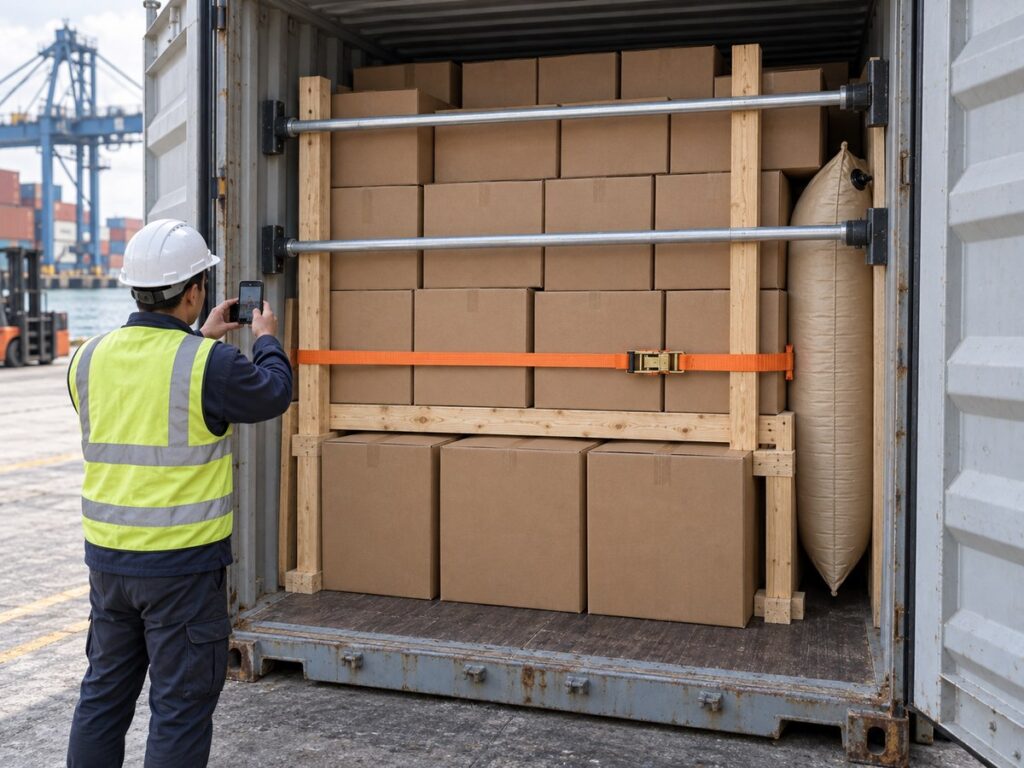
Packers should brace cargo against forward and sideways movement using load bars, timber bracing, or strapping. Keep cargo clear of container door seals so boxes do not spill outward when destination workers open the doors. Document the stowage by taking photographs before and after installing final restraints.
Warehouse Receiving and Documentation
Secure written confirmation from the destination facility covering these items:
- Delivery format acknowledging loose, non-palletized cartons
- Appointment scheduling rules for live unloads or drop trailers
- Carton labeling that matches the commercial invoice and packing list
- Inbound receiving fees for sorting, palletizing, and exception reporting
Ensure carton marks, quantities, and descriptions match all shipping paperwork and the relevant sea freight documents. Provide the receiving facility with the container loading plan so dock workers know where each SKU sits inside the box.
For a custom loading and freight evaluation, send Foresmart your route details, carton dimensions, total piece count, and destination warehouse requirements. The operations team can compare floor loading against palletizing to find the most economical shipping setup.
Frequently Asked Questions
Is floor loading the same as FCL shipping?
Floor loading refers to how cargo sits inside the container, while FCL (Full Container Load) is an ocean booking term where one shipper reserves an entire container. An FCL container can be floor-loaded, palletized, or packed with a combination of both methods.
Can a warehouse palletize floor-loaded cargo at destination?
Yes. Receiving facilities or third-party logistics warehouses can unload loose cartons and build pallets to your specifications. Confirm pallet dimensions, wrap requirements, and labor rates before shipping.
Can shippers use slip sheets instead of pallets?
Yes. Slip sheets save vertical space while still allowing machine handling. Destination forklifts must have push-pull attachments to grip and lift slip sheets, as standard forklift blades cannot handle them safely.
What does devanning mean for a floor-loaded container?
Devanning means unloading cargo from a container. For floor-loaded shipments, devanning involves manually taking down carton stacks or rolling boxes out on gravity conveyors before sorting them onto pallets.
Can shippers combine floor loading and pallets in one container?
Yes. Shippers sometimes place palletized goods in one section and stack loose cartons in remaining open spaces. The load plan must brace both sections securely so neither shifts during transit.