

Postponed VAT accounting (PVA) lets a UK VAT-registered business account for import VAT on its VAT Return instead of paying it when the goods arrive. The choice is made on the import declaration, and HMRC does not allow it to be changed once that declaration is submitted. If you buy from China, settle the importer details and give your customs agent written PVA instructions before the cargo reaches the UK.
What Does Postponed VAT Accounting Change?
PVA changes when import VAT is paid, not how much is due. You declare the import VAT and reclaim the recoverable amount on the same VAT Return, so a fully recoverable import costs no cash at the border. Take a shipment with £6,000 of import VAT that the business can recover in full:
| Step | Paying at Import | Using PVA |
|---|---|---|
| At the border | Pay £6,000 before release | Pay no import VAT |
| On the VAT Return | Reclaim £6,000 as input tax | Declare £6,000 in Box 1 and reclaim £6,000 in Box 4 |
| Cash tied up | £6,000 until the reclaim is processed | None for this import |

PVA does not reduce the VAT rate, and a business with restricted input tax recovery still ends up with VAT to pay. Customs Duty is also unaffected. It is still paid at import, or through a duty deferment account, which requires a bank guarantee.
Who Can Use PVA for Imports From China?
Any business that meets these conditions can use PVA without applying to HMRC:
- The business is registered for VAT in the UK.
- The goods are for use in the business, and the business has the right to dispose of them, usually as owner.
- The business’s VAT registration number appears on the import declaration.
- The declaration carries the business’s EORI number, since HMRC records the postponed VAT against that EORI.
PVA covers goods brought into Great Britain from anywhere outside the UK, and into Northern Ireland from outside the UK and EU, so imports from China fall within scope at either destination. Consignments valued at £135 or less follow different VAT rules.
How Do You Arrange PVA Before Customs Clearance?
Three things have to be settled before the declaration is filed: which business is importing, what the agent has been told in writing, and who controls the declaration when the supplier arranges delivery.
Confirming the Importer, VAT Number and EORI
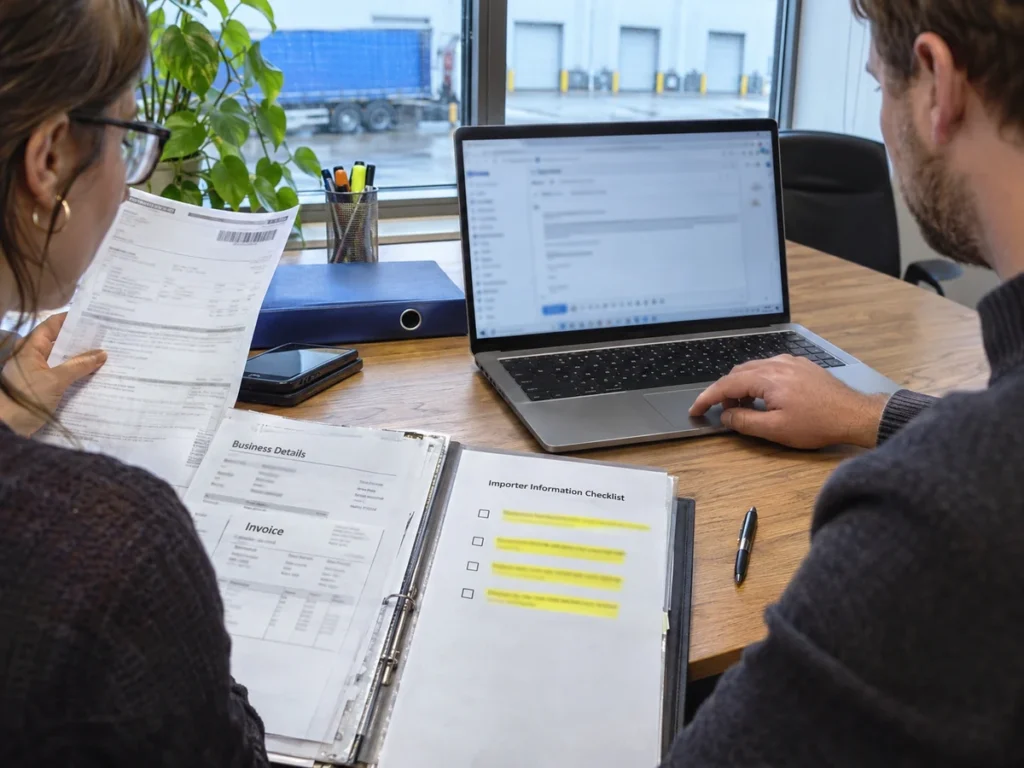
Name the legal business importing the goods, then confirm the VAT registration number and EORI number the agent will declare. A trading name or the warehouse delivery address does not identify the importer. Where the buyer, the delivery recipient and the consignee on the shipping documents differ, ask the agent how each party will appear on the declaration before you approve the document instructions.
Sending Written PVA Instructions
HMRC requires anyone importing goods on your behalf to have your written confirmation before proceeding with the declaration. A representative also cannot act for you without written instructions, so one document can cover both. It should state:
- The importing business and its VAT and EORI numbers
- That import VAT is to be accounted for through PVA
- The shipments or period the instruction covers
- Whether the agent acts as your direct or indirect representative
Ask the agent to acknowledge the instruction and keep that exchange with the shipment records. Appointing an agent does not shift responsibility: HMRC still holds you responsible for due diligence on your declarations.
When the Supplier Arranges UK Clearance
A delivered price, including a DDP or DAP arrangement, does not show how import VAT will be handled. Ask the supplier which agent will file the UK declaration and whose VAT and EORI numbers it will use. If the declaration names another business as importer, the postponed VAT is recorded against that business’s EORI and appears on its statement, not yours. When you are the importer, agree the PVA arrangement with the supplier in writing and confirm that your instruction reached the agent filing the declaration.
How Do You Use PVA Statements on Your VAT Return?
HMRC issues a monthly postponed import VAT statement that supports the figures you report. Download it, enter the figures in the right boxes and check each entry against your shipments.
Downloading the Monthly Statement
Statements are held in the Customs Declaration Service (CDS), which you subscribe to once using the sign-in details from your VAT registration. HMRC says each statement is usually available by the 10th working day of the month. Download and save every statement, because each one can be accessed for only six months from publication before HMRC archives it.
Filling In Boxes 1, 4 and 7
Report postponed import VAT in the VAT accounting period that covers the date of import.
| VAT Return Box | What to Include |
|---|---|
| Box 1 | Import VAT due in the period through PVA |
| Box 4 | Import VAT reclaimed in the period through PVA, under the normal input tax rules |
| Box 7 | The value of all goods imported in the period, excluding VAT |

If you delayed a declaration and have no statement for it yet, HMRC requires you to estimate the figures, then adjust to the statement amount once it arrives.
Reconciling Statement Entries
Each entry shows the import date (when HMRC accepted the declaration), the entry number, the declarant’s reference and the import VAT amount. Ask your agent to put your shipment or purchase order reference in the declarant’s reference, so each entry matches a shipment file without guesswork. HMRC has also found duplicated entries carrying the same movement reference number and VAT amount; if you spot one, adjust the statement manually and account for the corrected amount.
How Does PVA Fit a Multi-Supplier Shipment From China?
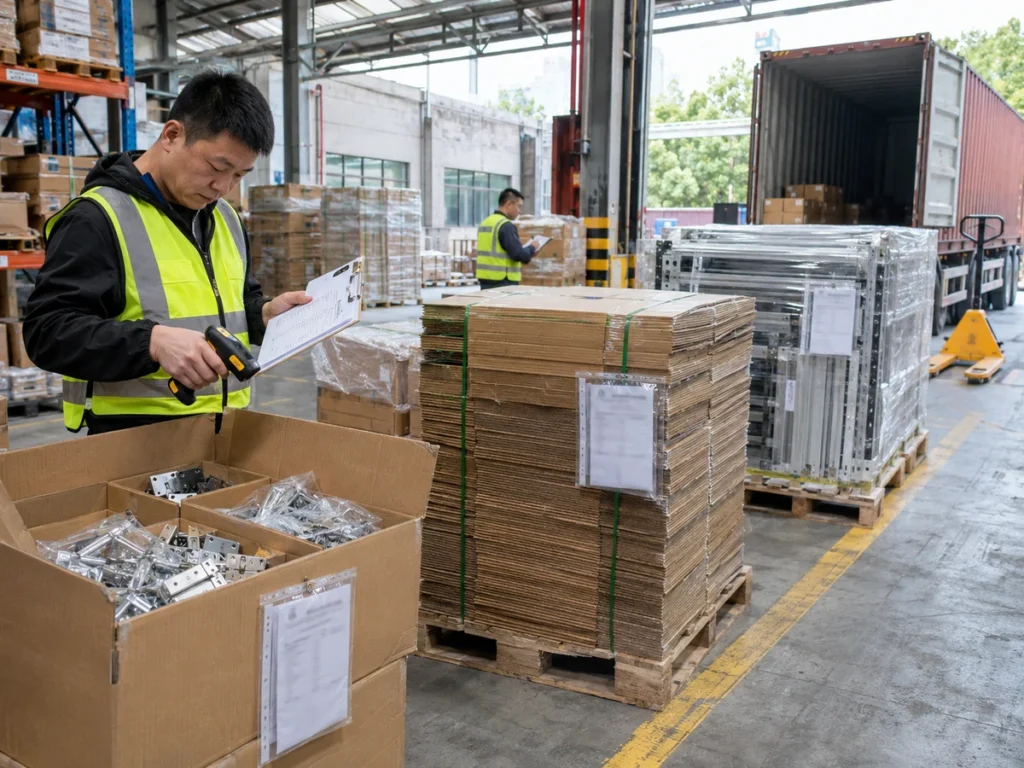
PVA follows the declaration, not the container. Suppose your business buys furniture fittings in Foshan, packaging in Yiwu and display equipment in Shenzhen, and ships all three orders together. The import VAT is recorded under whichever VAT number and EORI the declaration carries, so the combined shipment still needs one confirmed importer and one PVA instruction. With multi-supplier consolidation, keep each supplier’s invoice tied to its packages on the final packing list. Your agent can then declare the full value, and your finance team can trace each statement entry back to the orders it covers.
Planning UK Freight From China Around Postponed VAT Accounting
Foresmart, a China-based freight forwarder, collects from suppliers across China, including Foshan, Yiwu and Shenzhen, and receives the goods at its warehouses by purchase order reference. Its team handles agreed repacking or palletizing, chooses FCL or LCL from the final combined volume, and coordinates the export documents and handoff to your UK agent. Your agent files the declaration and applies your PVA instruction, and Foresmart does not act as importer by default.
For shipping from China to the UK, send your supplier list, ready dates, cargo dimensions and weights, UK delivery postcode and your appointed agent’s details. Shipments start at 100 kg or 1 cubic meter (CBM), a service threshold separate from PVA eligibility.
Frequently Asked Questions
Can I Switch to PVA After the Import Declaration Is Submitted?
No. HMRC does not allow you to change how import VAT is accounted for on a declaration once it has been submitted. If the agent used a different method, ask it to explain the entry and what can be done for that shipment.
Can a Business Without a UK Establishment Use PVA?
Yes, if it is registered for VAT in the UK and meets the other conditions. HMRC requires a business without a UK establishment to get someone to deal with customs for it, and to tell that person to select PVA on the declaration and enter the business’s details as the consignee.
What Should I Do if an Import Is Missing From My PVA Statement?
Ask the filing agent to confirm that the import VAT was allocated to the correct EORI number. If your business is in a VAT group or is closely related to another company, check whether the entry appears on that company’s statement. A VAT group representative needs copies of each member’s statements.
Source
- Check when you can account for import VAT on your VAT Return, HM Revenue & Customs: eligibility, no approval needed, territorial scope, written instructions, the £135 rule, non-established businesses and the no-change rule.
- Paying VAT on imports from outside the UK to Great Britain and from outside the EU to Northern Ireland, HM Revenue & Customs: payment options, duty deferment and input tax recovery under the normal rules.
- Get someone to deal with customs for you, HM Revenue & Customs: written instructions, direct or indirect representation and the importer’s due diligence.
- Completing your VAT Return to account for import VAT, HM Revenue & Customs: the accounting period, Boxes 1, 4 and 7, estimates and missing statement entries.
- Get your postponed import VAT statement, HM Revenue & Customs: CDS subscription, monthly availability and the six-month access window.
- Understanding your monthly postponed import VAT statements, HM Revenue & Customs: statement fields, the declarant’s reference and duplicate entries.