
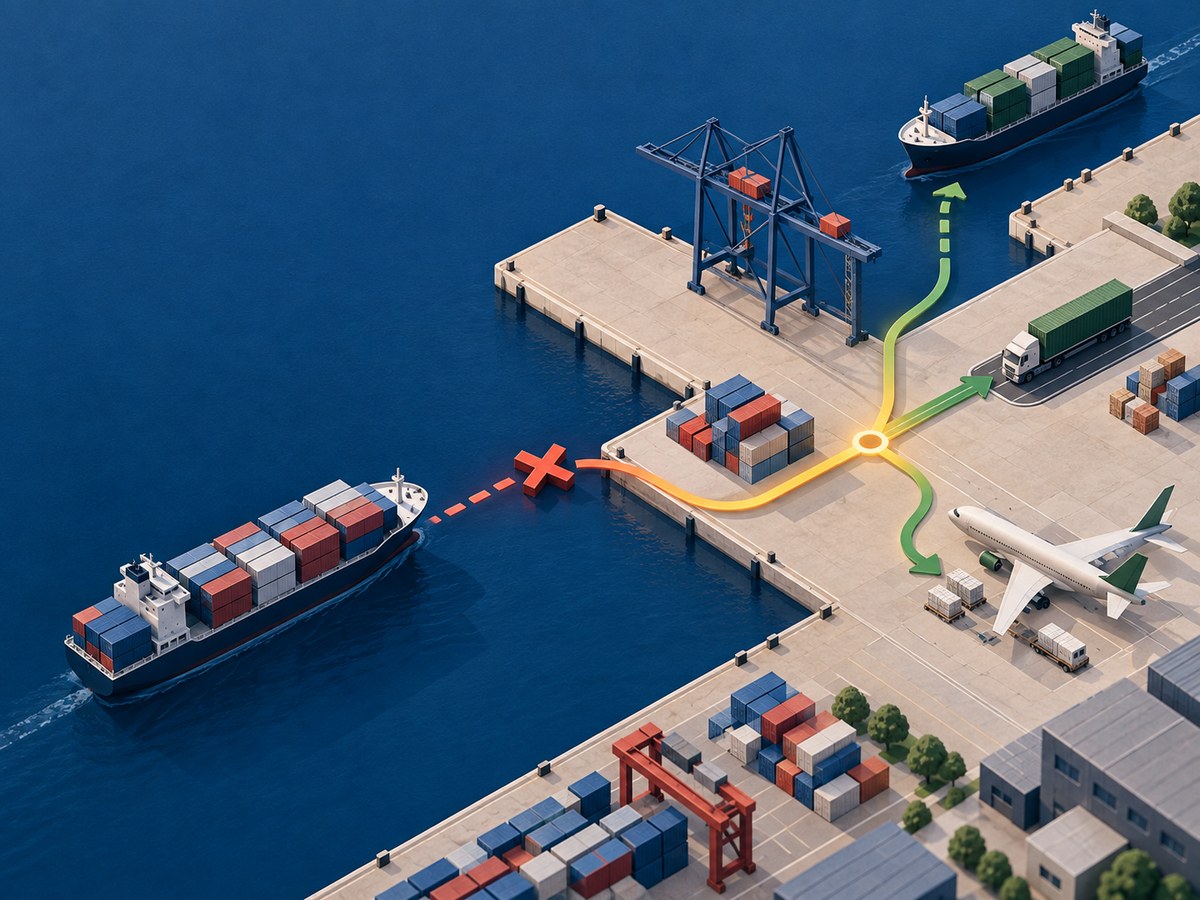
A blank sailing occurs when an ocean carrier cancels a scheduled voyage or skips a specific port call along its route. When you receive a blank sailing notice, do not accept a generic “rolled to next available sailing” update. You need to immediately verify your container’s physical location, confirmed vessel space, revised cutoffs, and extra cost exposure. Compare the carrier’s proposed replacement against alternative lines, routing options, or transport modes. Your recovery plan depends on cargo position, delivery deadlines, budget limits, and actual space availability.
What Does a Blank Sailing Mean for Your Booking?
Carriers blank voyages to balance capacity with cargo demand or recover from severe port congestion. When an alliance voids a departure, it disrupts scheduled ocean freight services across the entire loop. A standard booking confirmation never guarantees that a vessel will sail on its published schedule.
Full Voyage Cancellation and Port Omission
A full voyage cancellation removes the ship entirely from that week’s departure schedule. Displaced cargo from that canceled vessel must then compete for limited slots on subsequent sailings.
A port omission happens when the vessel completes its voyage but bypasses specific ports to recover lost transit time. If the carrier skips your loading port, your container sits at the origin terminal until another ship calls. If the carrier skips your destination port, cargo discharges at an alternate regional hub, requiring feeder barges, rail transfers, or secondary trucking.
Blank Sailing vs. Rolled Cargo
A blank sailing is a carrier-wide schedule change that eliminates an entire sailing window for all booked shippers. Rolled cargo occurs when the ship departs on schedule, but the carrier bumps your container due to overbooking or vessel weight limits.
However, blank sailings directly trigger rolled cargo. Displaced containers from a void voyage spill into later departures, creating severe space bottlenecks across the trade lane.
What Should You Check as Soon as You Receive the Notice?
When a carrier cancels a departure, pull up your active ocean freight booking and evaluate the operational status in this order:
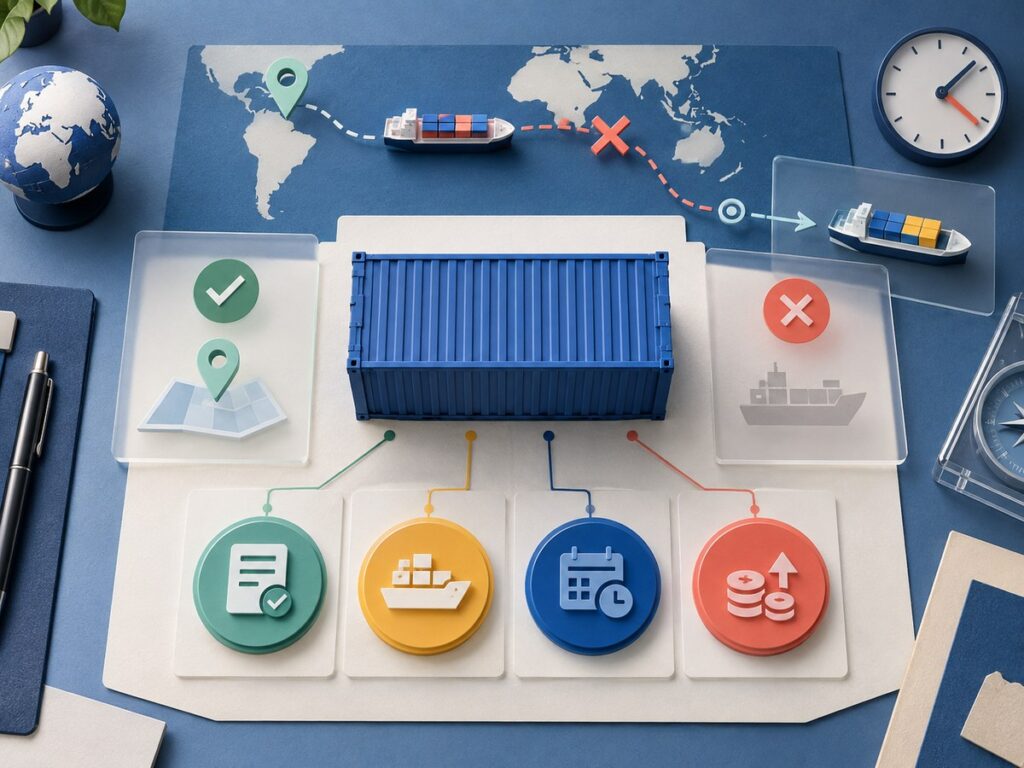
- Cancellation scope: Determine whether the carrier announced a complete voyage blank or a single port omission.
- Physical cargo location: Pinpoint whether your goods remain at the factory, sit in a warehouse, or gated into the container yard.
- Booking validity: Check whether the carrier transferred your booking automatically or requires a formal rebooking.
- Replacement schedule: Request the exact replacement vessel name, voyage number, revised ETD, and destination ETA.
- Cut-off deadlines: Confirm the updated container yard (CY) cutoff, shipping instruction (SI) cutoff, and VGM submission deadlines.
- Financial exposure: Ask for written confirmation on rate validity, container detention terms, demurrage liability, and terminal storage charges.
Treat any replacement vessel as unconfirmed until your forwarder secures written space approval. Never update customer delivery commitments based on a tentative shipping schedule.
Where Is Your Cargo Now?
Your container’s physical location dictates how quickly you can pivot and what fees you will face. Check live milestones through container tracking tools, then confirm the operational status with your forwarder.
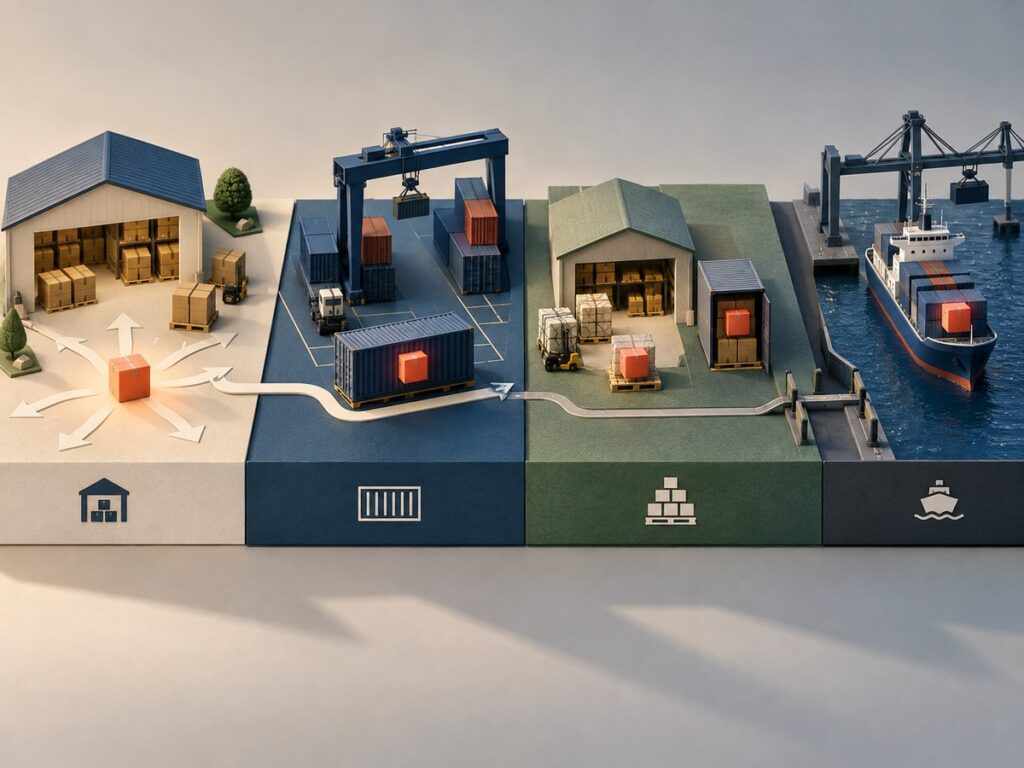
Cargo Still at the Supplier or Origin Warehouse
Cargo sitting outside the port gives you the greatest operational flexibility. Because the container has not entered the terminal, you avoid port demurrage, gate-out fees, and terminal storage costs.
Instruct your forwarder to pause origin drayage while evaluating alternative carriers. Check supplier storage limits and confirm whether another shipping line offers faster confirmed space before dispatching trucks.
FCL Container Picked Up or Gated In
A loaded container already gated into the container yard (CY) is difficult and costly to redirect. Switching shipping lines requires canceling the export customs declaration, paying terminal gate-out charges, trucking the box to another terminal, and returning carrier equipment.
If the carrier’s replacement vessel departs within two to three days, waiting inside the terminal is usually more economical than pulling the container out. If the delay threatens factory shutdowns or order cancellations, obtain written cost estimates for gate-out, trucking, and customs amendments before canceling.
LCL Cargo at a Consolidation Warehouse
For LCL shipments, check whether the cargo remains loose at the Container Freight Station (CFS) or is already stuffed into a consolidation container. Unstuffed cargo can easily transfer to another consolidator or switch to air freight.
Once the warehouse stuffs and seals your cargo inside a consolidation container with goods from other shippers, unloading becomes expensive. Destuffing requires customs approval, incurs warehouse handling labor fees, and risks damage to other cargo.
Cargo at a Transshipment Port
If a carrier blanks an onward voyage after origin departure, your container sits at an intermediate hub such as Singapore or Busan.
In this scenario, you have fewer direct intervention options because the carrier retains physical custody under maritime law. Request regular connection updates, monitor transshipment dwell times, and verify that the carrier provides priority loading on the next scheduled feeder vessel.
Should You Wait, Rebook, Change Ports, or Change Modes?
Select the recovery option that protects your supply chain deadlines without creating excessive costs. Always compare confirmed departure dates rather than published marketing schedules.

| Option | When It Can Work | Confirm Before You Choose | Main Tradeoff |
|---|---|---|---|
| Wait for carrier replacement | Revised ETA still meets customer delivery windows | Named vessel, confirmed space allocation, and free time terms | Lowest operational effort, but the subsequent vessel may roll cargo |
| Rebook with same carrier | The carrier offers an alternative loop or service string | Confirmed space, transit duration, and rate validity | May improve arrival timing, but transshipment risks can increase |
| Switch ocean carriers | Cargo remains accessible outside the terminal and another line confirms space | Equipment availability, new cutoffs, and gate-out or amendment costs | Provides schedule control, but incurs document amendment and transfer expenses |
| Reroute through alternate port | Regional trucking to a nearby port connects with an earlier sailing | Inland drayage costs, customs transfer permits, and terminal cutoffs | Earlier ocean departure, but added inland transit may absorb saved time |
| Split shipment or air freight | Imminent stockouts or factory production penalties exceed air freight premiums | Air cargo space, pallet dimensions, and customs export clearance | Protects critical commercial deadlines, but multiplies freight costs |
During peak season shipping periods before Golden Week or Chinese New Year, waiting for the carrier’s default replacement carries high roll risk. Subsequent departures often operate above nominal capacity.
Never cancel an existing booking before receiving written space confirmation on the replacement option. If the alternative does not save meaningful transit time after accounting for transfers, keeping the original carrier’s replacement vessel is the safer choice.
How Can Foresmart Help After a Blank Sailing?
Ocean carriers operate vessel rotations independently. Because carriers control sailing schedules, understanding the operational boundaries between a freight forwarder and carrier prevents costly assumptions. No forwarder can force a carrier to sail or guarantee third-party vessel space.
Through comprehensive freight forwarding services, Foresmart monitors port congestion across major Chinese gateways, benchmarks alternative carrier loops, and negotiates verified space allocations. For FCL and LCL shipments from China, the team coordinates factory dispatch, manages origin consolidation, and handles customs declaration amendments when schedule disruptions occur.
What Should You Send Your Freight Forwarder?
When a sailing cancellation hits your supply chain, provide your forwarder with a concise shipment brief. Supplying complete operational details upfront prevents delayed quotes and back-and-forth emails.

- Booking and carrier records: Original booking number, vessel name, voyage number, bill of lading draft, loading port, and discharge port.
- Cargo status and equipment details: Container and seal numbers for FCL, warehouse receipt numbers for LCL, total piece count, gross weight, and CBM volume.
- Commercial deadlines and handling requirements: Must-arrive delivery date, factory production milestones, warehouse receiving appointments, and any hazardous or temperature constraints.
Your forwarder can then compare the carrier’s replacement against alternative sailings, detailing cost differences, transit impacts, and decision deadlines.
Frequently Asked Questions
How Long Can a Blank Sailing Delay a Shipment?
A blank sailing typically delays cargo by one to two weeks, depending on service loop frequency and vessel space. If subsequent sailings are fully booked, displaced cargo can face rolling delays spanning two to three departure cycles. Review the replacement vessel’s confirmed ETD and ETA rather than relying on standard weekly schedules.
Will the Carrier Automatically Cover Added Charges?
No. Ocean carriers do not cover secondary storage, chassis detention, or drayage fees caused by blank sailings. Carrier liability terms protect shipping lines against schedule variations under standard bill of lading conditions. Importers should request extended detention free time in writing and review terminal demurrage rules before deciding on a recovery plan.
What Should You Do If the Replacement Sailing Has No Confirmed Space?
Instruct your forwarder to maintain your existing queue position while actively searching for verified space on secondary carriers. Establish a firm cutoff deadline based on your destination delivery requirements. If no ocean carrier can guarantee immediate space, inform your downstream customers of a realistic delivery range rather than promising an unconfirmed arrival date.