

A bonded shipment moves imported cargo under US Customs and Border Protection control before final entry and duty processing are complete. Use this process when cargo must reach another US port, cross the country for export, or leave from the arrival port. The cargo is not duty-free. Duties and other import requirements remain unresolved until the shipment reaches its authorized customs outcome. Before booking, confirm the in-bond type, filer, bonded carrier, destination, deadlines, and party responsible for closing the movement.
What Is a Bonded Shipment?
Under CBP regulations, imported merchandise moves in bond from an origination port to an authorized destination before the agency appraises the goods and collects applicable duties. Several international shipping terms in this process carry specific CBP meanings.
The movement requires an electronic in-bond application, a custodial bond, and CBP authorization. The party accepting liability under that bond must be authorized for the role. An ordinary carrier cannot take bonded cargo simply because it can serve the route.
The term describes the customs status of the movement, not a duty exemption. Duties, taxes, inspections, permits, and other agency rules still apply based on what happens when the in-bond movement ends.
When Does a US Importer Need a Bonded Shipment?
The correct entry type depends on where the cargo goes after arrival.
Clearing Cargo at Another US Port
Immediate Transportation (IT) moves cargo from the arrival port to another US port for final entry. An importer might use IT when the appointed broker or preferred clearance operation is located inland.
For example, a container arriving in Los Angeles may move in bond to Dallas. The importer then completes the customs clearance process at the destination port. The route, destination port, carrier bond, and handoff location must agree before movement begins.
Moving Cargo Through the United States
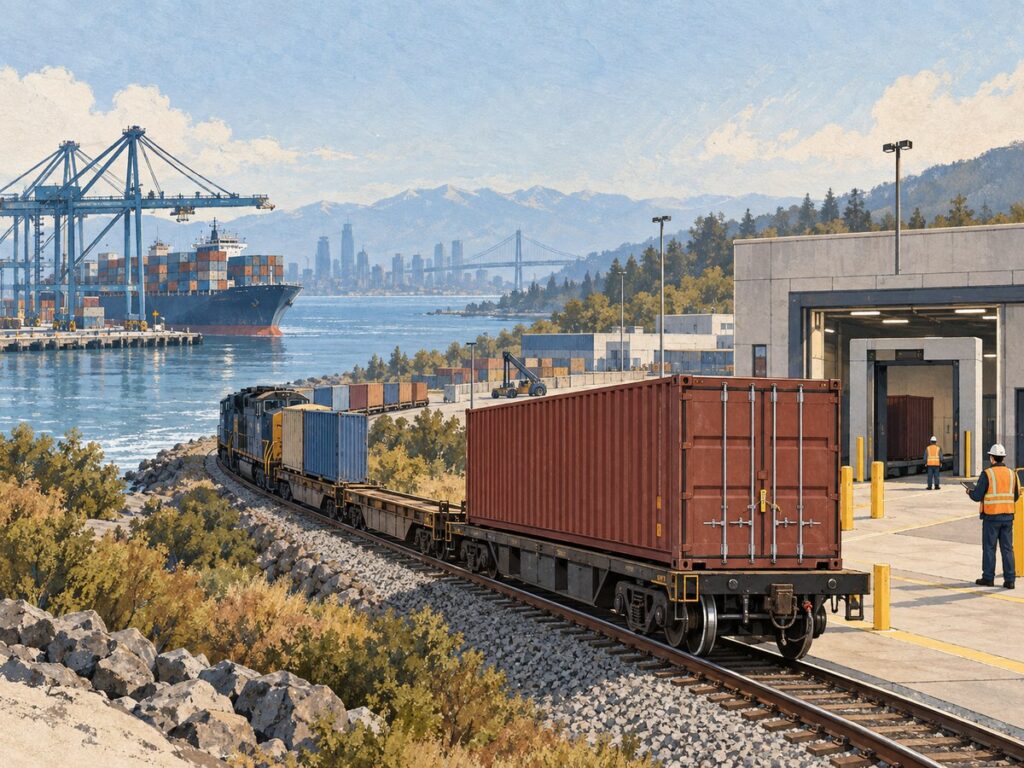
Transportation and Exportation (T&E) moves cargo through the United States to a different port for export without entering US commerce.
This route may apply when foreign cargo arrives at one US port and leaves through another for Canada, Mexico, or a different foreign destination. The plan must identify the US export port and first foreign port.

Exporting Cargo After US Arrival
Immediate Exportation (IE) covers cargo exported from the arrival port without an inland in-bond leg. This treatment fits cargo that will not enter US commerce and does not need transportation to another US port.
Both IE and T&E end in export. The difference is the route: T&E moves the cargo to another US port before export, while IE keeps the export at the arrival port.
How Does an In-Bond Shipment Move Under CBP Control?
A booking is incomplete until each party knows who performs every filing and physical handoff.
- Select the movement type. Confirm whether the cargo needs IT, T&E, or IE treatment. Name the origination port, destination or export port, and final customs outcome.
- Transmit the in-bond application. An eligible party sends the transportation entry and manifest data through a CBP-approved electronic system before departure from the origination port. Required data includes:
- Cargo description and six-digit HTSUS number
- Package quantity
- Container and seal details
- Destination
- Receive movement authorization. The cargo cannot move in bond until CBP authorizes the movement. Approval of the route does not equal final customs clearance.
- Transfer cargo to the bonded carrier. The carrier accepts the shipment under the applicable custodial bond. Seals and shipment identity must remain controlled through delivery. Most in-bond cargo must reach the destination or export port within 30 days. Barge movements generally have a 60-day limit.
- Report arrival. CBP must receive an electronic arrival report within two business days after any portion reaches the destination or export port.
- Complete the next customs action. The cargo must then be entered, exported, or admitted to a foreign-trade zone within the applicable period. A domestic entry or export event closes the commercial plan, but only the required CBP reporting closes the customs record.
A transfer to a new bonded carrier can create another filing and liability handoff. The original carrier should not assume its bond exposure ended because the freight physically changed hands.
Who Is Responsible for Each Part of a Bonded Shipment?
Responsibility follows the filing authority, written appointment, physical custody, and bond obligation.

| Party | Main responsibility | What the importer should confirm |
|---|---|---|
| Importer or cargo interest | Chooses the intended destination and customs outcome, supplies accurate shipment data, and appoints qualified providers | Legal party names, cargo description, HTSUS data, destination, broker authority, and final entry or export plan |
| Customs broker | Handles customs work covered by its authorization and may transmit in-bond data when eligible and appointed | Whether the broker files the in-bond application, handles the later entry, reports an event, or only advises |
| Bonded carrier | Accepts transportation liability under its custodial bond and delivers the cargo under CBP controls | Bonded status, carrier identity, pickup authority, seal control, arrival reporting, transfer rules, and proof of delivery |
| Freight forwarder | Coordinates routing, bookings, documents, and handoffs among the commercial and regulated parties | Which tasks the forwarder performs directly and which tasks belong to the broker or bonded carrier |
| CBP | Reviews the in-bond data, authorizes movement, tracks required events, and may inspect or restrict the cargo | Whether movement authorization, holds, diversions, or special agency conditions affect the plan |
The importer of record keeps its import compliance duties when other providers coordinate the shipment. A freight forwarder may manage the route without obligating its own custodial bond.
A customs broker may handle the later import entry without serving as the bonded carrier. Put the broker’s scope, the carrier’s bond liability, and every reporting handoff in writing.
What Should Importers Confirm Before Booking?
Confirm the regulated movement and commercial handoffs before cargo arrives. “Bonded delivery” alone does not define who files, who carries the bond, or who reports arrival.
Filing and compliance
- The required in-bond type: IT, T&E, or IE
- The US origination port and destination or export port
- The party transmitting the in-bond application
- The six-digit HTSUS number, cargo description, and smallest external package quantity
Physical movement
- The carrier or freight forwarder whose custodial bond will be obligated
- The physical carrier, equipment, container number, and seal plan
- The pickup location, FIRMS-coded arrival location, and receiving contact
Reporting and closure
- The party reporting arrival, export, diversion, shortage, or transfer events
- The broker handling the final consumption entry, when the cargo will enter US commerce
- The document that proves the movement reached its required customs outcome
Costs and contingency
- Charges for bonded movement, terminal handling, storage, transfer, examination, and failed pickup
- A contingency plan for holds, seal problems, port changes, or missed reporting deadlines
Ask each provider to accept its scope in writing. Match the in-bond instructions against the bill of lading, arrival notice, commercial invoice, packing list, container data, and final delivery or export plan.
For complex China-origin cargo, confirm early whether you need a customs broker for China-to-US imports. The broker appointment and bonded movement are separate decisions, even when one provider coordinates both.
How Do Bonded Shipments Differ From Customs Bonds and Bonded Warehouses?
Treating these terms as interchangeable can send cargo to the wrong provider or leave a compliance task unassigned.

| Term | What it is | What it does not mean |
|---|---|---|
| Bonded shipment | Imported cargo moving under an authorized in-bond entry before final clearance or export | The cargo is duty-free or cleared for US commerce |
| Customs bond | A financial guarantee supporting a party’s obligations to CBP | A transport route, carrier authorization, or storage location |
| Bonded warehouse | A CBP-authorized facility that stores or handles imported merchandise under warehouse controls | Automatic authority for any carrier to move the cargo there |
A carrier’s custodial bond covers the movement obligation. That bond is separate from the importer’s basic importation and entry bond. A warehouse proprietor also has separate bond obligations for merchandise in the facility.
How Can Foresmart Review the Route and Customs Handoff?
As a global freight forwarder, Foresmart can review the route, documents, and handoff plan for China-origin freight before the US leg begins. The review can align port choices, bill data, container details, broker instructions, and the intended clearance or export location. globel
Foresmart can also coordinate with the appointed US customs broker and qualified carrier based on the agreed service scope. The written plan should still name the in-bond filer and the party whose custodial bond is obligated.
For shipping from China to the USA, request a route, document, and customs handoff review before departure. This review helps expose missing roles while the shipper, importer, broker, and carrier can still correct the plan.