
Ship the ready part of a China order first only when that batch can be used on its own and getting it earlier is worth paying for a second dispatch. If the goods need to arrive together, or the rest will be ready in time for one shipment, wait and ship once. Base the call on usable stock, confirmed ready dates, and the full cost of both shipments, not on the first batch’s quote alone.
What Is a Partial Shipment?
A partial shipment splits one order into two or more deliveries, such as standard products leaving before a customized line that’s still in production. Keep the original purchase-order reference on both batches and record the quantity assigned to each, so the balance still due to ship is documented. If a delivery holds fewer goods than its own shipment records show, that’s a short shipment and needs investigating.
Splitting an order doesn’t make it a less-than-container-load (LCL) shipment. Partial shipment describes how an order is fulfilled, while LCL describes cargo sharing container space, and each batch can move by whichever mode suits it.
When Should You Split an Order From China?
Split an order when the first batch has an immediate use and a delivery plan that actually gets it there sooner.
The Ready Goods Can Be Used Independently
Start with what the first batch lets you do, such as restocking a product that’s running low, filling an existing customer order, or feeding scheduled production. Confirm the quantity that purpose needs before deciding how much to release.
Then check that the batch carries everything that use depends on, including components, packaging, and documentation. Finished products shipped ahead of unrelated accessories can go straight to sale, but incomplete sets that can’t be sold or assembled leave the original problem in place.

The Available Service Meets Your Deadline
Work backward from the date the goods must be usable at your receiving location, and ask the forwarder to plan pickup, origin handling, international transport, destination release, and final delivery. A port arrival date alone doesn’t tell you when you can use the cargo.
Then compare that plan with waiting. If both options meet the same deadline, an early dispatch adds little, but if the first batch covers a stock gap before the balance could arrive, the split is worth costing. Approve a pickup only once the first batch is packed and accessible, since a production completion estimate isn’t enough to rely on a departure.
When Should You Wait for the Full Order?
Wait when one combined shipment meets your needs and splitting adds cost without a useful earlier delivery.

| Situation | Why Waiting Can Make Sense | What to Confirm |
|---|---|---|
| Products must be used as a complete set | The first batch can’t do its job alone | Which missing items prevent use or sale |
| The remaining goods will be ready soon | One departure may still meet the receiving date | The remaining packing date and a workable transport plan |
| The first batch is small or awkward to handle | Its separate transport and preparation costs may outweigh the benefit | Packed dimensions, weight, and a quote for that batch |
| No earlier service meets the deadline | Splitting adds a dispatch without solving the timing problem | Available services and expected delivery milestones |
If you’re buying from several Chinese factories, freight consolidation can bring compatible cargo into one shipping plan without splitting any single order, so keep the order-level split decision separate from the warehouse’s job of combining cargo. Set a final date for waiting and decide in advance what happens if a supplier misses it, or both the warehouse and the booking stay uncertain.
What Does a Partial Shipment Really Cost?
A partial shipment costs whatever both batches cost together, measured against one shipment after waiting, so a low quote for the ready goods says little about the price of finishing the order. Compare freight forwarder cost for both options on the same destination, delivery scope, and cargo assumptions, and have the provider mark which charges apply to each dispatch and which depend on a later event. For each batch, the comparison should cover:
- Pickup and origin handling
- Extra packing, palletizing, or storage
- Transport charges, including any per-lot minimum
- Destination handling and final delivery
- Quote validity and the assumptions used for the balance

Set that against what waiting would cost your business, using your own stock, production, or customer-commitment data, and keep a confirmed expense apart from a possible missed sale.
Approve the split when getting usable goods earlier is worth the extra quoted cost. If the balance’s dimensions or ready date are still uncertain, show that in the comparison instead of treating the first-batch quote as a fixed price for the whole order.
How Do You Keep Both Shipments Under Control?
Agree on the split before any cargo is released, then track the balance until the order is complete.
- Confirm with the supplier what leaves first, what stays, the balance’s ready date, and who approves a change to that date.
- Give each batch’s cartons or pallets distinct references, and tell the warehouse which goods to release.
- Check the invoice and packing details against the goods in each batch, so the sea freight documents for ocean cargo describe that same batch.
- Put the balance on its own follow-up schedule, with a named owner for its packing and next booking.
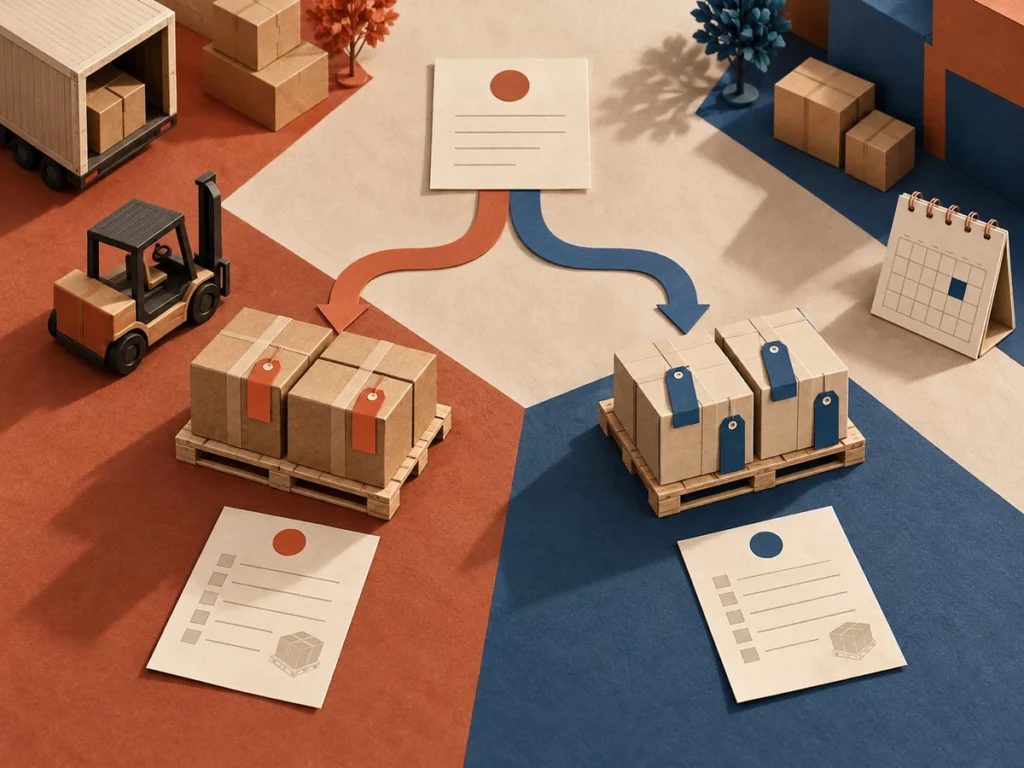
Send the destination receiver each dispatch’s references and expected contents so the first arrival isn’t mistaken for the full order. With several suppliers, carry each supplier and purchase-order reference through any repacking. If the warehouse repacks or re-pallets the cargo, get the revised package count, dimensions, and gross weight before approving the outgoing records, and keep the earlier version so the change can be traced.
Planning a Partial Shipment From China
As a China freight forwarder, Foresmart collects from suppliers across China, receives and identifies cargo by supplier and purchase order, and arranges agreed labeling, repacking, or palletizing before dispatch. When a supplier falls behind, the team sets out the cost and timing of waiting, splitting, or moving the ready cargo first, and you approve the release. For sea freight, it can compare full-container-load (FCL) and LCL options for both the urgent batch and the balance.
For a split-or-wait quote, send the supplier pickup locations and contacts, the products, quantities, packed weights, and dimensions for each batch, the confirmed ready and required delivery dates, and the destination address and Incoterm. Foresmart’s minimum shipment size is 100 kg or 1 CBM, and each separate departure goes through its own cargo and route review.
Frequently Asked Questions
Does “Partially Shipped” Mean the Cargo Has Left China?
Not necessarily. An order-progress label like that doesn’t prove an international departure, so ask the supplier or forwarder which transport stage it means, and for ocean cargo, check the actual departure event in container tracking against the right shipment reference.
Can Part of an Order Go by Air and the Rest by Sea?
Yes, when each batch suits its mode and the route supports the arrangement. Confirm each batch’s acceptance, documents, cost, and delivery plan before booking the urgent goods by air and the balance by sea.
Is Partial Shipment the Same as Transshipment?
No. A partial shipment divides an order into batches, while transshipment moves cargo from one vessel to another during an ocean voyage. A split order can travel on a transshipment route, but a vessel transfer doesn’t mean the order was split.