
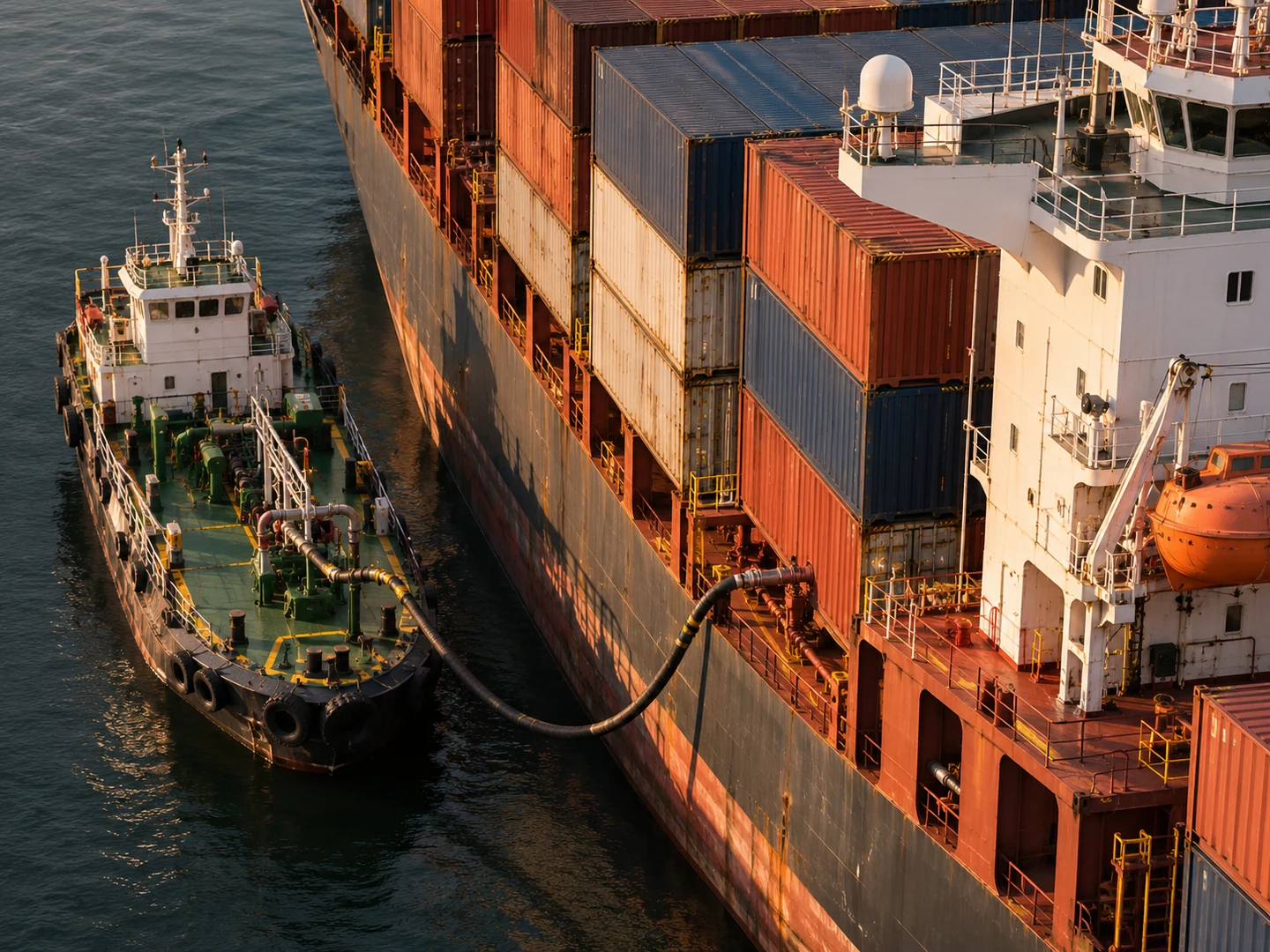
A fuel surcharge is the part of a freight charge that moves with a carrier’s fuel costs, and it follows the carrier’s own formula and dates rather than today’s oil price. Ocean and air carriers may bill it as a separate line or build it into the quoted rate. So when oil prices climb, check which fuel provision applies to your booking and when it updates before you revise your shipping budget.
Why Do Rising Oil Prices Change Freight Charges?
Ships burn marine fuel, called bunker, and aircraft burn jet fuel, so a jump in oil prices raises what it costs carriers to move your cargo. A July 2026 St. Louis Fed analysis modeled that effect for container shipping. Bunker prices rose 74% from a February 2026 baseline of $518 per ton to a March to May average of $901, and the fuel cost per TEU on a 21-day voyage from China to the U.S. West Coast rose very differently by vessel:
| Vessel | Fuel Cost per TEU Before | Fuel Cost per TEU After |
|---|---|---|
| Ships up to 5 years old | About $155 | About $269 |
| Ships older than 20 years | About $360 | About $626 |
| Post-Panamax ships | About $98 | About $171 |
| Feeder ships | About $365 | About $635 |
Those are carrier operating costs, not surcharges. The researchers state that they didn’t estimate how much of the increase reaches shippers, because pass-through depends on contracts, market conditions, capacity, demand and competition. What reaches your invoice is set by the carrier’s fuel mechanism.
How Do Fuel Surcharges Differ Between Ocean and Air Freight?
Ocean and air carriers track different fuels and charge on different units, so the same oil move lands on your bill in different ways.
| Quote Detail | Ocean Freight | Air Freight |
|---|---|---|
| Fuel tracked | Marine fuel, under the carrier’s method | Jet fuel, under the airline’s method |
| Typical names | BAF, LSS, FFF or another named fuel charge | Fuel surcharge, sometimes under another charge code |
| Charging unit | Per container or per TEU for FCL | Per kilogram of chargeable weight, or another airline basis |
| Date that sets the rate | The shipment event named in the carrier terms | The event named by the airline, such as air waybill issue |
Ocean Fuel Charges
Ocean carriers use several names for fuel charges. Maersk’s glossary, for example, separates the bunker adjustment factor (BAF) from its low sulphur surcharge, emergency bunker surcharge, fossil fuel fee and environmental fuel fee. Its ocean contract terms, amended October 27, 2026, place differently named fuel charges, such as the fossil fuel fee and emergency bunker surcharge, under one Ocean Fuel Surcharge. Maersk can bill it as one charge, several charges or part of the base rate, and usually adjusts it quarterly, though it can change it at any time when fuel markets swing. Ask for the exact charge name and terms rather than looking only for “BAF.”
Then match the charging unit to your cargo. A rate per container and a rate per twenty-foot equivalent unit (TEU) give different totals for a 40-foot box. For less-than-container-load (LCL) cargo, ask for the fuel charge on the LCL billing basis, because an FCL container amount doesn’t apply to a shared container.
Air Cargo Fuel Charges
Airline fuel surcharges can update more often than ocean charges, and they’re charged by weight. WestJet Cargo’s published method shows how one airline does it. It observes the IATA Jet Fuel Price Monitor for North America every two weeks, applies the new rate from the following Thursday, and charges per kilogram of chargeable weight at a short-haul or long-haul rate. The air waybill issue date sets which rate applies, for published, contract and spot rates alike. Shipments from Japan and South Korea follow government-regulated fuel charges instead.
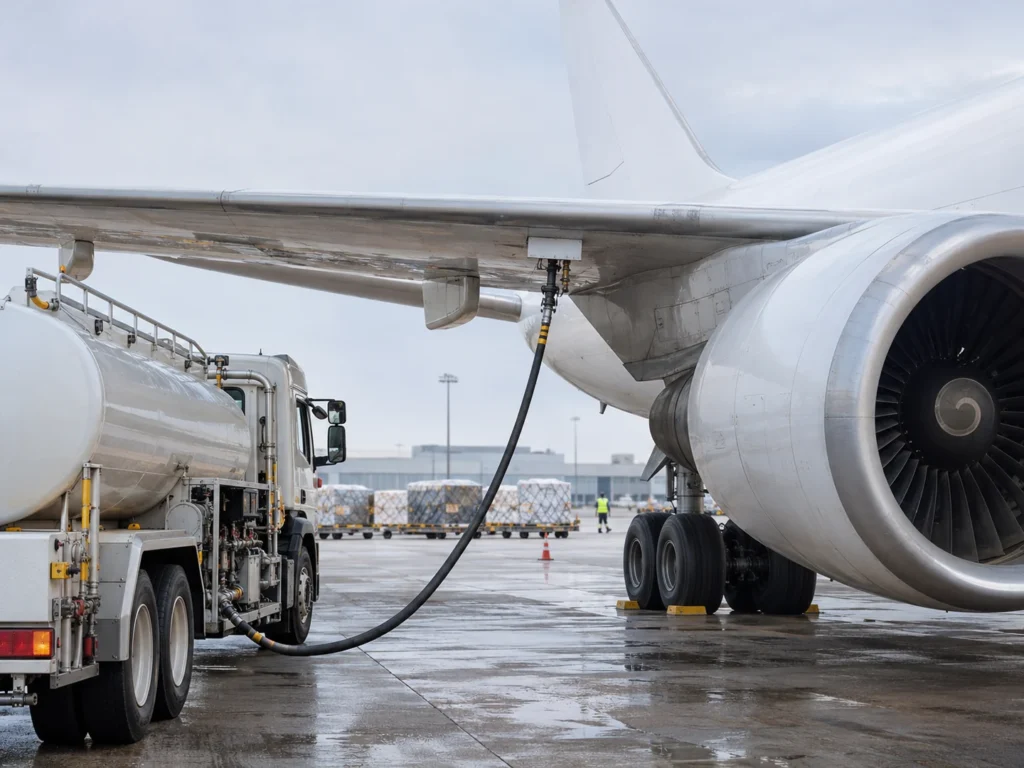
Because the charge runs on chargeable weight, the greater of actual weight and volumetric weight, bulky cartons raise the fuel amount even when the per-kilogram rate doesn’t change. Confirm the final packed dimensions and weight before you compare air quotes.
Why Can Fuel Surcharges and Freight Rates Move Differently?
The fuel charge follows its mechanism, while the base rate follows the freight market. Fuel mechanisms look back at an earlier observation period and apply the result from a set date. That happens every two weeks at WestJet Cargo and typically every quarter under Maersk’s ocean terms, so today’s oil price may not show up on today’s quote.
The base rate can also cancel out or amplify a fuel move. When space is tight, a higher base rate can outweigh a falling fuel charge, and in a soft market the base rate can drop while fuel stays high. Ask which component changed before you put a higher total down to oil.
How Do You Compare Quotes With Fuel Surcharges?
Compare the same cargo, route, service scope and shipment dates, then check whether each quote includes fuel before you compare base rates. A benchmark such as dollars per ton of marine fuel is an input to the carrier’s formula, not the amount you’ll pay per container. Ask each forwarder to state:
- The fuel charge name and the transport leg it covers
- The rate, currency and charging unit
- The container type or weight basis used
- The date rule that sets the rate, and the quote expiry
- Pickup, destination and delivery charges left out of the total
When an invoice differs from the accepted quote, run a freight audit against the rate, unit, quantity and terms, and ask for the calculation in writing. A different charge name alone doesn’t prove a billing error or a valid new charge.
How Can Importers Control Fuel Costs When Oil Prices Rise?
You can’t control a carrier’s fuel rate, but you can control how much cargo it’s charged on and how many shipments carry it.
Consolidating Supplier Orders in China
When goods come from several factories, price a combined shipment before you book separate international moves. A per-container fuel charge spreads across more cargo when several suppliers’ orders fill one container, so compare collection and warehouse costs against the freight, fuel and delivery costs of shipping each order on its own. Include the cost of waiting for any supplier that isn’t ready.

Matching the Mode and Packaging to the Charge Basis
Where only part of an order is urgent, ask for an air option on that portion and sea freight for the rest, and count the extra handling and documents in the comparison. For air cargo, cut empty packaging volume before the final quote, since a lower chargeable weight lowers a per-kilogram fuel charge, as long as the packaging still protects the goods. For FCL cargo, smaller cartons don’t reduce a per-container fuel charge, so focus on the right equipment and a full, well-planned load.

Shipping From China With the Fuel Surcharge Stated Upfront
Foresmart can bring several factories’ orders into one shipment. It receives them at warehouses in cities including Shenzhen, Guangzhou, Yiwu, Ningbo and Foshan, handles agreed repacking and palletizing, and then chooses sea or air for the combined cargo. In one Canadian consolidation case, goods from several Chinese suppliers went into one full container to Canada, with the China-side work run through one contact.
To get a quote with the fuel terms spelled out, give Foresmart the supplier locations, cargo description, packed measurements and weights, ready dates, destination and delivery deadline, and note which orders can wait. The quote should state whether fuel is included, under which charge names and which date rule. Quotes start at 100 kg or 1 cubic meter (CBM), Foresmart’s minimum shipment size.
Frequently Asked Questions
Is a Fuel Surcharge a Government Tax?
No. It’s a carrier transport charge. Maersk’s ocean contract terms, for example, state that their charges exclude VAT and taxes imposed by government bodies, so ask your forwarder to list carrier charges and government amounts separately.
Can a Fuel Surcharge Apply to a Long-Term Freight Contract?
Yes. Maersk applies its Ocean Fuel Surcharge to all bookings under its ocean contracts, and WestJet Cargo applies its fuel surcharge to contract rates as well as published and spot rates. Check whether your contract fixes the base rate only, the fuel charge too, or the whole price.
Can You Negotiate a Fuel Surcharge?
Sometimes, through the contract rather than the published rate. Maersk’s ocean terms let a separate written, signed agreement on a specific fuel charge take priority over the standard fuel clause. Ask what fuel terms are available for your volume, and compare the full price before accepting a fuel discount.
Source
- Oil Prices and Container Shipping Costs, Federal Reserve Bank of St. Louis: July 2026 bunker price change, fuel cost per TEU by vessel type, and the limits on estimating pass-through to shippers.
- Ocean Contract Product General Terms and Conditions, A.P. Moller – Maersk: the Ocean Fuel Surcharge, quarterly adjustment, billing options, separate fuel agreements and the exclusion of taxes, as amended October 27, 2026.
- Surcharge definition, A.P. Moller – Maersk: BAF, LSS, EBS, FFF and EFF definitions.
- Fuel Surcharge, WestJet Cargo: benchmark, two-week review, chargeable weight basis, air waybill date rule, contract rates and the Japan and South Korea exception.
- Air Cargo Tariffs and Rules: What You Need to Know, IATA: chargeable weight as the greater of actual and volumetric weight.