
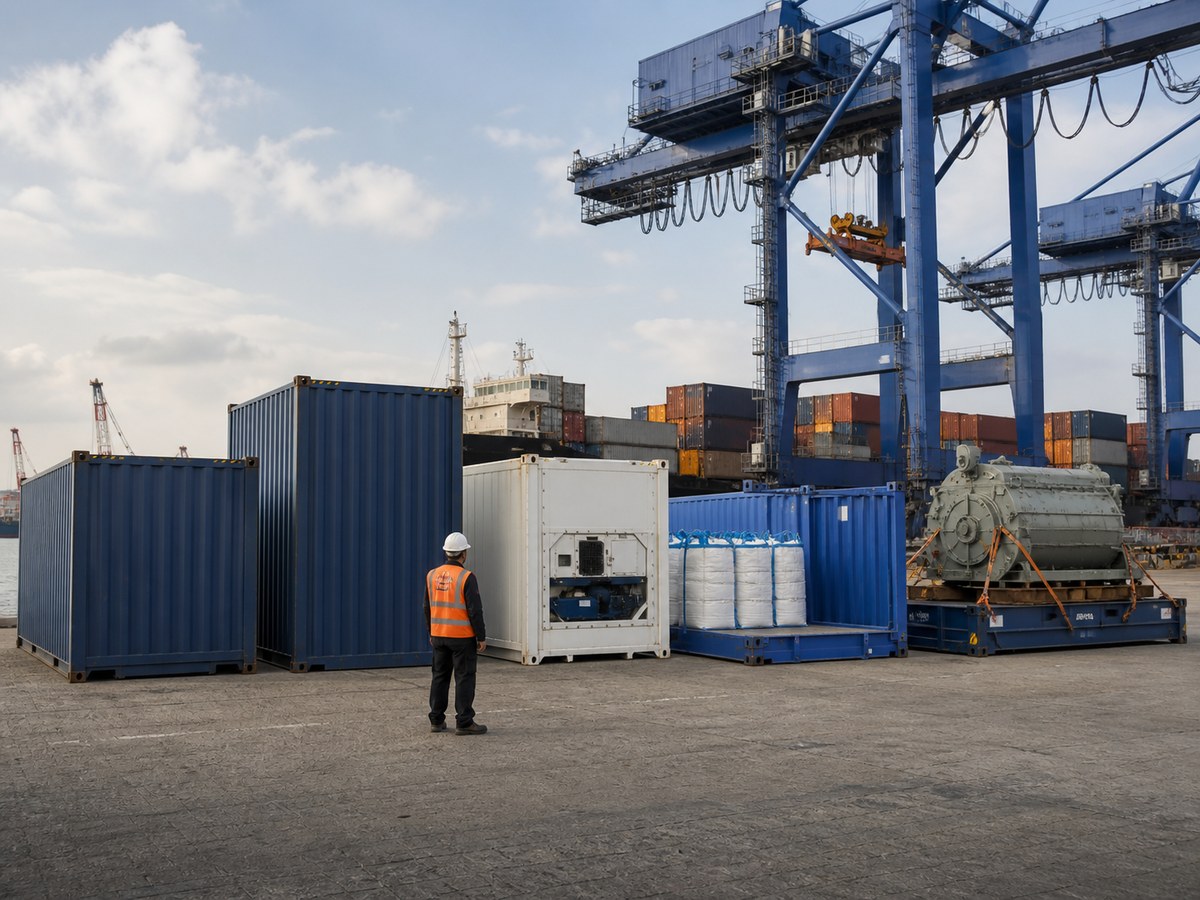
Choose the container by your cargo’s dimensions, weight, temperature needs, and loading method, not by length alone. A standard dry container works for most packed goods. A high cube adds height for bulky cargo. Reefers, open tops, flat racks, and tanks solve specific physical or handling limits. Confirm the final equipment with the carrier or freight forwarder before booking, because payload limits and special-equipment availability can vary by route.
Which Types of Shipping Containers Fit Ocean Freight Cargo?
Most ocean shipments use a general-purpose dry container. Specialized equipment becomes necessary when cargo needs temperature control, top loading, open sides, or a tank.
| Container Type | Best Starting Fit | What to Check Before Booking |
|---|---|---|
| Standard dry container | Cartons, pallets, bags, drums, and other dry cargo that fits through the end doors | Packed dimensions, gross weight, and door clearance |
| High cube dry container | Light, bulky cargo that needs extra internal height | Whether the extra height solves the volume problem without creating road or loading limits |
| Reefer | Perishable or temperature-sensitive cargo | Required set point, product handling requirements, and power support across the journey |
| Open top | Cargo that is too tall or difficult to load through standard doors | Crane access, top-loading plan, cargo height, and weather protection |
| Flat rack | Wide, heavy, or irregular cargo that cannot sit inside side walls | Out-of-gauge dimensions, lifting points, lashing plan, and port acceptance |
| Tank container | Liquid cargo | Product compatibility, required tank specification, and any dangerous-goods controls |
The table is a screening tool, not a loading approval. Shipping container dimensions vary by equipment type and can affect door clearance, usable space, and final loading approval. Container type, payload, gross weight, local road limits, cargo securing, and carrier acceptance all affect the final booking.
How Do Standard Dry and High Cube Containers Differ?
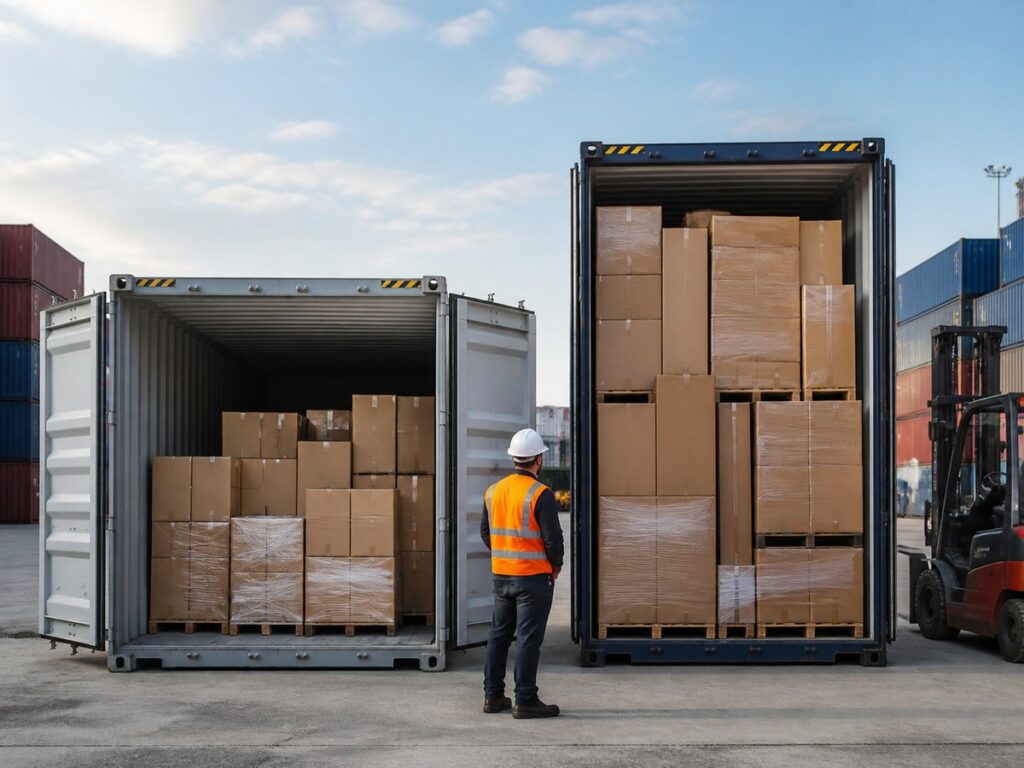
A standard dry container and a high cube container carry dry cargo, but a high cube gives you extra height rather than a simple increase in allowable cargo weight. A standard container is typically 8 feet 6 inches high, while a high cube is typically 9 feet 6 inches high. The extra foot can help when a shipment runs out of cubic space before it reaches its weight limit.
Cargo Density
Dense cargo reaches a payload or gross-weight limit before it fills the box. The 20-foot vs. 40-foot shipping container choice should start with weight distribution, not only total volume. Tiles, metal parts, stone products, and some machinery may need a 20-foot container or more than one unit.
Do not assume that a longer container carries twice the usable weight. The container’s tare weight, its permitted gross weight, the road leg, and the carrier’s limits all affect the cargo payload.
Cargo Volume and Height
Bulky, lighter goods often use a 40-foot high cube because the extra height gives more usable cubic space. Furniture, cartons with low density, and some packaged consumer goods may fit more efficiently in a high cube.
Measure the cargo after final packaging. Standard pallet dimensions and container fit can affect a loading pattern, even when the shipment’s total cubic volume appears to fit.
When Does Cargo Need a Specialized Container?
Cargo needs specialized equipment when an enclosed dry box cannot maintain the required condition or when the loading team cannot place and secure the cargo within its walls and roof.
Temperature-Controlled Cargo
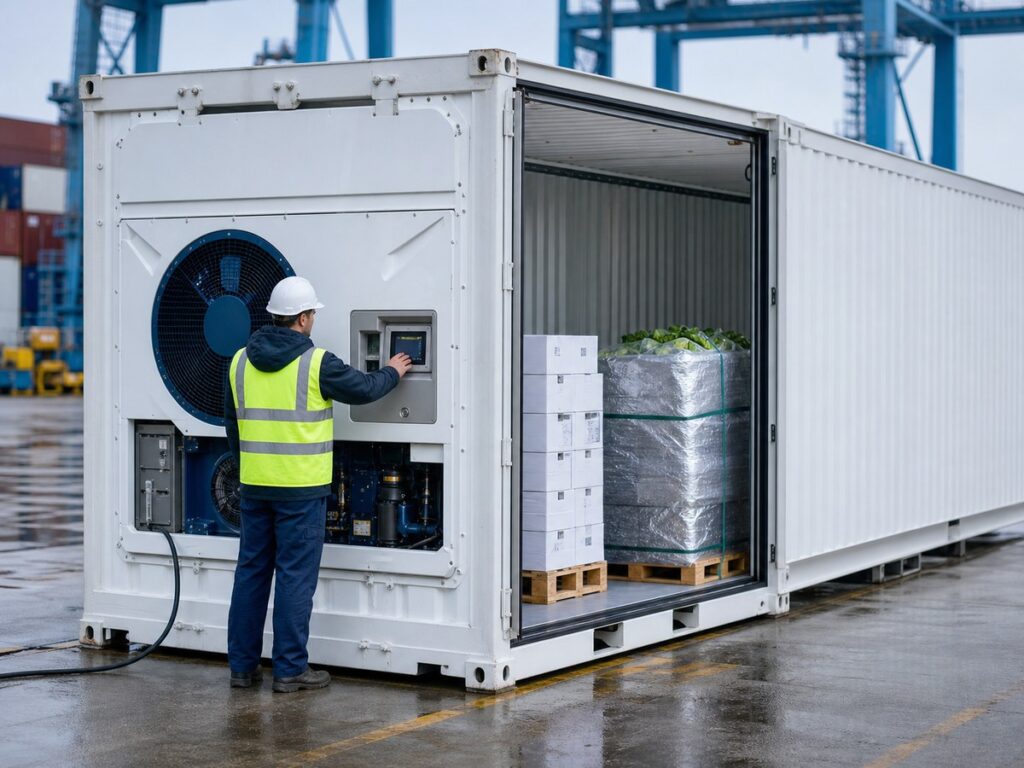
A reefer is a refrigerated container that controls the cargo environment for temperature-sensitive goods. Food, flowers, pharmaceuticals, and other perishable products may need a reefer. The shipper must provide the product temperature, packaging, ventilation needs, pre-cooling plan, and acceptable temperature range before booking.
Top-Loaded Cargo
An open-top container has side walls and a floor but no rigid roof. It can suit tall or heavy cargo that needs crane loading from above and still benefits from side-wall containment. The cargo must fit within the approved profile, and the carrier must accept the lifting, securing, and cover plan.
Out-of-Gauge Cargo
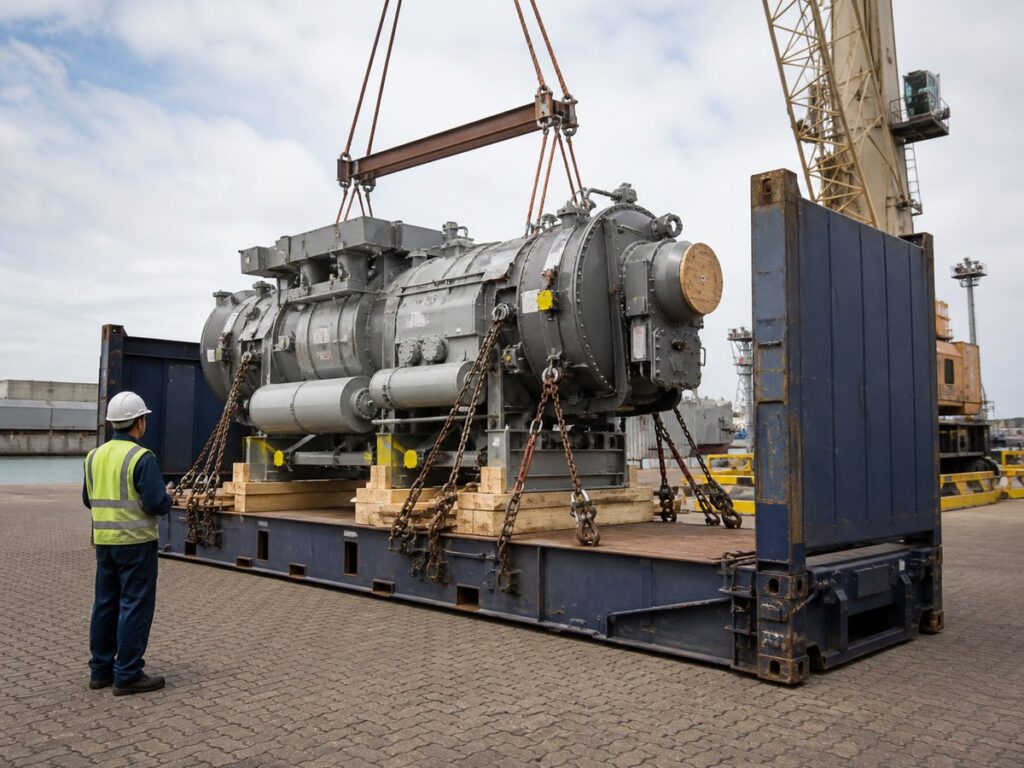
A flat rack has a strong base and end structures but no full side walls or roof. This equipment can carry machinery, construction materials, boats, and other cargo that is too wide, too high, or too irregular for an enclosed container.
Flat-rack cargo needs a project-style review. The shipper should provide exact packed dimensions, weight, center of gravity, lifting points, drawings or photos when available, and a lashing plan. Some out-of-gauge cargo may require a different shipment method if the carrier or route cannot accept the required profile.
Bulk Liquid Cargo
A tank container carries liquid cargo in a tank within a standard container frame. The product, tank material, cleaning requirements, and dangerous-goods classification determine whether a tank container is appropriate. Liquid cargo needs product-specific equipment and carrier approval, not a dry container with an improvised liner.
What Should You Confirm Before Booking a Container?
The booking request should give the carrier or freight forwarder enough information to confirm fit, legal weight, handling method, and equipment availability before the carrier releases the empty container.
Packed Dimensions and Weight
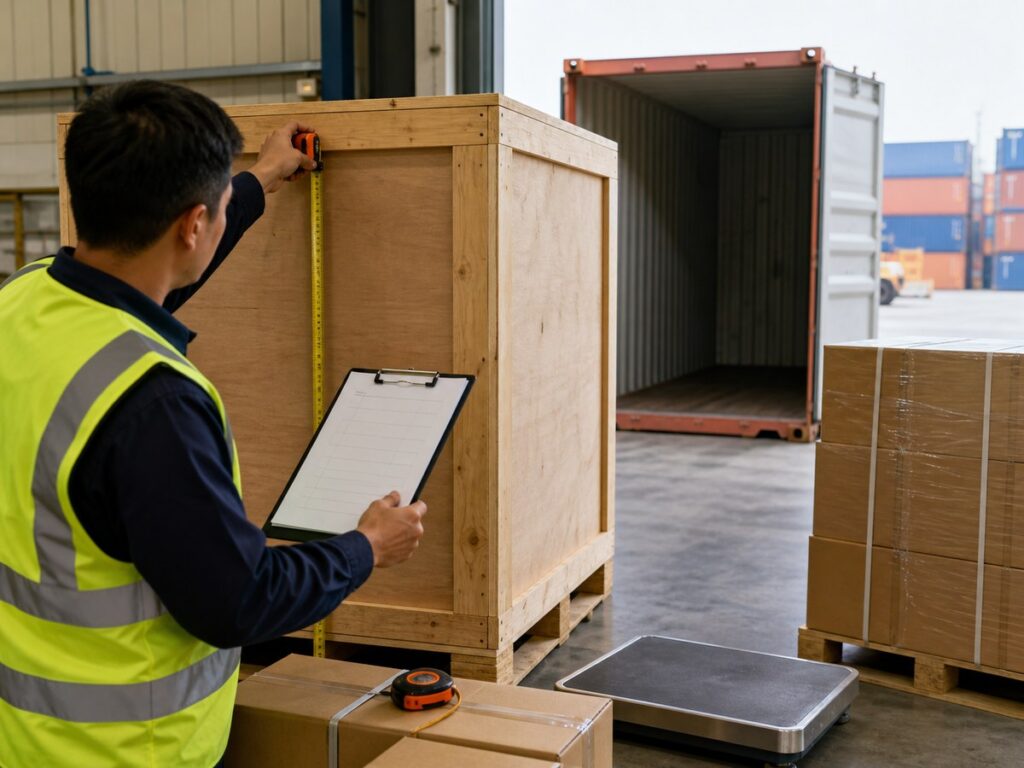
Provide the length, width, height, gross weight, package count, and total volume for the finished shipment. For machinery or other irregular cargo, include the widest and tallest points, not only the product’s nominal dimensions.
Weight distribution also matters. A shipment can fit by cubic volume but still exceed a container payload limit or create an unsafe concentration of weight on the floor.
Loading and Unloading Method
State how the cargo will enter and leave the container. Forklift loading through end doors, crane loading from above, side loading, and heavy-lift handling can lead to different equipment choices.
For tall, wide, heavy, fragile, or awkward cargo, include:
- cargo photos or drawings
- lifting points
- packaging details
- any known securing requirements
Route and Equipment Availability
Special equipment is not available on every sailing or at every origin and destination. The forwarder needs the pickup location, port pair, cargo-ready date, destination, Incoterm, and any delivery restrictions before confirming an open top, flat rack, reefer, or tank.
Ask for the equipment type and any special-handling assumptions to appear in the written quote. A low price does not confirm that the shipment has an approved loading, lashing, temperature-control, or out-of-gauge plan.
How Can Foresmart Help Validate the Container Choice?
Foresmart, a global freight forwarder, can review the cargo details before quoting sea freight from China and determine whether the shipment suits FCL, LCL, or special equipment. Foresmart’s out-of-gauge freight service covers oversized cargo beyond standard 20-foot and 40-foot containers. The carrier still confirms the final equipment against the route, weight, handling, and availability conditions.
Send the following details for a useful review:
- packed dimensions and gross weight
- package count and cargo description
- pickup location, destination, cargo-ready date, and Incoterm
- photos or drawings for non-standard cargo
After carrier handover, container tracking can help you follow the shipment by carrier.
Frequently Asked Questions
Are Shipping Containers and ISO Containers the Same Thing?
In ocean freight, an ISO container usually means an intermodal freight container that follows ISO size, type, coding, and safety standards. The term “shipping container” is broader and can describe different shipping equipment, so confirm the actual size and type code when the equipment matters.
Can a 40-Foot High Cube Replace a 20-Foot Container for Heavy Cargo?
No. A 40-foot high cube adds volume and height, but it may not be the right choice for dense cargo. Compare the cargo payload, gross weight, floor loading, weight distribution, and route-specific road limits before selecting the container.
Does a Container’s Payload Limit Stay the Same on Every Route?
No. The container type and size affect payload, and country or local transport rules can impose lower limits. Confirm the accepted payload with the carrier or freight forwarder for the booked route.
Can Every Ocean Carrier Provide Special Container Equipment?
No. Availability for reefers, open tops, flat racks, tanks, and other special equipment depends on the carrier, route, port, sailing date, and operational acceptance. Confirm the equipment before finalizing the packing and loading plan.