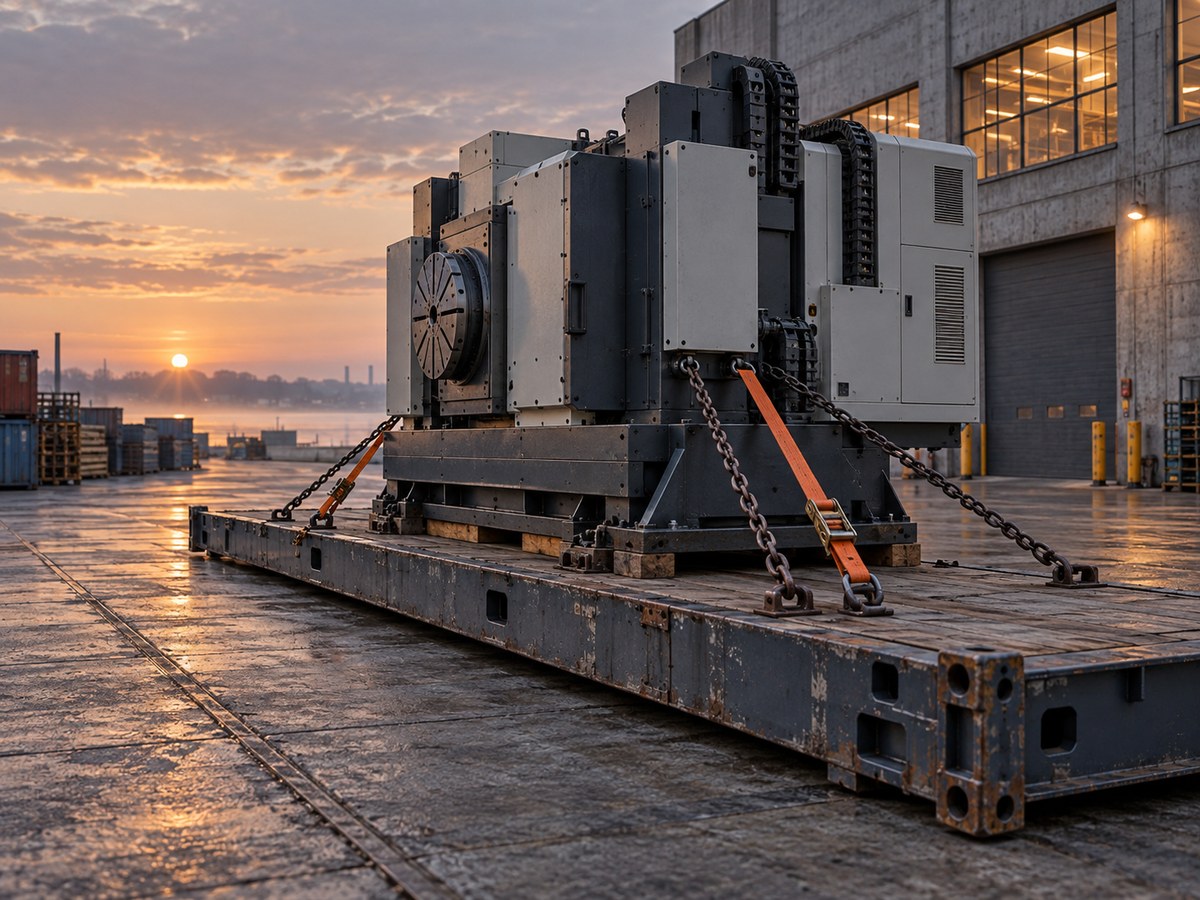
Who arranges cargo lashing depends on the booking and the agreed service scope. Before booking a flat rack, get a written answer naming who will arrange the work and who will secure the machine. The supplier may provide technical data, while a freight forwarder may coordinate a loading or lashing contractor. Confirm the split against the carrier’s conditions for this shipment.
Who Is Responsible for Each Part of Flat-Rack Cargo Lashing?
Separate the cargo data, securing method, physical work, and booking submission. One company can own multiple tasks; name an owner for each.
| Task | Party to confirm | Written handoff |
|---|---|---|
| Supply machine data | Supplier or machine owner | Measured cargo file and handling details |
| Develop the loading and lashing method | Appointed loading or lashing specialist | Proposed method for booking-party review and carrier review if required |
| Load and lash the machine | Named loading or lashing provider | Work site, supervision, and completion records |
| Submit the OOG booking details | Shipper or appointed forwarder | Cargo weight, dimensions after lashing, and carrier response |

The IMO/ILO/UNECE CTU Code treats the consignor, packer, shipper, forwarder, and carrier as separate functions. It calls for the parties to agree on and communicate the packing and securing work. Do not infer the lashing contractor from the purchase term alone.
When the supplier provides measurements and a contractor secures the machine, the contractor needs the supplier’s handling data. The forwarder then needs the contractor’s final dimensions for the booking. Put both handoffs in the work plan so the carrier receives the cargo profile that will actually travel.
What Should You Confirm Before Booking the Flat Rack?
Use the packed machine’s actual measurements and handling details. A drawing of the bare machine cannot establish the shipping profile.
Heavy machinery flat rack cargo measurement](https://www.foresmart.com/wp-content/uploads/2026/09/post-lashing-heavy-machinery-measurement-1024x768.jpg)
- Cargo file: Confirm packed dimensions and weight for each unit, plus the center of gravity, lifting points, drawings, and current photos. Resolve missing data before approving a loading method.
- Dimensions after securing: Name the party that will measure the full length, width, and height after loading and lashing. A Maersk China OOG guide requires booking dimensions to include lashing; check the chosen carrier’s rules for this sailing.
- Loading site: Confirm whether the job will take place at the factory, a yard, or the port. Check access, lifting equipment, and who can supervise and record the work at that location.
A flat rack is one shipping container option. If the cargo or route does not suit it, ask the forwarder to assess an open top or breakbulk move.
What Should the Written Lashing Scope Include?
The quote should name the contractor and work site. It should identify the proposed loading and lashing method and say whether the price covers securing materials, lifting equipment, labor, supervision, completion records, and any required survey. If the quote only says “lashing included,” ask what the provider will actually supply and which records the buyer will receive.
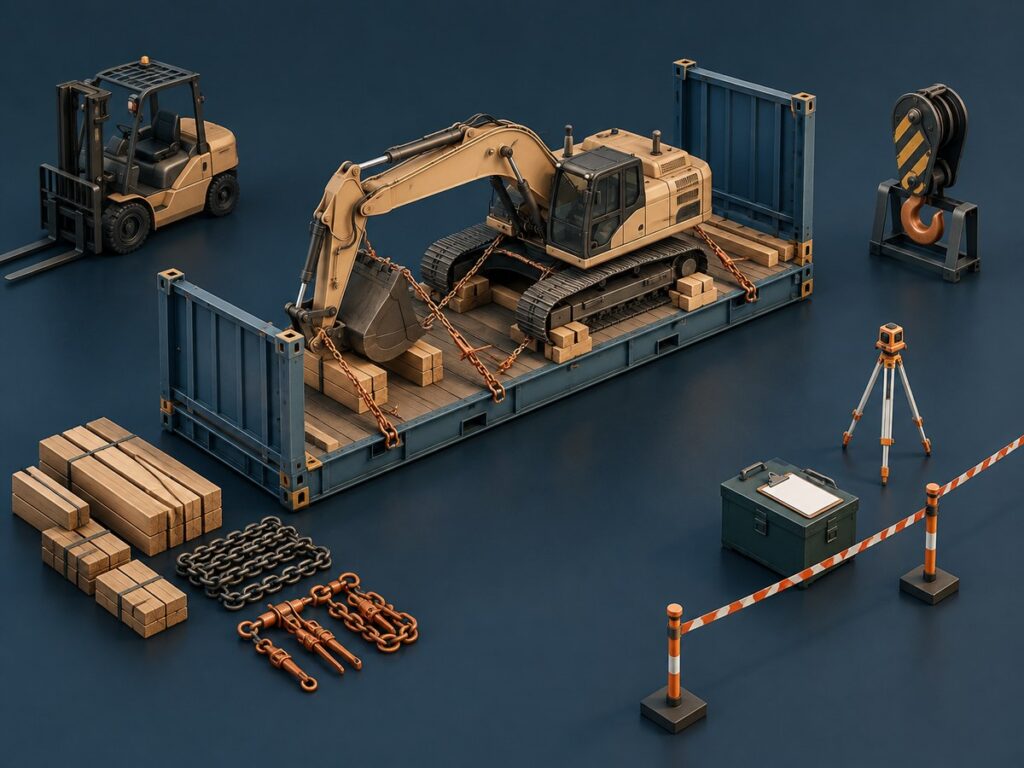
The ocean freight booking should use the final cargo profile. Have the forwarder confirm which lashing documents or approvals the carrier requires and who will submit them. The freight rate does not define the lashing scope.
What If the Cargo Profile Changes After Booking?
Send revised measurements to the forwarder before sending the machine for loading. A change in packing, weight, or the proposed securing arrangement can alter the dimensions the carrier reviewed. The loading specialist should check whether the method still fits the cargo, while the forwarder checks the revised profile against the carrier’s equipment and route conditions.
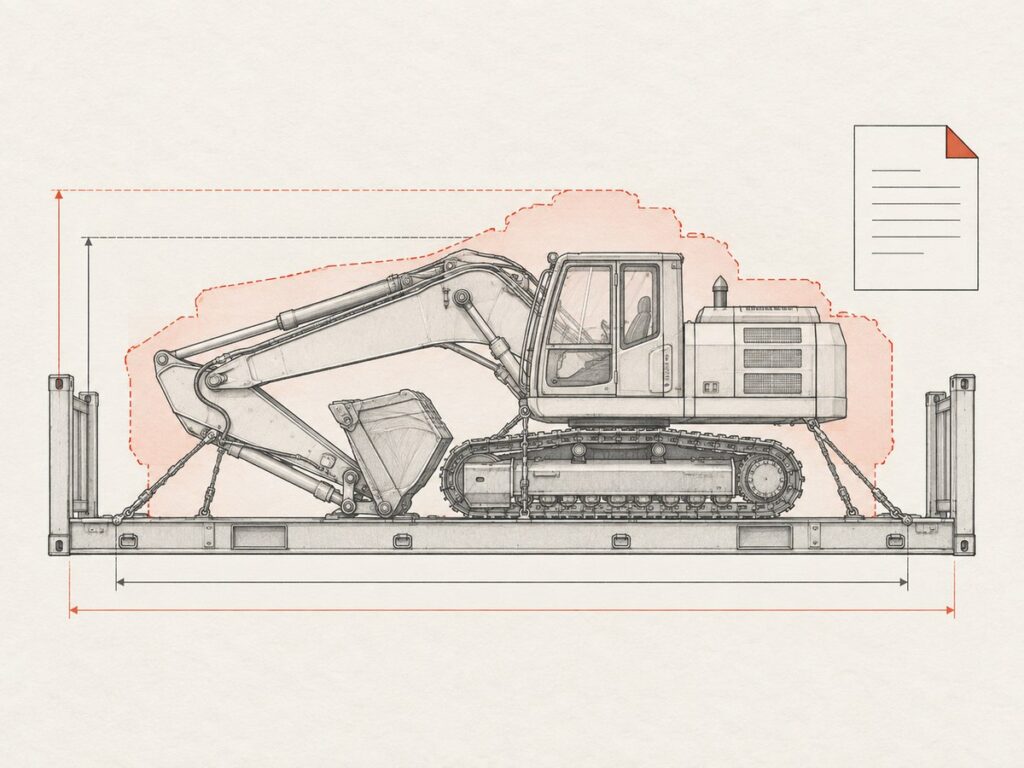
If the revised profile falls outside the booking conditions, get the carrier’s response and update the work scope before loading. Name who will make those revisions and whether they affect the quoted work. This avoids sending a prepared flat rack to the terminal with cargo data that no longer matches the booking.
Frequently Asked Questions
Can the Supplier Lash the Machine at Its Factory?
The supplier can lash the machine at its factory if it is the agreed loading provider and the site has the required equipment and access. Confirm that worksite with the booking party and check the carrier’s conditions before loading.
Does Every Flat-Rack Shipment Need a Lashing Certificate?
Requirements depend on the carrier. Swire Shipping, for example, requires a certificate from a competent cargo surveyor for its flat-rack shipments. Ask the chosen carrier whether it needs one. If so, confirm who will arrange it and when the carrier needs it.
Does a Confirmed Booking Mean the Carrier Has Approved the Lashing?
No. A booking confirmation can cover space, equipment, and vessel approval before the loading provider secures the machine. Confirm any inspection or records the carrier needs before the loaded flat rack moves to the vessel.
How Can Foresmart Help Plan the Shipment?
Foresmart’s out-of-gauge freight service reviews machinery data against equipment, port, vessel, terminal, and inland-route conditions. Foresmart can compare a flat rack with other transport options, plan loading and lashing responsibilities, and arrange the work where available. Its written scope should identify who performs the job and what that work includes.
Send Foresmart the cargo file, origin, destination, loading-site conditions, and ready date. Foresmart can assess the equipment and work scope for a project quote.