
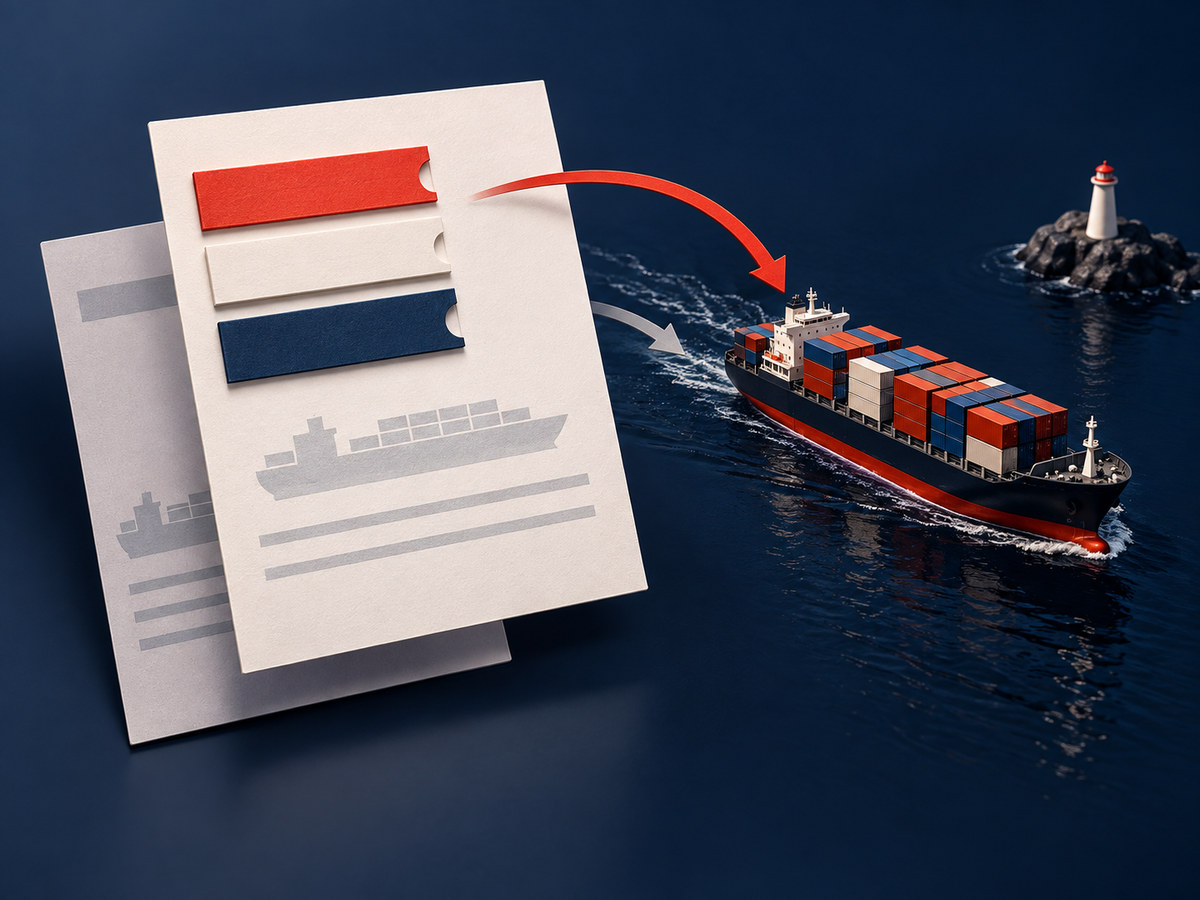
A switch bill of lading replaces an issued bill when a documented transaction change calls for different commercial parties. The issuer must approve the request. If originals were issued, the first set must be taken out of circulation before the replacement is released. The new bill must preserve the shipment’s actual loading and cargo facts.
When Is a Switch Bill of Lading Needed?
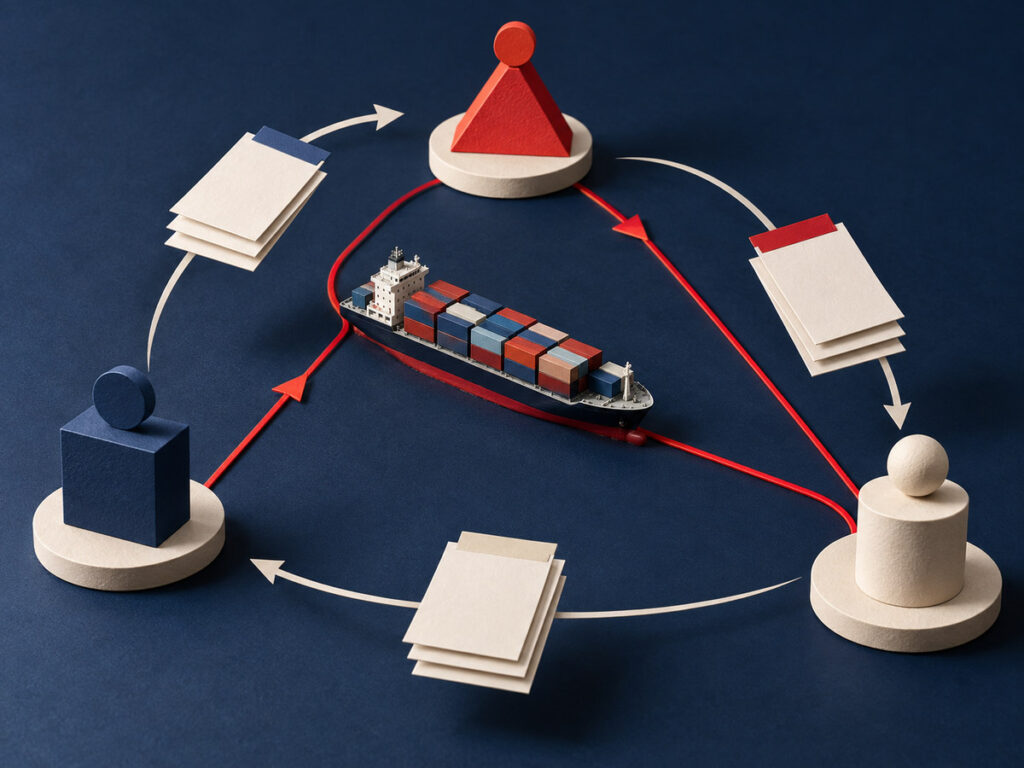
An intermediary may need a switch bill after selling goods to a new buyer while the cargo is in transit. In a triangular trade, the second bill updates the consignor and consignee details. The replacement bill names the trader as shipper and the final buyer as consignee, if the issuer accepts the documented sale.
If the first bill is still a draft, correct it before issuance. For an error on an issued bill, ask the issuer whether an amendment will do.
What Should You Confirm Before Requesting a Switch Bill?
Identify the issuer and secure control of the first set of originals before applying. Then check the proposed changes against the trade documents and the issuer’s requirements.
- Confirm whether the request concerns the carrier’s master bill or an NVOCC’s house bill.
- Check whether originals have been issued and who holds each one, including a bank or buyer. Ask how the issuer will record their surrender and cancellation.
- List each proposed change. Compare it with the sale contract, commercial invoice, and export and import filings.
- If a letter of credit is involved, ask the bank whether the replacement would meet its terms. Check destination requirements with the relevant customs broker and agent.
- Ask the issuer what authorization, letter of indemnity (LOI), charges, and cutoff rules apply.
What Can Change on a Switch Bill of Lading?
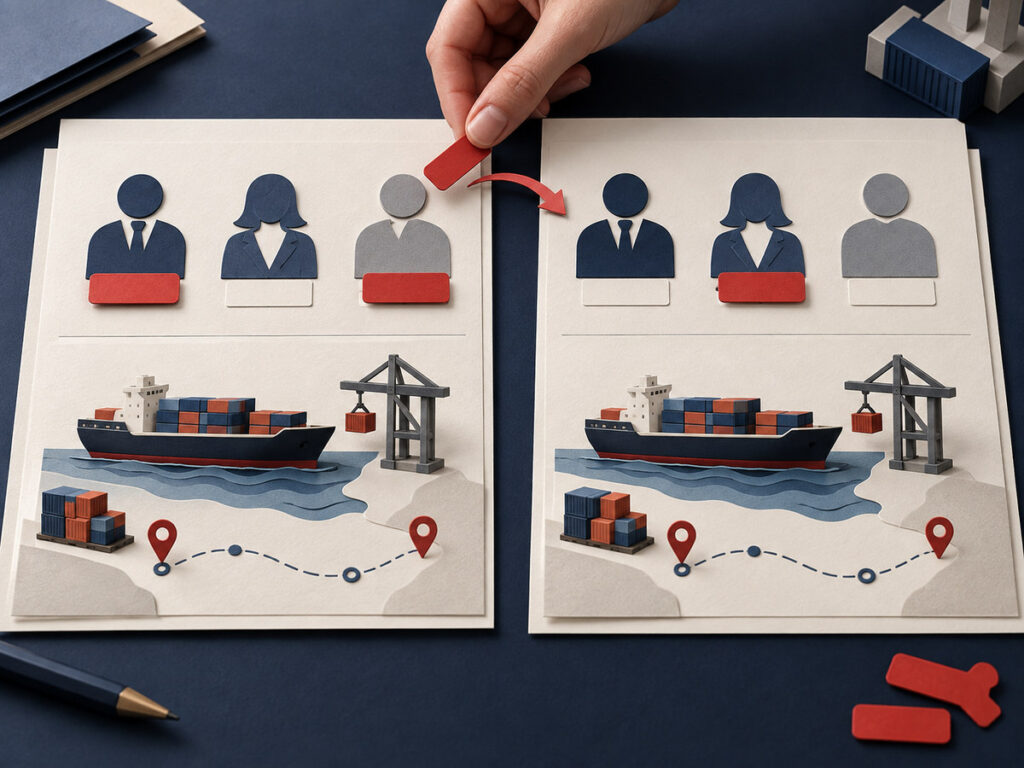
The shipper, consignee, and notify party may be proposed for change.
| Field or fact | Decision before requesting the switch |
|---|---|
| Shipper, consignee, notify party | Name the real parties and provide sale records. The issuer decides whether to accept the change. |
| Commercial or letter-of-credit references | Ask whether the issuer accepts revised references and whether the bank accepts the resulting bill. |
| Freight payment terms | Ask whether the issuer permits a change and which outstanding charges must be settled. |
| Actual loading port, vessel, voyage, and on-board date | Keep the transport record accurate. A switch cannot create a different loading event. |
| Cargo description, quantity, weight, and dangerous-goods facts | Keep the cargo record accurate. Report a genuine error through the issuer’s evidence and amendment process. |
| Country of origin | Do not conceal or invent origin. Check origin evidence and customs declarations separately. |
The replacement’s issue date may differ from the original bill’s date. The cargo’s actual on-board date must remain accurate.
What Can Go Wrong With a Switch Bill?
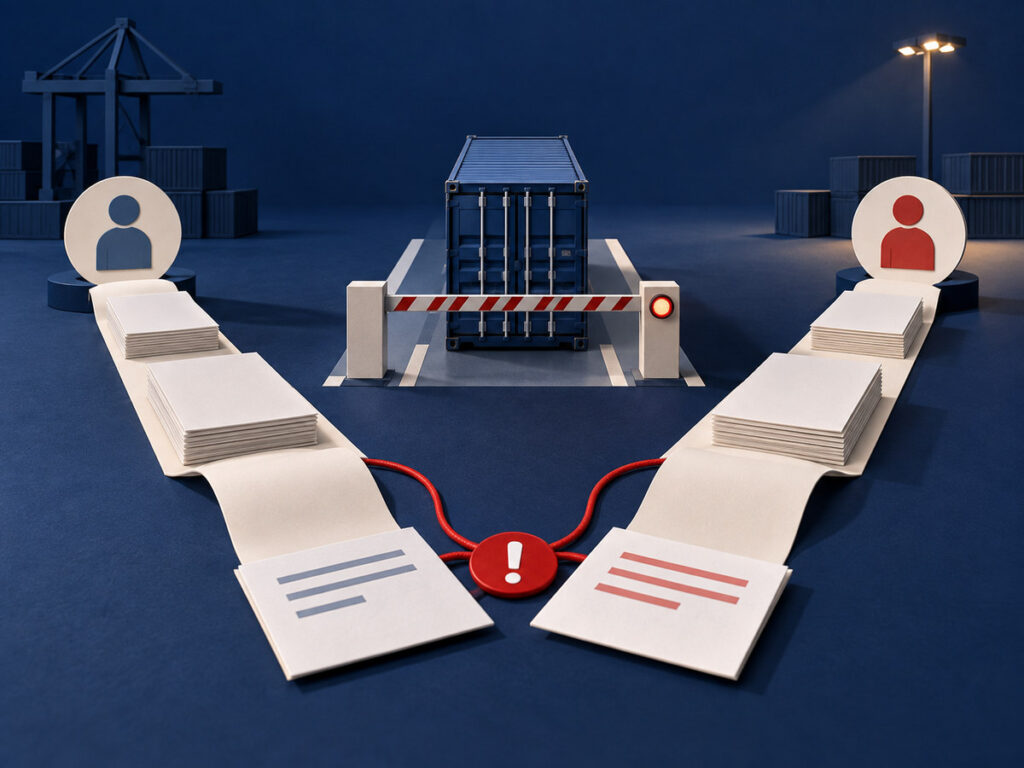
Two sets of valid originals for one shipment can create competing delivery claims.
A bill of lading that conflicts with the invoice, letter of credit, or customs filing can draw questions from a bank, customs authority, or destination agent. Those questions may delay document acceptance or cargo release.
An LOI assigns specified risks to its signers. It cannot make false cargo details acceptable.
Frequently Asked Questions
Who Can Request a Switch Bill of Lading?
The requester must have the issuer’s authorization and lawful control of the complete first set of originals. Being named as shipper on the first bill does not automatically grant that right after the originals have been transferred. If a bank or buyer holds an original, ask what consent and surrender steps the issuer requires before applying.
Can a Switch Bill Show a Different Port of Discharge?
A switch bill may show a new discharge port if the cargo is genuinely redirected and the carrier approves the change. A routine switch of commercial parties does not, by itself, redirect the cargo. Ask the carrier to confirm the new routing, manifest, and destination release instructions before requesting a bill with a different discharge port.
Can a Switch Bill Keep the Original Supplier Confidential?
A switch bill can leave the original supplier’s name off the replacement shown to the buyer in a legitimate resale. It cannot guarantee secrecy. The issuer retains records of the first bill, and a Hapag-Lloyd switch form expressly addresses disclosure of the original shipper. Origin and customs records must still be accurate.
Can a Sea Waybill Be Switched?
A Sea Waybill may need a different process because it has no negotiable originals to surrender. Maersk’s Singapore procedure requires a negotiable bill and directs Sea Waybill holders to amend the document type first. Ask the actual issuer whether an amendment or reissue is available and how the change would affect cargo release.
How Can Foresmart Help With a Switch Bill Request?
Foresmart can coordinate sea freight from China and send a documented switch request to the carrier or NVOCC for review. Provide the route, issuer, bill type, status and holder of the originals, proposed changes, and supporting trade documents. Include any bank or destination requirements.