
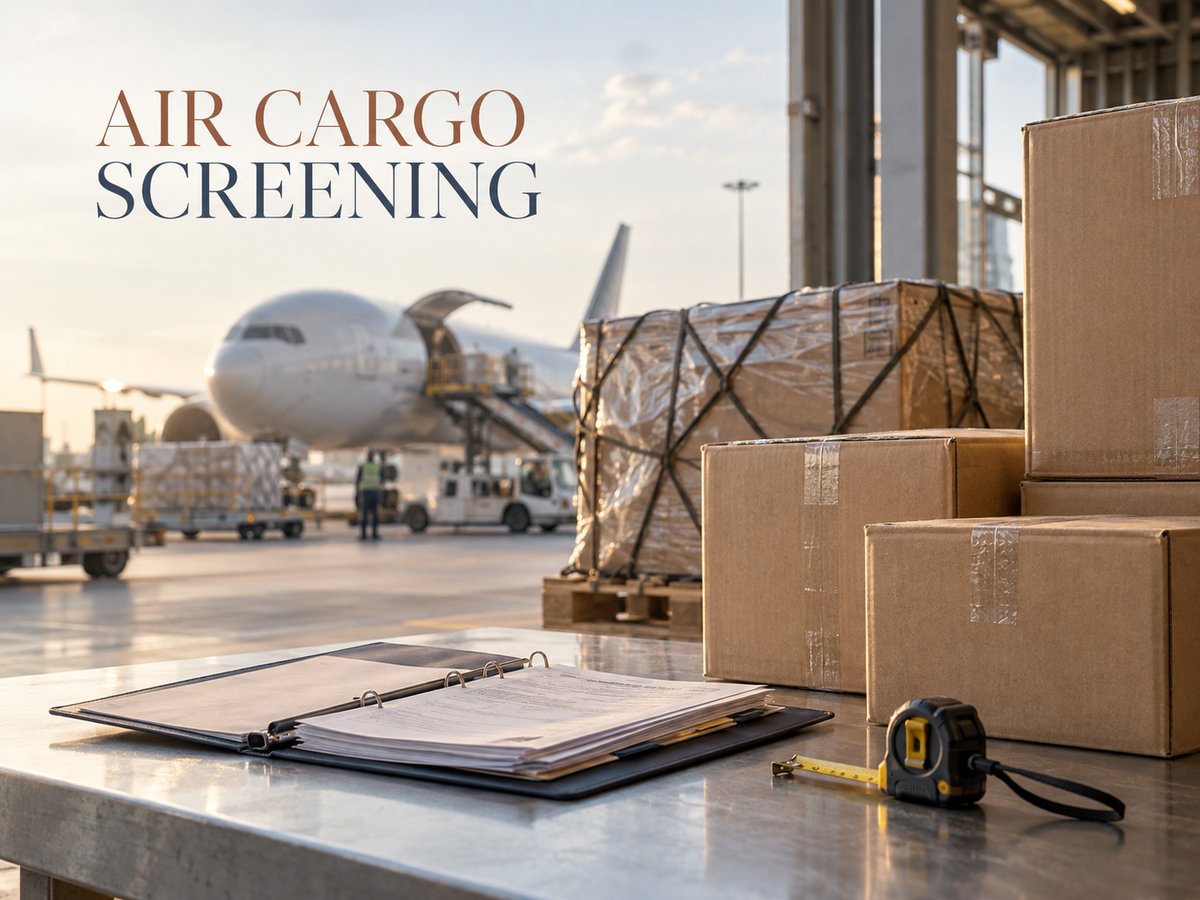
Before booking international air freight, confirm that the goods and their final packaging can enter the required air cargo screening process. Give the forwarder a clear goods description, piece count, packed dimensions, weight, origin airport, and any special handling needs. If the packed shipment differs from the booking details, the receiving party may ask for more information or a different handling plan.
What Is Air Cargo Screening?
Air cargo screening is a security control intended to identify items that could threaten an aircraft. Screening may use different approved methods; an X-ray scan is not the only possible method.
Customs exams serve border and trade compliance, while dangerous-goods rules address transport safety. A cargo security check is separate from customs clearance. Classification, packing, and dangerous-goods declarations remain the shipper’s responsibility before offering cargo for air transport.
In the United States, Known Shipper status concerns the shipper’s eligibility. It does not describe how a particular packed shipment will be screened.
What Determines the Screening Plan for Air Cargo?
The screening plan depends on the origin, routing, cargo, packaging, and applicable local security rules. The forwarder can gather the shipment details, but the responsible airline or authorized screening party must confirm what applies to that movement.
Origin and Routing
Start with the origin airport and each planned transfer point. A route change can alter which party accepts the freight and what security documentation must accompany it. Do not assume that an arrangement used for a previous shipment will apply to a new origin or connection.
Cargo and Packaging
Package size and density may affect which screening arrangement can be used. A method suitable for individual cartons may not suit a large crate or a densely packed assembly. Fragile equipment, temperature-controlled goods, and cargo that should not be opened need early review. Describe the restriction; do not label the shipment as exempt. The qualified screening party decides whether an approved process can be used.
The declared contents matter as much as the outer dimensions. “Parts” or “samples” gives the receiving party little basis to assess the shipment. Name the goods and identify batteries, liquids, magnetic materials, or any other property that may affect airline acceptance.
What Information Should Shippers Send Before Handover?
Send a shipment profile that matches the goods the supplier will actually hand over. The forwarder can then compare the booking and document details with the packed cargo before tender.

- Cargo identity: What each package contains, not just the product category.
- Piece count: Give the number of cartons, crates, and pallets, including cartons per pallet.
- Packed size and weight: Give packed dimensions and gross weight for each package type.
- Packaging: Describe the outer packaging and flag packages that cannot be opened without damage or breaking a required seal.
- Route and timing: Give the pickup location, origin airport, destination, cargo-ready date, and required arrival date.
- Special properties: Flag batteries, liquids, magnets, fragile goods, or temperature needs, and attach requested product documents.
The air freight shipping documents, including the commercial invoice, packing list, and air waybill instructions, should describe the same shipment. A mismatch between the paperwork and delivered pieces can lead to clarification before acceptance.
How Should Cargo Be Packed for Screening?
Protect the goods in transit, then check whether the final freight packaging suits the planned security process. A large crate or tightly packed pallet may need a different process. Tell the forwarder what the outer packaging is made of and whether authorized inspection would require opening it.

Package Access and Resealing
Ask the forwarder to confirm local requirements with the carrier or qualified screening provider before changing the packing. If a package might need to be opened, agree who can open and reseal it. For fragile or temperature-sensitive goods, agree how the contents will be protected while the pack is open.
Marks and Repacking Updates
Add a clear shipping mark to each package so the pieces can be matched to the shipment documents. Tell the forwarder when the pallet count and carton count differ. After repacking, update the dimensions, weight, piece count, and documents before handover.
What Happens When the Planned Screening Cannot Be Completed?
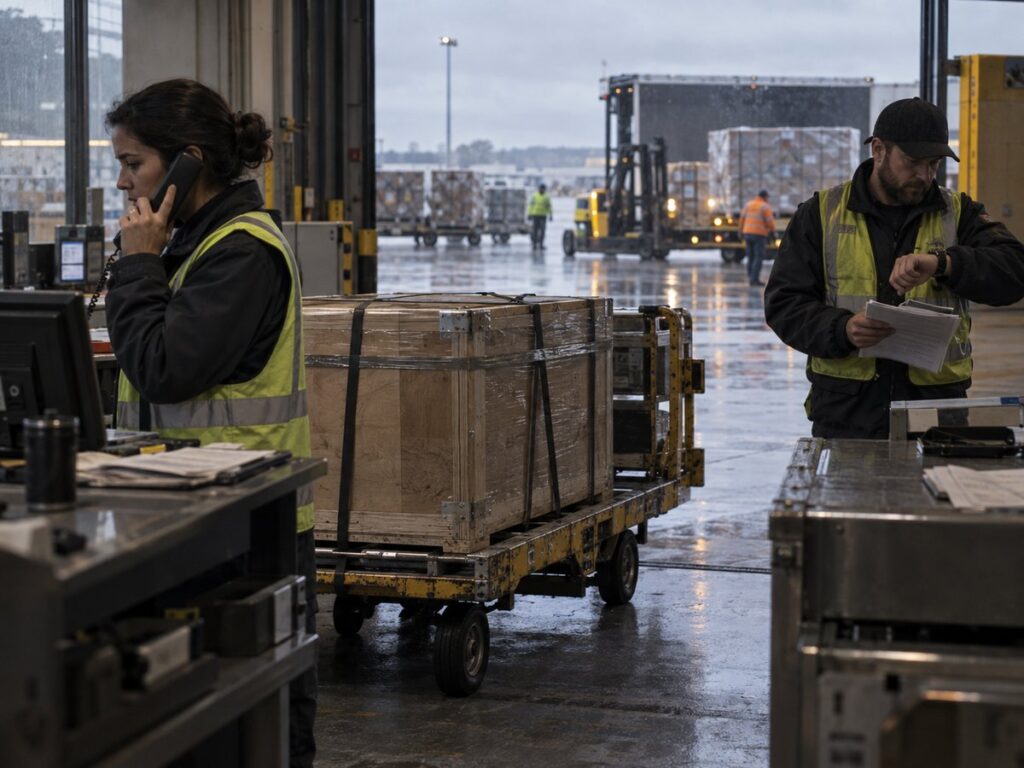
If the shipment cannot be screened as planned, the airline or authorized screening party must decide the next permitted step. Possible outcomes include a request for a clearer goods description, additional documentation, a packing change, or another approved handling arrangement. Cargo may be held or refused until the security requirement is met. No forwarder can promise that the original flight will remain available.
Resolving the Screening Issue
Ask which requirement the shipment has not met and who can resolve it. If the supplier must provide details or authorize opening, assign that contact before the cargo cutoff. Treat a revised booking as conditional until the responsible party confirms it.
Rechecking the Booking
When a booking is time sensitive, ask about the revised cargo cutoff and available flight options as soon as the issue appears. Repacking, extra handling, and a missed cutoff can change the cost and delivery plan. Request a revised quote or handling instruction before authorizing work that was outside the original booking.
How Is Screened Cargo Protected After Handover?
Screened cargo must stay within the applicable secure handover process until it reaches the aircraft. Each party handling it needs to preserve its security status and pass the required information to the next authorized party.
Agree on the handover point and responsible party before dispatch. Ask who receives the freight, who records its security status, and whether any later repacking or transfer requires another review. Do not reopen or alter a screened package without telling the party managing the security chain. If packaging is damaged or the piece count changes, report it before the next handover.

At each transfer, confirm which record will show the shipment is cleared. A shipper’s own “screened” label does not serve as that confirmation.
How Does Foresmart Coordinate the Air Freight Handover?
Foresmart can collect cargo and packing details, review flight and airport options, support export documentation, and coordinate pickup and airline tender. Its published air freight from China service also includes screening in the origin handover plan. The actual security controls remain with the airline and authorized parties under the applicable local rules.
Send Foresmart the shipment profile described above, including any seal, temperature, or handling condition. Foresmart can then check handover requirements with the receiving parties and coordinate the booking around the confirmed plan. Screening acceptance, airline space, and flight timing still depend on the route and cargo.
Frequently Asked Questions
Can Cargo Be Screened Before It Reaches the Airport?
Sometimes. An approved secure supply chain may allow an authorized party to apply security controls before airport tender. Whether this is available depends on the origin’s rules, the parties involved, and the shipment’s security status. Confirm the permitted arrangement for the specific route before moving the cargo.
Can a Shipper Refuse to Open a Package During Screening?
A shipper can explain why a package needs to remain sealed, but the party running the screening decides whether to accept it. Raise the restriction before booking. If no approved process fits, the shipment may need a different packing or transport plan.
What If a Supplier Changes the Contents After Booking?
Send the revised cargo description and any changed weight, dimensions, or piece count to the forwarder before pickup. The airline and screening party may need to review the booking and acceptance plan again.